
Slow-Roasted Garlic & Herb Chicken
1 hr 45 minView


The smash technique creates an impossibly crisp, lacey-edged patty with maximum Maillard crust — stacked double with American cheese, pickles, and a tangy burger sauce.
Preheat your oven to 160°C (325°F). Pat the chicken completely dry with paper towels — this is the single most important step for crispy skin.
Mash the softened butter with half the garlic cloves, the leaves from 2 rosemary sprigs, and the thyme leaves. Season generously with salt and pepper.
Gently loosen the skin over the breast and thighs with your fingers. Push the herb butter underneath the skin, spreading it evenly over the meat.
Rub the outside of the chicken with olive oil and season all over with salt and pepper. Stuff the cavity with the lemon halves, remaining garlic, and herb sprigs.
Place the chicken breast-side up in a roasting pan. Pour the stock into the bottom of the pan. Roast for 1 hour 30 minutes, basting every 30 minutes.
Increase the oven to 220°C (425°F) for the final 15 minutes to crisp and deeply colour the skin.
Rest the chicken uncovered for 15 minutes before carving. Spoon the pan juices over each serving.

Mound the flour on a clean surface, make a well in the centre, and crack in the eggs. Use a fork to gradually incorporate the flour from the inside out until a shaggy dough forms.
Knead the dough for 8–10 minutes until smooth and elastic. Wrap in cling film and rest at room temperature for 30 minutes.
Roll the dough to about 2 mm thickness using a pasta machine or rolling pin. Dust generously with flour, loosely roll up, and cut into 2 cm wide ribbons. Shake out and dust again.
Cook the pappardelle in well-salted boiling water for 2–3 minutes until just al dente. Reserve a ladleful of pasta water before draining.
Meanwhile, melt the butter in a wide skillet over medium heat. Once it foams, add the sage leaves. Cook, swirling the pan, until the butter turns deep golden and smells nutty, about 3–4 minutes. Remove the sage to a plate.
Add the drained pasta to the brown butter with a splash of pasta water. Toss vigorously over low heat until the sauce coats every ribbon.
Divide between warm bowls. Top with crispy sage, a generous snowfall of Parmesan, and a crack of black pepper.

Mix the flours and 350 g of the water in a large bowl until no dry flour remains. Cover and rest (autolyse) for 45 minutes.
Add the starter and salt with the remaining 25 g water. Squeeze and fold until fully incorporated. The dough will feel sticky — that's correct.
Perform 4 sets of stretch-and-folds every 30 minutes over 2 hours: wet your hand, grab the dough from one side, stretch it up and fold it over. Rotate the bowl 90° and repeat 4 times per set.
After the final fold, let the dough bulk ferment at room temperature (21–24°C) for a further 2–4 hours until it has grown by 50–75% and looks airy and domed.
Turn the dough onto an unfloured surface. Shape into a tight round by folding the edges to the centre, then flipping and dragging toward you to build surface tension.
Place seam-side up in a rice-flour-dusted banneton. Cover and refrigerate overnight (8–16 hours) for a slow, cold proof.
One hour before baking, place a Dutch oven in the oven and preheat to 250°C (480°F). Turn the cold dough onto parchment, score with a lame or sharp knife at a 45° angle, and lower into the hot Dutch oven. Bake covered for 20 minutes, then uncovered for 20–25 minutes until deeply caramelised. Cool on a wire rack for at least 1 hour before slicing.

Melt the butter with the olive oil in a large, heavy-bottomed pot over medium heat. Add the onions and a pinch of salt. Stir to coat.
Cook the onions, stirring every 5–10 minutes, for 45–60 minutes. They will soften, then turn golden, then a deep mahogany brown. This slow caramelisation is the soul of the soup — don't rush it. Add the sugar halfway through to help the colour.
Add the garlic and cook for 1 minute. Pour in the wine and scrape up any browned bits from the bottom of the pot. Simmer until the wine is almost fully absorbed, about 3 minutes.
Add the stock, thyme, and bay leaf. Bring to a simmer and cook for 20 minutes. Taste and season generously with salt and pepper. Remove the thyme and bay leaf.
Preheat your grill (broiler) to high. Ladle the soup into oven-safe bowls set on a baking tray. Float 2 baguette slices on top of each bowl.
Pile the Gruyère generously over the bread, letting it spill over the edges. Grill for 3–5 minutes until the cheese is bubbling, golden, and beginning to char at the edges. Serve immediately.

Heat the olive oil in a large, deep skillet over medium heat. Add the onion and pepper and cook, stirring occasionally, for 8 minutes until softened and beginning to colour.
Add the garlic, cumin, paprika, coriander, and cayenne. Stir and cook for 1 minute until fragrant.
Pour in the crushed tomatoes. Season with salt and pepper. Simmer over medium-low heat for 10 minutes, stirring occasionally, until the sauce thickens slightly.
Use the back of a spoon to make 4 wells in the sauce. Crack an egg into each well. Cover the pan with a lid and cook for 5–7 minutes — the whites should be just set but the yolks still runny.
Scatter the feta over the top and finish with torn parsley and mint. Serve directly from the pan with plenty of crusty bread for scooping.

Make the croutons: toss the torn bread with olive oil and a pinch of salt. Toast in a skillet over medium heat, turning often, until golden and crunchy on all sides, about 8 minutes. Rub with the cut garlic clove while still warm. Set aside.
Make the dressing: whisk together the anchovy paste, garlic, egg yolk, lemon juice, Dijon, and Worcestershire in a bowl until combined.
Slowly drizzle in the olive oil while whisking constantly to emulsify into a creamy, cohesive dressing. Season with salt and plenty of black pepper. Taste — it should be bold, savoury, and bright.
Tear the romaine into large pieces and place in a wide, chilled bowl. Drizzle over the dressing and toss well to coat every leaf.
Add the croutons and half the Parmesan and toss once more. Pile onto plates and finish with the remaining Parmesan and a final crack of black pepper.

Preheat the oven to 220°C (425°F). Generously butter four 175 ml (6 oz) ramekins and dust with cocoa powder, tapping out the excess. Place on a baking tray.
Melt the chocolate and butter together in a heatproof bowl set over a pot of barely simmering water, stirring until smooth. Remove from heat and let cool for 5 minutes.
In a separate bowl, whisk the eggs, egg yolks, and sugar together vigorously for 2 minutes until the mixture is pale and slightly thickened.
Fold the chocolate mixture into the egg mixture until just combined. Sift in the flour and salt and fold gently until no streaks remain.
Divide the batter evenly among the prepared ramekins. (At this point they can be refrigerated for up to 24 hours — add 1–2 minutes to the bake time if going straight from the fridge.)
Bake for exactly 12 minutes. The edges will be set and the centre will still wobble when you shake the tray. Run a knife around the edge of each ramekin, invert onto a warm plate, and serve immediately with ice cream.

The day before (optional but recommended): place the beef in a bowl with the wine, carrot, sliced onion, and garlic. Cover and marinate in the fridge overnight. Drain and pat the beef dry, reserving the marinade.
Preheat the oven to 160°C (325°F). In a large Dutch oven, cook the lardons in olive oil over medium heat until golden. Remove with a slotted spoon. In the same fat, brown the beef in batches — don't crowd the pan — until deeply seared on all sides. Remove and set aside.
Add the carrot and sliced onion to the pot and cook for 5 minutes. Stir in the tomato paste and flour and cook for 1 minute. Pour in the reserved marinade (or fresh wine) and stock. Scrape up all the browned bits.
Return the beef and lardons to the pot. Add the bouquet garni. The liquid should just cover the meat — add more stock if needed. Bring to a simmer, cover, and transfer to the oven.
Braise for 2½–3 hours until the beef is completely tender and yields easily to a fork. Check every hour and add a splash of stock if the liquid reduces too much.
While the beef braises, cook the pearl onions in butter over medium heat until golden, about 10 minutes. In the same pan, sauté the mushrooms over high heat until browned. Set both aside.
Remove the bouquet garni. Stir in the pearl onions and mushrooms. Taste and adjust seasoning. Serve in wide bowls over buttered egg noodles or mashed potato, finished with fresh parsley.

Toast the cracked peppercorns in a large, dry skillet over medium heat for 1–2 minutes until fragrant. Remove half and set aside for finishing.
Cook the pasta in a smaller amount of water than usual (about 2 litres) with a modest amount of salt — this concentrates the starch in the water, which is essential for the sauce. Cook until 2 minutes shy of al dente.
While the pasta cooks, combine the two cheeses in a bowl. Add 3–4 tbsp of the hot pasta water and stir vigorously into a smooth, creamy paste. It should have the consistency of thick cream.
Add a ladleful (about 60 ml) of pasta water to the skillet with the toasted pepper. Bring to a simmer.
Transfer the pasta directly from the pot to the skillet using tongs. Toss over medium-low heat for 1 minute, adding pasta water a splash at a time, until the pasta is al dente and the water has reduced to a light glaze.
Remove the pan from the heat. Add the cheese paste and toss rapidly, adding tiny splashes of pasta water as needed, until the sauce is glossy and coats every strand without clumping. Serve immediately with the reserved pepper on top.

Preheat the oven to 175°C (350°F). Grease a 23 × 13 cm (9 × 5 inch) loaf pan and line with parchment paper, leaving an overhang on the long sides.
Mash the bananas in a large bowl with a fork until mostly smooth — a few lumps are fine and add texture.
Stir in the melted butter, brown sugar, eggs, and vanilla until combined.
Sift the flour, baking soda, salt, and cinnamon over the wet ingredients. Fold gently with a spatula until just combined — do not overmix or the bread will be tough.
Fold in the walnuts. Pour the batter into the prepared pan and smooth the top. Sprinkle with demerara sugar for a crunchy, caramelised crust.
Bake for 55–65 minutes until a skewer inserted into the centre comes out clean. If the top browns too quickly, tent loosely with foil after 40 minutes. Cool in the pan for 10 minutes, then lift out and cool completely on a wire rack.

Soft-boil the eggs: bring a small pot of water to a boil. Gently lower in the eggs and cook for exactly 6 minutes 30 seconds. Transfer immediately to an ice bath. Once cool, peel and set aside.
Cook the pork or chicken in a skillet over medium-high heat until cooked through and lightly caramelised. Season with a splash of soy sauce. Set aside.
In a medium saucepan, melt the butter over medium heat. Add the garlic and ginger and cook for 1 minute until fragrant. Add the stock and bring to a gentle simmer.
Whisk the miso paste with a ladleful of hot stock in a small bowl until smooth (this prevents lumps). Pour back into the pot. Add the soy sauce, mirin, and sesame oil. Keep warm over low heat — do not boil after adding the miso.
Cook the ramen noodles according to the package instructions. Drain and divide between two deep bowls.
Ladle the hot miso broth over the noodles. Halve the soft-boiled eggs and place cut-side up in each bowl. Arrange the pork, corn, nori, and spring onions. Finish with sesame seeds and a drizzle of chilli oil.

Toast the bread until golden and sturdy enough to hold the toppings without going soggy.
Halve the avocado, remove the pit, and scoop the flesh into a bowl. Add the lemon juice, a pinch of flaky salt, and a crack of pepper. Mash with a fork to your preferred texture — chunky or smooth.
Spread the mashed avocado generously over each slice of toast, right to the edges.
Classic: drizzle with olive oil and scatter chilli flakes. Smoked Salmon: spread cream cheese first, then layer smoked salmon, capers, and dill. Everything Bagel: sprinkle with bagel seasoning and top with a halved soft-boiled egg. Caprese: arrange cherry tomatoes and basil, drizzle with balsamic glaze. Spicy Feta: dollop harissa, crumble feta, and finish with fresh mint.
Serve immediately — avocado toast waits for no one.

Warm the stock in a separate saucepan and keep it at a gentle simmer throughout — cold stock shocks the rice and breaks the starch release.
In a wide, heavy-based pan, heat 1 tbsp olive oil and 20 g butter over medium-high heat. Sauté the mushrooms in a single layer without stirring for 3–4 minutes until deeply golden. Season, add the thyme, and set aside.
In the same pan, reduce heat to medium. Add the remaining olive oil and cook the onion for 6–8 minutes until completely soft and translucent. Add the garlic and cook for 1 minute more.
Add the rice and toast for 2 minutes, stirring constantly, until the edges of each grain turn translucent. Pour in the wine and stir until fully absorbed.
Add the warm stock one ladleful at a time, stirring frequently and waiting until each addition is absorbed before adding the next. This process takes 18–20 minutes.
When the rice is al dente and the mixture is loose and flowing (not stiff), remove from heat. Fold in the remaining cold butter and the Parmigiano-Reggiano vigorously — this is the mantecatura, the step that makes risotto creamy.
Fold in the reserved mushrooms, taste and adjust seasoning, and serve immediately in warm bowls with a scatter of fresh parsley.

Pat the salmon fillets completely dry with paper towels — moisture is the enemy of a crisp skin. Season generously on both sides with salt and pepper.
Heat the oil in a heavy stainless-steel or cast-iron skillet over high heat until shimmering and just beginning to smoke.
Place the salmon skin-side down. Press gently with a spatula for the first 30 seconds to prevent curling. Cook undisturbed for 4–5 minutes until the skin is deep golden and the flesh is opaque two-thirds of the way up.
Flip the fillets and cook for just 60–90 seconds on the flesh side — the residual heat will finish the centre. Transfer to a warm plate.
Reduce heat to medium. Add the butter to the pan and let it foam. Add the garlic and capers and cook for 1 minute until the garlic is golden.
Remove from heat, add the lemon juice and zest, and swirl to emulsify. Spoon the sauce over the salmon, scatter with parsley, and serve immediately.

Mix flour, water, salt, and yeast until a shaggy dough forms. Knead for 10 minutes until smooth and elastic. Divide into 2 balls, place in oiled containers, and cold-ferment in the fridge for 24–72 hours.
For the sauce, crush the San Marzano tomatoes by hand into a bowl. Season with salt and olive oil. Do not cook — the raw sauce finishes in the oven.
Place a pizza stone or heavy baking sheet on the top rack of your oven. Preheat to the highest setting (250–280°C / 480–540°F) for at least 45 minutes.
Remove the dough from the fridge 1 hour before baking. On a lightly floured surface, stretch each ball by hand into a 30 cm round — never use a rolling pin, which degasses the crust.
Spoon a thin layer of sauce over the base, leaving a 2 cm border. Scatter the torn mozzarella evenly. Drizzle lightly with olive oil.
Slide the pizza onto the hot stone and bake for 6–8 minutes until the crust is blistered and charred in spots and the cheese is bubbling.
Remove from the oven, immediately scatter fresh basil leaves, and drizzle with a little more olive oil. Slice and serve at once.

Blend all paste ingredients with 2 tbsp water until completely smooth. A high-powered blender gives the best result; a mortar and pestle gives the most flavour.
Heat the coconut oil in a wok or wide saucepan over medium-high heat. Add the paste and fry, stirring constantly, for 3–4 minutes until fragrant and the raw smell has cooked off.
Pour in the thick top layer of coconut milk first and cook, stirring, for 2 minutes until the oil separates and the paste fries in it — this step deepens the flavour significantly.
Add the chicken pieces and stir to coat. Cook for 3 minutes until sealed on the outside.
Pour in the remaining coconut milk, stock, fish sauce, sugar, and kaffir lime leaves. Simmer for 12–15 minutes until the chicken is cooked through.
Add the eggplant or zucchini and cook for 4 minutes until just tender. Stir in the spinach or Thai basil and remove from heat.
Taste and balance with more fish sauce (salt), sugar (sweetness), or lime juice (acidity). Serve over jasmine rice with extra basil and sliced chilli.

Whisk the egg yolks, sugar, and Marsala in a heatproof bowl set over a pan of barely simmering water (bain-marie). Whisk vigorously for 8–10 minutes until the mixture is pale, thick, and tripled in volume (zabaglione). Remove from heat and cool for 10 minutes.
Beat the mascarpone with a pinch of salt until smooth. Gently fold the cooled zabaglione into the mascarpone in three additions, keeping as much air as possible.
Pour the cooled espresso into a shallow dish. Working quickly, dip each savoiardo for just 2 seconds per side — they should be moist but not waterlogged.
Arrange a single layer of soaked savoiardi in a 23 × 33 cm dish. Spread half the mascarpone cream evenly over the top.
Repeat with a second layer of soaked savoiardi and the remaining cream. Smooth the surface with a palette knife.
Cover and refrigerate for at least 4 hours, or overnight — the tiramisu improves significantly as it sets and the flavours meld.
Just before serving, dust generously with cocoa powder through a fine sieve. Cut into portions and serve cold.

Combine the citrus juices, garlic, cumin, paprika, oregano, and olive oil. Season the steak generously, pour the marinade over, and refrigerate for 2–4 hours (no longer — the acid will start to cook the meat).
For the salsa: char the tomatillos, serranos, garlic, and onion directly on a dry comal or under a broiler until blackened in spots. Blend with salt until slightly chunky.
Remove the steak from the marinade and pat dry. Heat a cast-iron skillet or grill to the highest possible heat — you want a fierce sear.
Cook the steak for 3–4 minutes per side for medium-rare, pressing down occasionally. The exterior should be deeply charred.
Rest the steak for 5 minutes, then slice thinly against the grain. Chop the slices into small pieces — taco-sized.
Warm the corn tortillas directly over a gas flame or in a dry pan until lightly charred and pliable. Double them up for structure.
Load each taco with carne asada, white onion, cilantro, and a spoonful of tomatillo salsa. Serve with lime wedges and extra salsa on the side.

Preheat the oven to 180°C (350°F). Arrange the tomatoes cut-side up on a large roasting tray with the onion quarters and the garlic head. Drizzle with olive oil, sprinkle with sugar, salt, and pepper.
Roast for 55–60 minutes until the tomatoes are collapsed, caramelised at the edges, and deeply concentrated. The garlic should be completely soft.
Squeeze the roasted garlic cloves out of their skins directly into a large saucepan. Add all the roasted tomatoes and onions, scraping up every bit of the caramelised juices from the tray.
Add the stock and bring to a simmer for 5 minutes. Add most of the basil (reserve some for serving) and the balsamic vinegar.
Blend until completely smooth using a stick blender or in batches in a standing blender. Pass through a sieve for a silky-smooth result, or leave as-is for a more rustic texture.
Return to the pan, stir in the cream, and gently reheat. Taste and adjust seasoning — it may need more salt, a touch more sugar, or a squeeze of lemon.
Ladle into warm bowls, swirl with a little extra cream, scatter fresh basil leaves, and drizzle with olive oil. Serve with crusty bread.

Make the hollandaise: melt the butter and skim off the foam to clarify it. Whisk the egg yolks and cold water in a heatproof bowl over barely simmering water until thick and pale (ribbon stage). Remove from heat.
Drizzle the warm clarified butter into the yolks drop by drop at first, whisking constantly, then in a thin stream until fully emulsified. Season with lemon juice, cayenne, salt, and white pepper. Keep warm over the hot water (off the heat).
Fill a wide saucepan with 8 cm of water and the white wine vinegar. Bring to a gentle simmer — you want small bubbles, not a rolling boil.
Crack each egg into a small cup. Create a gentle whirlpool in the water and slide the egg in. Poach for exactly 3 minutes for a runny yolk. Remove with a slotted spoon and drain on a clean cloth.
While the eggs poach, pan-fry the bacon until golden and slightly crisp at the edges.
Assemble: place two toasted muffin halves on each plate, top with bacon, then a poached egg. Spoon hollandaise generously over each egg.
Finish with a pinch of cayenne, cracked black pepper, and a few chives if you have them. Serve immediately — hollandaise waits for no one.

Remove the lamb from the fridge 30 minutes before cooking. Preheat the oven to 200°C (400°F). Mix the rosemary, parsley, garlic, and breadcrumbs together in a bowl.
Season the lamb chops generously on all sides with salt and pepper. Heat the olive oil in a cast-iron skillet over high heat until smoking.
Sear the chops for 2 minutes per side until deeply browned. Don't move them — you want a proper crust. Sear the fat cap briefly by holding the chops on their edge.
Remove from heat. Brush the top of each chop generously with Dijon mustard, then press the herb-breadcrumb mixture firmly onto the mustard to form a crust.
Transfer the skillet to the oven and roast for 6–8 minutes for medium-rare (internal temperature 57°C / 135°F). The crust should be golden and fragrant.
Rest the chops on a warm plate for 5 minutes before serving. Finish with flaky sea salt and a drizzle of olive oil.

Make the pastry: pulse flour, butter, icing sugar, and salt in a food processor until it resembles fine breadcrumbs. Add the egg yolks and water and pulse until the dough just comes together. Flatten into a disc, wrap, and chill for 1 hour.
Roll the pastry to 3 mm thick on a lightly floured surface. Line a 23 cm loose-bottomed tart tin, pressing into the edges. Trim the excess. Chill for 30 minutes.
Blind bake: line the pastry with baking paper and fill with baking beans. Bake at 180°C (350°F) for 15 minutes. Remove the beans and paper, and bake for a further 8–10 minutes until the base is golden and dry.
Make the filling: whisk the eggs, yolks, sugar, lemon zest, and juice in a heavy saucepan. Add the butter and cook over medium-low heat, stirring constantly, until the curd thickens enough to coat the back of a spoon (about 10 minutes). Do not boil.
Strain the curd through a fine sieve into a jug to remove the zest and any cooked egg. Pour immediately into the warm tart shell.
Bake at 150°C (300°F) for 10–12 minutes until the filling is just set with a slight wobble in the centre — it will firm up as it cools.
Cool completely at room temperature, then refrigerate for at least 2 hours. Dust with icing sugar just before serving. Slice with a hot, dry knife for clean edges.

Combine all marinade ingredients with the chicken thighs. Mix thoroughly, cover, and refrigerate for at least 4 hours or overnight — the longer the better.
Cook the chicken under a very hot grill or in a screaming-hot cast-iron pan for 5–6 minutes per side until charred in spots and just cooked through. Set aside to rest, then cut into large chunks.
In a heavy saucepan, heat the butter and oil over medium heat. Cook the onion for 10 minutes until deep golden. Add the garlic and ginger and cook for 2 minutes more.
Add the tomatoes and all the ground spices. Simmer uncovered for 20 minutes, stirring occasionally, until the sauce is thick and the oil begins to separate at the edges.
Blend the sauce until completely smooth using a stick blender or standing blender. Pass through a sieve for a restaurant-smooth result. Return to the pan.
Add the grilled chicken pieces and the cream. Simmer gently for 10 minutes. Crush the kasuri methi between your palms and stir in — this is the signature flavour note.
Taste and balance with sugar, salt, and a squeeze of lemon. Serve over basmati rice with warm naan and a drizzle of extra cream.
Mix all sauce ingredients together and refrigerate until needed. Toast the buns cut-side down in a dry pan until golden — this is non-negotiable for structural integrity.
Heat a cast-iron skillet or flat griddle over the highest heat possible for at least 3 minutes. You want it ripping hot — a drop of water should evaporate instantly.
Add a thin film of oil. Place two beef balls in the pan, spacing them apart. Immediately smash each ball flat with a heavy spatula or burger press, pressing firmly for 10 seconds. Season generously with salt and pepper.
Cook undisturbed for 2–2.5 minutes until the edges are deeply browned and lacy. The crust should release naturally from the pan — don't force it.
Flip each patty and immediately place a slice of American cheese on top. Cook for 45 seconds more. For a double, stack two patties together while the cheese is still molten.
Spread the sauce generously on both bun halves. Build: bottom bun, sauce, pickles, onion, double patty, lettuce, more sauce, top bun.
Serve immediately — smash burgers are at their peak in the first 2 minutes. Wrap in paper if you want to hold them briefly.

Roast the lobster shells on a baking tray at 200°C (400°F) for 15 minutes until deeply fragrant and slightly charred — this is the flavour foundation of the bisque.
In a large pot, melt the butter over medium-high heat. Sauté the onion, carrot, and celery for 8 minutes until softened. Add the garlic and tomato paste and cook for 2 minutes more.
Add the roasted shells to the pot. Pour in the brandy and carefully flambé, or simply cook off the alcohol for 2 minutes. Add the white wine and reduce by half.
Add the stock, paprika, and cayenne. Bring to a boil, then reduce to a gentle simmer for 40 minutes, pressing the shells occasionally to extract maximum flavour.
Strain the stock through a fine sieve, pressing hard on the solids. Discard the shells and vegetables. Return the strained stock to the pan.
Stir in the cream and simmer for 10 minutes until slightly thickened. Taste and adjust seasoning with salt, white pepper, and a squeeze of lemon.
Chop the reserved lobster meat and warm it briefly in a little butter. Ladle the bisque into warm bowls, top with the lobster meat, a swirl of cream, and fresh tarragon.

Wilt the spinach in a dry pan over high heat, then transfer to a colander and squeeze out every drop of moisture — wet spinach will make the pastry soggy. Roughly chop.
Sauté the onion in olive oil for 8 minutes until soft. Add the spring onions and garlic and cook for 2 minutes more. Cool completely.
Combine the spinach, onion mixture, feta, eggs, dill, parsley, and nutmeg in a large bowl. Season carefully — feta is already salty. Mix well.
Preheat the oven to 180°C (350°F). Brush a 23 × 33 cm baking dish with melted butter. Layer 6 sheets of phyllo in the base, brushing each sheet generously with butter and letting the edges overhang the sides.
Spread the spinach filling evenly over the phyllo base. Fold the overhanging edges over the filling, then layer the remaining 6 sheets on top, brushing each with butter. Tuck the edges in neatly.
Score the top layers of phyllo into portions with a sharp knife — this prevents the pastry from shattering when you cut it after baking. Brush the top generously with butter.
Bake for 45–50 minutes until the pastry is deep golden and crisp. Rest for 10 minutes before cutting along the scored lines. Serve warm or at room temperature.

Preheat the oven to 150°C (300°F). Place four 150 ml ramekins in a deep roasting tray. Heat the cream with the vanilla pod and seeds over medium heat until just steaming — do not boil. Remove from heat and infuse for 15 minutes.
Whisk the egg yolks, sugar, and salt together until pale and slightly thickened. Do not whisk vigorously — you want minimal air bubbles in the custard.
Remove the vanilla pod from the cream. Pour the warm cream into the yolk mixture in a slow, steady stream, whisking gently. Strain through a fine sieve.
Divide the custard evenly between the ramekins. Pour enough boiling water into the roasting tray to come halfway up the sides of the ramekins — the water bath ensures gentle, even cooking.
Bake for 30–35 minutes until the custards are just set with a slight wobble in the centre — they will firm up as they cool. Remove from the water bath and cool to room temperature.
Refrigerate for at least 4 hours or overnight. When ready to serve, blot any condensation from the surface with a paper towel.
Sprinkle an even, thin layer of caster sugar over each custard. Caramelise with a kitchen torch in slow, circular motions until the sugar is amber and glassy. Wait 60 seconds for the crust to harden, then serve immediately.

Mix all sauce ingredients together until the sugar dissolves. Taste — it should be a balance of sour, salty, and slightly sweet. Drain the soaked noodles.
Heat a wok over the highest heat possible until smoking. Add 2 tbsp oil and fry the tofu until golden on all sides. Push to the side.
Add the shrimp and cook for 60–90 seconds until just pink. Add the garlic and dried shrimp (if using) and toss for 30 seconds.
Add the drained noodles and pour the sauce over. Toss constantly for 2–3 minutes until the noodles absorb the sauce and begin to caramelise slightly at the edges. Add a splash of water if they stick.
Push everything to one side. Add the remaining oil and crack in the eggs. Scramble briefly, then fold into the noodles before the eggs are fully set.
Add the bean sprouts and spring onions. Toss for 30 seconds — you want the sprouts to retain their crunch.
Plate immediately and top with crushed peanuts, a generous squeeze of lime, dried chilli flakes, and fresh coriander. Serve with extra lime, peanuts, and chilli on the side.

Season the short ribs generously on all sides with salt and pepper. Heat the oil in a large Dutch oven over high heat. Sear the ribs for 3–4 minutes per side until deeply browned on all surfaces. Work in batches — don't crowd the pan. Remove and set aside.
Reduce heat to medium. Add the onion, carrot, and celery to the same pot and cook for 8 minutes until softened and golden. Add the garlic and tomato paste and cook for 2 minutes more.
Pour in the red wine and scrape up all the browned bits from the base of the pot. Bring to a boil and reduce by one third — about 10 minutes.
Add the stock and herbs. Return the short ribs to the pot — they should be mostly submerged. Bring to a simmer.
Cover and braise in a 160°C (325°F) oven for 2.5–3 hours until the meat is completely tender and pulling away from the bone. Turn the ribs halfway through.
Remove the ribs carefully. Strain the braising liquid through a fine sieve, pressing on the solids. Return the liquid to the pot and reduce over high heat until glossy and sauce-like — about 15 minutes. Taste and season.
Serve the short ribs over creamy mashed potato, spooning the reduced sauce generously over the top. Finish with freshly grated horseradish and a few thyme leaves.

Whisk the egg yolks, milk, and vanilla together. Sift in the flour and baking powder and mix until smooth — a few small lumps are fine. Do not overmix.
In a clean bowl, whip the egg whites with the cream of tartar and salt until foamy. Gradually add the caster sugar and whip to stiff, glossy peaks — the whites should hold their shape when the bowl is inverted.
Fold one third of the meringue into the yolk batter to loosen it. Gently fold in the remaining meringue in two additions, using a large spatula with light, sweeping motions. Stop as soon as no white streaks remain.
Heat a non-stick pan over the lowest possible heat and brush lightly with oil. Using a large spoon or ice cream scoop, mound the batter into tall rounds — each pancake should be about 5 cm high.
Add 1 tbsp of water to the pan (not on the pancakes) and immediately cover with a lid. Cook for 5–6 minutes until the bottoms are set and golden.
Carefully flip each pancake using two spatulas. Add another splash of water, cover, and cook for a further 4–5 minutes until cooked through — a skewer should come out clean.
Serve immediately — soufflé pancakes deflate within minutes. Stack on warm plates with a generous pat of butter, maple syrup, fresh berries, and a dusting of icing sugar.

Preheat the oven to 200°C (400°F). Bring a large pot of salted water to a boil. Blanch the whole cauliflower for 8 minutes until just beginning to soften. Drain and pat completely dry.
Mix the olive oil, harissa, honey, cumin, paprika, salt, and pepper into a paste. Rub this mixture all over the cauliflower, getting into every crevice.
Place the cauliflower on a baking tray and roast for 45–55 minutes, basting with any pan juices every 15 minutes, until deeply golden and a skewer passes through the centre with no resistance.
While the cauliflower roasts, make the tahini sauce: whisk the tahini, lemon juice, and garlic together. Add cold water a tablespoon at a time, whisking until smooth and pourable. Season with salt.
Toast the flaked almonds in a dry pan over medium heat for 2–3 minutes until golden. Watch carefully — they burn quickly.
Spread the tahini sauce generously over a large serving platter. Place the roasted cauliflower in the centre.
Scatter pomegranate seeds, toasted almonds, fresh parsley, and mint over the top. Drizzle with a little extra olive oil and serve with lemon wedges for squeezing.

Preheat the oven to 160°C (325°F). Crush the biscuits to fine crumbs and mix with the melted butter and sugar. Press firmly into the base of a greased 23 cm springform tin. Bake for 10 minutes, then cool.
Beat the cream cheese on low speed until completely smooth — no lumps. Add the sugar and flour and beat until just combined. Scrape down the bowl thoroughly.
Add the vanilla, lemon zest, and salt. Beat briefly. Add the eggs and yolk one at a time, mixing on low speed after each addition — overbeating incorporates air, which causes cracks.
Fold in the sour cream by hand with a spatula. The batter should be completely smooth and pourable.
Wrap the outside of the springform tin tightly in two layers of foil. Pour the filling over the cooled base. Place in a roasting tray and fill with enough boiling water to come 3 cm up the sides of the tin.
Bake for 60–70 minutes until the edges are set but the centre still has a distinct wobble — it will firm up as it cools. Turn off the oven, crack the door open, and leave the cheesecake inside for 1 hour.
Cool completely at room temperature, then refrigerate overnight. Run a thin knife around the edge before releasing the springform. Serve chilled with fresh berries or a warm berry compote.

Season the beef generously on all sides. Heat the olive oil in a cast-iron pan over the highest heat and sear the tenderloin for 2 minutes on each side and the ends until deeply browned all over. Brush immediately with Dijon mustard and cool completely.
Make the duxelles: cook the shallots and garlic in butter over medium heat for 3 minutes. Add the mushrooms and thyme and cook, stirring frequently, for 15–20 minutes until all moisture has evaporated and the mixture is a dry, dark paste. Season and cool completely.
Lay a large sheet of cling film on the bench. Arrange the prosciutto slices in an overlapping rectangle. Spread the duxelles evenly over the prosciutto, leaving a 2 cm border.
Place the beef at the near edge of the prosciutto and roll tightly using the cling film, twisting the ends to form a tight log. Refrigerate for at least 30 minutes — this is essential for the Wellington to hold its shape.
Preheat the oven to 220°C (425°F). Lay the puff pastry on a floured surface. Remove the cling film from the beef roll and place it on the pastry. Wrap tightly, sealing the seam and ends with egg wash. Trim any excess pastry.
Brush the entire surface with egg wash. Score a light crosshatch pattern on top with a sharp knife — do not cut through the pastry. Sprinkle with flaky salt. Bake for 25–28 minutes until the pastry is deep golden.
Rest for 10 minutes before slicing — this is non-negotiable. Cut into thick rounds with a sharp serrated knife and serve immediately with roasted potatoes and a red wine jus.

Make the stock: roast the fish bones at 200°C (400°F) for 15 minutes. Transfer to a pot with the onion, fennel, garlic, tomatoes, wine, and water. Simmer for 30 minutes, then strain through a fine sieve. You need about 1.5 L of stock.
In a large, wide pot, heat the olive oil over medium heat. Cook the onion and fennel for 10 minutes until soft. Add the garlic, paprika, thyme, bay leaves, and orange zest and cook for 2 minutes.
Add the canned tomatoes and cook, breaking them up, for 5 minutes. Pour in the fish stock and saffron water. Bring to a boil and simmer for 15 minutes to meld the flavours.
Make the rouille: mix all ingredients together until smooth. Taste and adjust seasoning. Spread generously on the toasted baguette slices.
Add the firm fish chunks to the simmering broth first — they take longest. Cook for 3 minutes.
Add the mussels, clams, and shrimp. Cover and cook for 4–5 minutes until the mussels and clams have opened and the shrimp are pink. Discard any shellfish that haven't opened.
Taste the broth and adjust seasoning. Ladle into deep, warm bowls, making sure each serving gets a variety of seafood. Float the rouille croutons on top and serve immediately.

Rub the duck legs all over with the cure mixture. Place in a single layer in a dish, cover, and refrigerate overnight. The salt draws out moisture and seasons the meat deeply.
The next day, rinse the cure off the duck legs and pat completely dry. Preheat the oven to 140°C (275°F).
Melt the duck fat in a deep ovenproof dish. Submerge the duck legs completely in the fat. Cover tightly with foil and cook in the oven for 2.5–3 hours until the meat is completely tender and pulls away from the bone easily.
While the duck cooks, make the lentils: sauté the onion, carrot, and celery in olive oil for 8 minutes. Add the garlic and cook for 1 minute. Add the lentils, red wine, and stock. Simmer for 25–30 minutes until the lentils are tender but holding their shape.
Stir the red wine vinegar and Dijon mustard into the lentils. Season generously and fold in the chopped parsley. Keep warm.
Remove the duck legs from the fat. Heat a heavy pan over high heat — no added oil. Place the duck legs skin-side down and cook for 4–5 minutes until the skin is shatteringly crisp and deep golden.
Spoon the warm lentils onto plates and place a crispy duck leg on top. Drizzle with a little of the duck cooking fat and serve with a simple green salad.

Blanch the beef bones in boiling water for 10 minutes. Drain and rinse thoroughly under cold water — this removes impurities and ensures a clear broth.
Char the onion and ginger directly over a gas flame or under a hot grill until blackened on the outside — about 5 minutes. This is the defining flavour step of pho.
Toast the star anise, cinnamon, cloves, and coriander seeds in a dry pan for 2 minutes until fragrant. Place in a muslin spice bag or tea strainer.
Place the blanched bones, brisket, charred onion and ginger, and spice bag in a large pot. Cover with 3 L of cold water. Bring to a boil, then reduce to the gentlest possible simmer. Cook for 3–4 hours, skimming any foam regularly.
Remove the brisket after 2 hours when tender. Slice thinly and set aside. Continue simmering the bones. Strain the finished broth through a fine sieve. Season with fish sauce and rock sugar — it should be deeply savoury, slightly sweet, and fragrant.
Cook the soaked noodles in boiling water for 1–2 minutes until just tender. Drain and divide between deep bowls. Top with sliced brisket and the raw sirloin slices.
Bring the broth to a rolling boil and ladle it over the raw beef — the heat will cook the thin slices instantly. Serve immediately with the full garnish plate alongside.

Melt the chocolate and butter together in a heatproof bowl over barely simmering water, stirring until smooth. Remove from heat and cool to room temperature — it should be fluid but not warm.
Whisk the egg yolks into the cooled chocolate one at a time until fully incorporated and glossy.
Whip the cold double cream to soft peaks — it should hold its shape but still be billowy. Do not over-whip.
In a clean bowl, whip the egg whites with the cream of tartar and salt until foamy. Gradually add the caster sugar and whip to stiff, glossy peaks.
Fold one third of the meringue into the chocolate mixture to loosen it. Fold in the remaining meringue in two additions with a large spatula, using light, sweeping motions to preserve the air.
Gently fold in the whipped cream in two additions until just combined — a few streaks are fine. Do not overmix or the mousse will deflate.
Divide between glasses or ramekins. Refrigerate for at least 3 hours until set. Serve topped with a spoonful of lightly whipped cream and a generous shower of shaved dark chocolate.

Heat the olive oil in a 38–40 cm paella pan or the widest pan you own over medium-high heat. Fry the chorizo until the fat renders and it is lightly crisp. Remove and set aside.
In the same pan, cook the onion and red pepper for 8 minutes until soft. Add the garlic and smoked paprika and cook for 1 minute. Add the tomatoes and cook, stirring, for 10 minutes until the sofrito is thick and jammy.
Add the rice and stir to coat in the sofrito for 2 minutes. Pour in the warm stock and saffron water. Stir once to distribute the rice evenly — do not stir again after this point.
Bring to a vigorous boil, then reduce to a steady simmer. Nestle the chorizo back into the rice. Cook for 10 minutes.
Arrange the squid, shrimp, and mussels over the rice, pressing them lightly into the surface. Cook for a further 8–10 minutes until the seafood is cooked and the mussels have opened.
To develop the socarrat (the prized crispy base), increase the heat to high for the final 2 minutes. Listen for a gentle crackling sound — this means the crust is forming. Remove from heat when you smell a faint toasty aroma.
Cover with foil and rest for 5 minutes. Scatter with fresh parsley and serve directly from the pan with lemon wedges. The socarrat is the cook's reward — scrape it up and share it.

Bake the potatoes whole at 200°C (400°F) for 1 hour until completely tender. Split and scoop the flesh while still hot — hot potato absorbs less flour, making lighter gnocchi.
Pass the potato through a ricer or fine sieve onto a clean work surface. Spread out and allow the steam to escape for 5 minutes — this removes excess moisture.
Make a well in the potato. Add the egg yolk, salt, and nutmeg. Gradually incorporate the flour, starting with 200 g, mixing gently until a soft, slightly sticky dough forms. Add more flour only if needed — less flour means lighter gnocchi.
Divide the dough into portions. Roll each into a 2 cm thick rope on a lightly floured surface. Cut into 2 cm pieces. Roll each piece over the back of a fork to create ridges (optional but traditional).
Make the sauce: melt the butter in a wide pan over medium heat. Fry the sage leaves until crisp, then remove. Add the cream and gorgonzola and stir until the cheese melts into a smooth sauce. Season with white pepper and nutmeg.
Cook the gnocchi in a large pot of well-salted boiling water. They are ready 30 seconds after they float to the surface. Remove with a slotted spoon directly into the sauce.
Toss the gnocchi gently in the sauce over low heat for 1 minute. Serve immediately topped with toasted walnuts, the crispy sage leaves, and a generous grating of Parmigiano-Reggiano.

Drain the soaked rice. Line a steamer basket with muslin or a clean tea towel. Spread the rice in an even layer and steam over boiling water for 20–25 minutes until translucent and tender throughout.
While the rice steams, make the sweet coconut milk: gently heat the coconut milk, sugar, and salt in a saucepan, stirring until the sugar dissolves. Do not boil.
Transfer the hot steamed rice to a bowl. Pour three quarters of the warm sweet coconut milk over the rice and stir gently to combine. Cover and rest for 15–20 minutes — the rice will absorb the coconut milk and become glossy and fragrant.
Make the topping: whisk the rice flour into the remaining coconut milk. Heat in a small saucepan with the salt and sugar, stirring constantly, until just thickened to a pourable sauce consistency. Cool slightly.
Taste the rice — it should be sweet, rich, and deeply coconutty. Add more of the reserved sweet coconut milk if needed.
Slice the mangoes alongside the stone in long, elegant pieces. Arrange on plates beside a generous mound of the sticky rice.
Drizzle the salty coconut cream topping over the rice, scatter with toasted sesame seeds, and serve at room temperature — the contrast of sweet rice, fragrant mango, and salty cream is the whole point.

Butterfly each chicken breast by slicing horizontally almost all the way through and opening it flat. Place between cling film and pound to an even 1 cm thickness — uniform thickness ensures even cooking.
Season the flour generously. Dredge each cutlet in the seasoned flour, shaking off any excess.
Heat the olive oil and 1 tbsp butter in a large skillet over medium-high heat. Cook the cutlets for 3 minutes per side until golden and just cooked through. Work in batches — don't crowd the pan. Transfer to a warm plate.
In the same pan, reduce heat to medium. Add the garlic and capers and cook for 1 minute until the garlic is golden.
Pour in the white wine and scrape up any browned bits. Reduce by half, about 2 minutes. Add the chicken stock and lemon juice and simmer for 3 minutes until slightly reduced.
Remove from heat and swirl in the remaining 2 tbsp cold butter to emulsify the sauce — this gives it a glossy, velvety consistency. Add the lemon zest and parsley.
Return the chicken to the pan and spoon the sauce over to warm through for 1 minute. Serve immediately over spaghetti or mashed potato with extra sauce spooned over.

The day before (optional but recommended): marinate the chicken pieces in the wine with the thyme and bay leaves overnight in the fridge. This deepens the flavour considerably. Pat the chicken dry before cooking.
Season the chicken generously. Heat the olive oil in a large Dutch oven over medium-high heat. Brown the chicken pieces in batches, skin-side down first, for 4 minutes per side until deeply golden. Remove and set aside.
In the same pot, fry the lardons until the fat renders and they begin to crisp. Add the pearl onions and cook for 5 minutes until lightly golden. Add the garlic and tomato paste and cook for 1 minute.
Sprinkle the flour over the onion mixture and stir to coat. Pour in the wine (and marinade if using) and the stock, scraping up all the browned bits. Add the herbs and bring to a simmer.
Return the chicken to the pot, skin-side up. Cover and braise over the lowest heat (or in a 160°C/325°F oven) for 1 hour until the chicken is completely tender.
Meanwhile, sauté the mushrooms in butter in a separate pan over high heat until golden. Season and set aside.
Remove the chicken. Discard the herb sprigs and bay leaves. If the sauce needs thickening, reduce it over high heat for a few minutes. Stir in the mushrooms, return the chicken, and warm through. Scatter with parsley and serve with crusty bread or buttered egg noodles.

Toast the dried chillies in a dry pan for 30 seconds per side until fragrant. Remove stems and seeds. Soak in boiling water for 20 minutes until softened.
Blend the soaked chillies with the onion, garlic, tomatoes, vinegar, and all the spices until completely smooth. Season generously with salt.
Season the beef and sear in batches in a hot Dutch oven until deeply browned on all sides. Pour the chilli paste over the beef, add the stock, and bring to a simmer.
Cover and braise at 160°C (325°F) for 3–3.5 hours until the beef is completely tender and shreds easily with two forks. Remove the beef and shred it. Strain the consommé and keep warm — this is your dipping broth.
Skim the fat from the surface of the consommé and reserve it in a shallow bowl — this is what you dip the tortillas in for frying.
Dip a corn tortilla briefly in the reserved fat. Place in a hot griddle or cast-iron pan. Add a handful of shredded beef and cheese to one half. Fold over and cook for 2–3 minutes per side until crispy and the cheese is melted.
Serve the tacos immediately topped with diced white onion and fresh coriander, with a small bowl of hot consommé alongside for dipping. A squeeze of lime over everything is essential.

Blend the tomatillos, jalapeño, coriander stems, and half the parsley with a splash of water until smooth. Set aside.
Heat the olive oil in a large cast-iron skillet over medium heat. Cook the onion for 8 minutes until soft and translucent. Add the garlic, cumin, and ground coriander and cook for 1 minute.
Pour in the blended green sauce and cook for 5 minutes, stirring, until it darkens slightly and the raw smell cooks off.
Add the spinach in large handfuls, stirring each addition until wilted. The sauce should be thick and vibrantly green. Season generously with salt and pepper.
Make 6 wells in the green sauce using the back of a spoon. Crack an egg into each well.
Cover the pan and cook over medium-low heat for 5–7 minutes until the whites are just set but the yolks are still runny. Check frequently — overcooked yolks are the only mistake you can make here.
Remove from heat and scatter with crumbled feta, the remaining fresh parsley and coriander leaves. Drizzle with extra olive oil and serve directly from the pan with warm flatbread.

Preheat the oven to 190°C (375°F). In a 24–26 cm ovenproof skillet or tarte tatin dish, melt the butter over medium heat. Add the sugar in an even layer and cook without stirring for 8–10 minutes until it turns a deep amber caramel. Watch carefully — it can burn quickly.
Remove from heat and stir in the vanilla and salt. Arrange the apple halves tightly in the caramel, cut-side up, packing them in as they will shrink during cooking. They should be snug.
Return to medium heat and cook for 15–20 minutes until the apples are tender and the caramel is bubbling up around them. The apples should be golden and slightly translucent.
Roll the pastry into a circle slightly larger than the pan. Drape it over the apples, tucking the edges down around the fruit inside the pan — like tucking in a blanket.
Bake for 25–30 minutes until the pastry is deep golden and crisp. The caramel should be bubbling vigorously around the edges.
Remove from the oven and rest for exactly 5 minutes — long enough for the caramel to settle slightly but not so long that it sets and sticks. Place a large plate over the pan.
In one confident motion, invert the tart onto the plate. If any apples stick, simply rearrange them — the caramel will hide all sins. Serve warm with crème fraîche or vanilla ice cream.

Pat the chicken completely dry — moisture is the enemy of crunch. Season lightly with salt and let sit uncovered in the fridge for 30 minutes to dry out further.
Make the sauce: combine all sauce ingredients in a small saucepan and simmer over medium heat for 3–4 minutes until slightly thickened and glossy. Set aside.
Make the batter: whisk the dry ingredients together. Add the ice-cold sparkling water and mix briefly — lumps are fine and actually desirable. Do not overmix.
Heat the oil to 160°C (320°F) in a deep pot. Dip the chicken pieces in the batter and fry in batches for 8 minutes. They should be pale golden, not dark. Drain on a wire rack.
Increase the oil temperature to 190°C (375°F). Fry the chicken a second time for 3–4 minutes until deeply golden and shatteringly crisp. The double-fry drives out residual moisture and creates the signature crust.
Drain briefly on the wire rack, then immediately toss in the warm yangnyeom sauce until every piece is evenly coated and lacquered.
Pile onto a platter and scatter with sesame seeds and spring onions. Serve immediately with pickled daikon on the side — the crunch is at its peak in the first 10 minutes.

Heat the olive oil in a large, heavy pot over medium heat. Cook the onion, carrot, and celery for 10 minutes until soft and golden. Add the garlic and chilli flakes and cook for 1 minute.
Add the tomatoes and cook for 5 minutes, breaking them up. Add the stock, rosemary, thyme, and Parmesan rind if using. Bring to a simmer.
Mash half the cannellini beans roughly with a fork and add both the mashed and whole beans to the pot. This gives the soup its characteristic thick, creamy body.
Add the cavolo nero and cabbage. Simmer for 20 minutes until the greens are completely tender and the soup has thickened.
Add the torn bread and stir it into the soup. Simmer for a further 15 minutes, stirring occasionally, until the bread has completely dissolved into the soup and the texture is thick and porridge-like.
Remove the herb sprigs and Parmesan rind. Taste and season generously — ribollita needs bold seasoning. The soup should be very thick; add a splash of stock if needed.
Serve in deep bowls with a very generous drizzle of your best extra-virgin olive oil and cracked black pepper. Ribollita is even better the next day — reheat gently, adding a little water if needed.

Make the marinade: combine the miso, mirin, sake, and sugar in a small saucepan over medium heat. Stir until the sugar dissolves and the mixture is smooth — about 2 minutes. Do not boil. Cool completely.
Pat the cod fillets completely dry. Place in a shallow dish and coat generously on all sides with the cooled marinade. Cover and refrigerate for 24–48 hours — the longer the better. The miso cures and flavours the fish deeply.
When ready to cook, remove the fish from the marinade and wipe off the excess gently with your fingers — leaving too much marinade will cause it to burn rather than caramelise.
Preheat the grill (broiler) to its highest setting. Line a baking tray with foil and lightly oil it.
Place the cod skin-side down on the prepared tray. Grill for 8–10 minutes, watching carefully, until the surface is deeply caramelised and blistered in spots. The fish is done when it flakes easily and the glaze is a rich amber.
There is no need to flip the fish — the grill heat cooks it through from above while the foil reflects heat from below.
Serve immediately over steamed Japanese rice with wilted bok choy, pickled ginger, a scatter of spring onions and sesame seeds, and a small dish of extra mirin on the side.

Make the syrup first so it is completely cold when the baklava comes out of the oven: combine the sugar, water, honey, lemon juice, and cinnamon stick in a saucepan. Bring to a boil, stir to dissolve the sugar, then simmer for 10 minutes. Remove from heat, add the rose water, and cool completely.
Mix the pistachios, walnuts, sugar, cinnamon, and cardamom together. Preheat the oven to 180°C (350°F). Brush a 23 × 33 cm baking dish generously with clarified butter.
Layer 8 sheets of phyllo in the base, brushing each sheet generously with butter. Keep the unused phyllo covered with a damp tea towel to prevent drying.
Spread half the nut mixture evenly over the phyllo. Layer 4 more buttered phyllo sheets on top. Spread the remaining nuts. Finish with the remaining phyllo sheets, buttering each one.
Using a very sharp knife, cut the baklava into diamonds or squares — cut all the way through to the base. This must be done before baking, as the pastry will shatter if cut after.
Bake for 40–45 minutes until the top is deep golden and the layers are crisp throughout. Remove from the oven immediately.
Pour the cold syrup evenly over the hot baklava — the sizzle is deeply satisfying. Leave to absorb at room temperature for at least 4 hours before serving. The baklava keeps at room temperature for up to a week and improves with time.

Season the lamb generously. Heat the olive oil in a tagine or heavy Dutch oven over medium-high heat. Brown the lamb in batches for 3–4 minutes per side until deeply coloured. Remove and set aside.
In the same pot, cook the onions over medium heat for 10 minutes until soft and golden. Add the garlic, ginger, ras el hanout, cinnamon, cumin, and turmeric. Cook for 2 minutes until fragrant.
Add the tomatoes and cook for 5 minutes, breaking them up. Return the lamb to the pot and add the stock. Bring to a simmer.
Cover tightly and braise over the lowest heat (or in a 160°C/325°F oven) for 1.5–2 hours until the lamb is completely tender and yielding.
Add the dried apricots, preserved lemon rind, and honey. Stir gently and cook uncovered for a further 20 minutes until the sauce has thickened and the apricots are plump.
Taste and adjust seasoning — the tagine should be warmly spiced, slightly sweet, and deeply savoury. Add a squeeze of lemon if it needs brightness.
Serve over fluffy couscous, scattered with toasted almonds, fresh coriander, and mint. Pass harissa at the table for those who want heat.

Fry the guanciale in a dry pan over medium heat until the fat renders and the pieces are crispy. Remove with a slotted spoon and drain on paper towel. Reserve the rendered fat.
In a wide, heavy saucepan, heat the olive oil and 1 tbsp butter over medium heat. Cook the onion for 6 minutes until completely soft. Add the garlic and cook for 1 minute.
Add the rice and toast for 2 minutes, stirring constantly, until the grains are translucent at the edges and smell nutty. Add the white wine and stir until fully absorbed.
Add the hot stock one ladleful at a time, stirring constantly and waiting until each addition is absorbed before adding the next. This process takes 18–20 minutes. The rice should be al dente — tender with a slight bite.
Whisk the egg yolks with the Pecorino and Parmigiano. Add 2 tbsp of the hot stock to the egg mixture and whisk to temper it — this prevents scrambling.
Remove the risotto from heat. Stir in the remaining butter (mantecatura) vigorously until the risotto is creamy and flows like lava. Pour in the egg and cheese mixture and fold quickly — the residual heat will cook the eggs to a silky, glossy sauce.
Fold in most of the crispy guanciale. Taste and season — it may need very little salt as the cheese and guanciale are already salty. Serve immediately in warm bowls, topped with the remaining guanciale, extra Pecorino, and a truly generous amount of cracked black pepper.

Blend all the spice paste ingredients with a splash of water until completely smooth. This is the flavour foundation — take your time to get it silky.
Heat the oil in a large, wide pot over medium heat. Fry the spice paste for 8–10 minutes, stirring constantly, until it darkens, the raw smell cooks off, and the oil begins to separate from the paste.
Add the beef and stir to coat every piece in the paste. Cook for 5 minutes until the beef is sealed on the outside.
Pour in the coconut milk and coconut cream. Add the kaffir lime leaves, bruised lemongrass, cinnamon, cloves, cardamom, palm sugar, and tamarind. Stir to combine and bring to a gentle boil.
Reduce to a steady simmer and cook uncovered for 1.5–2 hours, stirring occasionally, until the coconut milk has reduced significantly and the sauce is thick and dark.
Continue cooking, now stirring more frequently, as the remaining liquid evaporates. The rendang will begin to fry in the coconut oil — this is the critical stage. Stir constantly for 20–30 minutes until the beef is dark, dry, and caramelised.
Taste and adjust with salt and sugar. The rendang should be intensely savoury, warmly spiced, and slightly sweet. Serve over steamed jasmine rice scattered with crispy fried shallots.

Make the pastry: pulse the flour, butter, and salt in a food processor until the mixture resembles breadcrumbs. Add the egg yolk and water and pulse until the dough just comes together. Flatten into a disc, wrap, and refrigerate for 30 minutes.
Caramelise the onions: melt the butter and oil in a wide, heavy pan over medium-low heat. Add the onions, thyme, and a pinch of salt. Cook, stirring every 5 minutes, for 45–55 minutes until the onions are a deep, jammy amber. Add the sugar and wine in the last 5 minutes. Cool.
Preheat the oven to 190°C (375°F). Roll the pastry to 3 mm thick and line a 23 cm loose-bottomed tart tin. Prick the base, line with baking paper and weights, and blind bake for 15 minutes. Remove the weights and bake for a further 5 minutes until the base is dry and pale golden.
Whisk the eggs, cream, milk, nutmeg, salt, and white pepper together until smooth.
Scatter half the Gruyère over the tart base. Spread the caramelised onions evenly on top. Pour the custard over slowly — it should come to just below the rim.
Scatter the remaining Gruyère over the surface. Bake for 25–30 minutes until the custard is just set with a slight wobble in the centre and the top is golden.
Cool in the tin for 15 minutes before slicing — this allows the custard to firm up enough to cut cleanly. Serve warm or at room temperature with a simple green salad dressed with Dijon vinaigrette.

Bring a large pot of heavily salted water to a rolling boil. Cook the linguine until 2 minutes shy of al dente — it will finish cooking in the sauce. Reserve 200 ml of pasta water before draining.
While the pasta cooks, heat the olive oil in a large, wide pan over medium heat. Add the garlic and chilli and cook gently for 2 minutes until the garlic is golden and fragrant — do not let it burn.
Increase the heat to high. Add the cherry tomatoes and cook for 2 minutes until they begin to blister and collapse.
Add the prawns in a single layer and cook for 1 minute without moving them. Flip and cook for 30 seconds more — they should be just pink. Do not overcook.
Pour in the white wine and let it bubble and reduce by half, about 2 minutes. Season generously.
Add the drained linguine to the pan along with a generous splash of the reserved pasta water. Toss vigorously over high heat for 1–2 minutes until the sauce coats every strand and is glossy and emulsified. Add more pasta water if needed.
Remove from heat. Add the lemon juice, zest, and most of the parsley. Toss once more. Divide between warm bowls, scatter with the remaining parsley, and finish with a drizzle of your best olive oil and cracked black pepper.

Preheat the oven to 180°C (350°F). Grease a 20 × 30 cm baking dish or 8 individual pudding moulds. Place the dates in a bowl, pour over the boiling water, and stir in the bicarbonate of soda. Leave to soak for 10 minutes — the dates will soften and the mixture will foam.
Blend the date mixture until smooth (or leave chunky for more texture). Cool slightly.
Beat the butter and muscovado sugar together until light and fluffy, about 3 minutes. Beat in the eggs one at a time, then the vanilla.
Fold in the flour and baking powder until just combined. Stir in the date purée — the batter will be quite loose.
Pour into the prepared dish and bake for 25–30 minutes (20 minutes for individual moulds) until a skewer comes out clean and the top springs back when pressed.
Make the toffee sauce while the sponge bakes: combine the butter, sugar, and cream in a saucepan over medium heat. Stir until the butter melts and the sugar dissolves. Simmer for 3–4 minutes until the sauce thickens and coats the back of a spoon. Add the vanilla and salt.
Poke the warm sponge all over with a skewer and pour half the toffee sauce over it, allowing it to soak in for 5 minutes. Serve in generous portions with the remaining warm sauce poured over and a scoop of vanilla ice cream alongside.

Salt the eggplant slices generously and leave in a colander for 30 minutes to draw out moisture. Rinse and pat completely dry. Brush with olive oil and roast at 200°C (400°F) for 20–25 minutes until golden and tender. Set aside.
Make the meat sauce: brown the lamb in a large pan over high heat, breaking it up. Drain excess fat. Add the onion and cook for 5 minutes. Add the garlic, cinnamon, allspice, and nutmeg and cook for 1 minute. Add the tomato paste, wine, and tomatoes. Simmer for 25–30 minutes until thick. Season and cool.
Make the béchamel: melt the butter in a saucepan over medium heat. Add the flour and cook, stirring, for 2 minutes. Gradually whisk in the warm milk, adding it slowly to prevent lumps. Cook, stirring constantly, for 8–10 minutes until thick and smooth. Remove from heat, cool slightly, then whisk in the egg yolks, cheese, and nutmeg. Season.
Preheat the oven to 180°C (350°F). Lightly oil a deep 23 × 33 cm baking dish.
Layer half the eggplant slices in the base, overlapping slightly. Spread all the meat sauce evenly on top. Layer the remaining eggplant over the meat.
Pour the béchamel over the top and spread to the edges. Smooth the surface with a spatula. Sprinkle with a little extra cheese.
Bake for 45–50 minutes until the top is deep golden and the moussaka is bubbling at the edges. Rest for at least 20 minutes before cutting — this is essential for clean slices. Moussaka is even better the next day, reheated.

Blanch the pork bones in boiling water for 10 minutes. Drain and scrub under cold water to remove all impurities — this is what makes the broth clean-tasting despite its richness.
Place the bones, pork belly, onion, garlic, and ginger in a large pot. Cover with 3 L of cold water. Bring to a vigorous boil and maintain a rolling boil for the entire cooking time — the agitation is what turns the broth milky white. Cook for 4–5 hours, topping up with water as needed.
Remove the pork belly after 2 hours when tender. Make the chashu: combine the soy sauce, mirin, sake, and sugar in a small pan and simmer for 2 minutes. Roll the pork belly tightly, tie with kitchen twine, and simmer in the chashu sauce for 20 minutes. Cool in the sauce, then refrigerate until firm before slicing.
Make the marinated eggs: peel the soft-boiled eggs and submerge in the soy, mirin, and water mixture for at least 2 hours (overnight is better). They will turn a beautiful amber colour.
Strain the finished broth through a fine sieve. It should be opaque, milky, and intensely porky. Season with the tare mixture — start with half and adjust to taste.
Cook the ramen noodles per packet instructions. Drain and divide between deep, pre-warmed bowls.
Ladle the hot broth over the noodles. Top with 2–3 slices of chashu, a halved marinated egg, bamboo shoots, nori, and spring onions. Finish with a drizzle of sesame oil and a pinch of white pepper. Serve immediately.

Make the pastry: pulse the flour, sugar, salt, and butter until the mixture resembles coarse breadcrumbs. Add the water one tablespoon at a time until the dough just comes together. Flatten into a disc, wrap, and refrigerate for 30 minutes.
Make the frangipane: beat the butter and sugar until pale. Beat in the egg, then fold in the ground almonds, flour, and almond extract until smooth.
Toss the peach slices with the caster sugar, vanilla, and cornflour. Set aside for 10 minutes.
Preheat the oven to 200°C (400°F). Roll the pastry on a lightly floured sheet of baking paper into a rough 35 cm circle — it doesn't need to be perfect.
Spread the frangipane over the pastry, leaving a 5 cm border. Arrange the peach slices over the frangipane in overlapping concentric circles or simply tumble them on — both are beautiful.
Fold the pastry border up and over the edge of the fruit, pleating as you go. Brush the pastry with egg wash and scatter generously with demerara sugar.
Slide the galette (still on the baking paper) onto a baking tray. Bake for 35–40 minutes until the pastry is deep golden and the peaches are tender and caramelised at the edges. Cool for 15 minutes before slicing. Serve warm with crème fraîche.

Heat 1 tbsp olive oil in a large, heavy pot over medium-high heat. Add the sausage meat and cook, breaking it up into rough chunks, for 6–8 minutes until deeply browned and caramelised. Remove and set aside.
Reduce heat to medium. Add the remaining olive oil, onion, and a pinch of salt. Cook for 8 minutes until soft and golden. Add the garlic, rosemary, and chilli flakes and cook for 1 minute.
Add the tomatoes and cook for 5 minutes, breaking them up, until the sauce is thick and fragrant.
Mash about a quarter of the beans roughly with a fork — this thickens the stew beautifully. Add all the beans (mashed and whole) to the pot along with the stock.
Return the sausage to the pot. Bring to a simmer and cook for 15 minutes until the broth has thickened and the flavours have melded.
Add the cavolo nero and stir it into the stew. Cook for a further 5–8 minutes until the greens are completely tender.
Remove the rosemary sprigs. Taste and season generously. Ladle into deep bowls, finish with a very generous drizzle of extra-virgin olive oil and cracked black pepper, and serve with crusty bread and grated Parmigiano alongside.

Score the pork skin in a crosshatch pattern with a sharp knife, cutting through the skin but not into the meat. This allows the fat to render and the skin to blister evenly.
Mix the marinade ingredients together. Rub the marinade all over the meat side and sides of the pork belly — keep it away from the skin entirely.
Brush the skin with rice vinegar and rub with fine sea salt. Place the pork belly skin-side up on a wire rack over a tray. Refrigerate uncovered overnight — the skin must be completely dry before roasting.
Remove from the fridge 1 hour before cooking. Preheat the oven to 220°C (425°F). Pat the skin dry one final time with paper towel.
Roast skin-side up for 30 minutes at 220°C until the skin begins to blister and crackle. Reduce the temperature to 160°C (325°F) and roast for a further 1.5 hours until the meat is completely tender.
If the crackling needs more colour, increase the heat to 240°C (465°F) or use the grill for the final 5 minutes. Watch carefully — it can go from perfect to burnt quickly.
Rest for 15 minutes before slicing with a sharp, heavy knife. The crackling should shatter on contact. Serve over steamed rice with pickled cucumber and hoisin sauce for dipping.

Make the dough: combine the flour, salt, sugar, and yeast. Add the milk and softened butter and mix until a smooth, slightly tacky dough forms. Do not over-knead — 5 minutes is enough. Shape into a rectangle, wrap, and refrigerate overnight.
Make the butter block: beat the cold butter between two sheets of baking paper into a 20 × 20 cm square of even thickness. Refrigerate until firm but pliable — it should bend without cracking.
Roll the cold dough into a 40 × 20 cm rectangle. Place the butter block in the centre and fold the dough over it like an envelope, sealing the edges. Roll out to 60 × 20 cm.
First fold (letter fold): fold the dough into thirds like a letter. Wrap and refrigerate for 30 minutes. Repeat the roll and fold two more times, resting 30 minutes between each. After 3 folds you have 27 layers of butter.
Roll the final dough to 4 mm thick. Cut into long triangles with a 10 cm base. Make a small notch at the base of each triangle, stretch gently, and roll tightly from base to tip. Curve the ends slightly inward.
Place on lined baking trays, brush lightly with egg wash, and prove at room temperature for 2–3 hours until doubled and visibly jiggly. Brush again with egg wash.
Bake at 190°C (375°F) for 16–18 minutes until a deep, even amber all over. Cool on a wire rack for at least 15 minutes — the layers need time to set. The reward for two days of work is a croissant that shatters, then melts.

If using live lobsters, dispatch humanely and split lengthways with a sharp, heavy knife. Remove the stomach sac and intestinal tract. Crack the claws. Brush the flesh with melted butter and season.
Grill (broil) the lobster halves flesh-side up under a high grill for 8–10 minutes until just cooked through — the flesh should be opaque and just pulling away from the shell. Do not overcook. Remove the meat from the shells and roughly chop. Reserve the shells.
Make the sauce: melt the butter in a saucepan over medium heat. Cook the shallots for 3 minutes until soft. Add the Cognac and carefully flambé, or let it bubble and reduce for 1 minute.
Add the white wine and reduce by half. Pour in the cream and simmer for 5–6 minutes until the sauce coats the back of a spoon. Stir in the mustard and tarragon. Season generously.
Fold the chopped lobster meat into the sauce. Spoon the mixture back into the reserved shells, mounding it generously.
Mix the Gruyère and Parmigiano together and scatter over the filled shells.
Grill under a high heat for 3–4 minutes until the cheese is golden and bubbling. Serve immediately on warmed plates with lemon wedges, fresh tarragon, and crusty bread to mop up every drop of sauce.

Make the dough: combine the flour, yeast, salt, and sugar. Add the water and olive oil and knead for 8 minutes until smooth and elastic. Cover and prove for 45 minutes until doubled.
Make the topping: combine all topping ingredients in a bowl and mix thoroughly — the mixture should be a spreadable paste. Season assertively; the flavour needs to be bold.
Preheat the oven to its maximum temperature (250°C/480°F or higher) with a baking stone or heavy baking tray inside for at least 30 minutes.
Divide the dough into 6 equal balls. On a lightly floured surface, roll each ball as thin as possible — aim for 2 mm, almost translucent. The thinner, the better.
Spread a thin, even layer of the lamb mixture over each flatbread, right to the edges. Use the back of a spoon to press it into the dough.
Slide onto the hot baking stone or tray and bake for 6–8 minutes until the edges are charred and crisp and the lamb is cooked through. Work in batches.
Serve immediately — scatter with sumac onions and fresh parsley, add a squeeze of lemon, and roll up to eat. A dollop of cold yoghurt alongside is essential.

Tie kitchen twine around the circumference of each veal shank to hold its shape during braising. Season generously and dust lightly with flour, shaking off the excess.
Heat the olive oil in a large Dutch oven over medium-high heat. Brown the shanks for 4 minutes per side until deeply golden. Remove and set aside.
Reduce heat to medium. Add the butter, onion, carrot, and celery. Cook for 10 minutes until soft and golden. Add the garlic and cook for 1 minute.
Pour in the white wine and scrape up all the browned bits. Reduce by half. Add the tomatoes and stock. Nestle the shanks back in, standing upright so the marrow stays in the bone.
Add the thyme and bay leaves. The liquid should come halfway up the shanks. Bring to a simmer, cover, and braise at 160°C (325°F) for 1.5–2 hours until the meat is completely tender and pulling away from the bone.
Make the gremolata: combine the lemon zest, minced garlic, and parsley. This bright, raw condiment is the essential counterpoint to the rich braise.
Remove the twine. Taste the sauce and reduce over high heat if it needs thickening. Serve each shank over saffron risotto, spooning the braising sauce generously over. Scatter the gremolata over at the last moment.

In a large bowl, whisk together the ricotta, egg yolks, lemon zest and juice, vanilla, and sugar until smooth and combined.
Sift the flour, baking powder, and salt over the ricotta mixture and fold gently until just combined — a few lumps are fine.
In a clean bowl, whisk the egg whites with a pinch of salt to stiff peaks. This is the secret to the extraordinary fluffiness.
Fold one third of the egg whites into the batter to loosen it. Then fold in the remaining whites in two additions, using a large spatula and a gentle figure-eight motion. Stop as soon as no white streaks remain — do not deflate the batter.
Heat a large non-stick pan over medium-low heat. Add a small knob of butter and let it foam and subside.
Spoon generous mounds of batter (about 3 tbsp each) into the pan. Cook for 3–4 minutes until bubbles appear on the surface and the edges look set. Flip gently and cook for a further 2–3 minutes. The low heat is deliberate — it allows the centres to cook through without burning the outside.
Serve immediately in tall stacks with fresh blueberries, a generous pour of maple syrup, a dusting of icing sugar, and extra lemon zest. These do not keep — eat them straight from the pan.

Preheat the oven to 200°C (400°F). Wrap each beet individually in foil with a drizzle of olive oil and a pinch of salt. Roast for 45–60 minutes until completely tender when pierced with a knife. The time will vary with size.
Cool the beets until handleable, then rub off the skins with paper towel — they slip off easily. Cut into wedges or halves. If using both red and golden beets, keep them separate until plating to prevent the red from staining the gold.
Toast the walnuts in a dry pan over medium heat for 3–4 minutes until fragrant and lightly golden. Watch carefully — they burn quickly. Cool and roughly break.
Make the dressing: whisk together the olive oil, balsamic vinegar, honey, and mustard until emulsified. Season generously.
Toss the rocket and mint leaves with half the dressing and arrange on a large platter.
Arrange the beet wedges over the leaves. Scatter the crumbled goat cheese and toasted walnuts over the top.
Drizzle the remaining dressing over everything. Serve immediately — the warmth of the beets will slightly soften the goat cheese, which is exactly what you want.

Season the beef generously. Heat the oil in a large Dutch oven over high heat. Brown the beef in batches for 3–4 minutes per side until deeply caramelised. Do not crowd the pan. Remove and set aside.
Reduce heat to medium. Cook the onions for 8 minutes until soft and golden. Add the garlic, tomato paste, chilli powder, cumin, paprika, oregano, and cinnamon. Cook for 2 minutes until fragrant.
Return the beef to the pot. Add the tomatoes and stock. Bring to a simmer, cover, and cook over low heat for 1.5 hours until the beef is tender enough to break apart with a spoon.
Add the kidney beans and dark chocolate. Stir until the chocolate melts into the sauce — it adds depth and a subtle richness without tasting chocolatey.
Cook uncovered for a further 30 minutes until the sauce has thickened to a rich, glossy consistency. Use a spoon to break some of the beef into smaller pieces.
Taste and adjust seasoning. The chilli should be deeply savoury, warmly spiced, and slightly smoky. A pinch more chilli powder or a splash of cider vinegar can lift it if needed.
Serve over steamed rice or with cornbread, topped with soured cream, grated cheddar, sliced jalapeños, and fresh coriander. A squeeze of lime over everything brightens the whole bowl.

Sprinkle the powdered gelatine over the cold water in a small bowl. Leave to bloom for 5 minutes — it will swell and become spongy.
Combine the coconut milk, double cream, and sugar in a saucepan over medium heat. Stir until the sugar dissolves. Heat until steaming but do not boil — tiny bubbles at the edges is perfect.
Remove from heat and add the vanilla. Add the bloomed gelatine and whisk until completely dissolved. Strain through a fine sieve.
Lightly oil 6 ramekins or dariole moulds with a neutral oil. Pour the panna cotta mixture evenly between them.
Cool to room temperature, then refrigerate for at least 4 hours, or overnight. The panna cotta should be set but still have a gentle wobble in the centre — like a just-set jelly.
To unmould: run a thin knife around the edge of each panna cotta. Place a plate over the top and invert with a confident flick. If it doesn't release, dip the base briefly in warm water for 10 seconds.
Spoon the passion fruit pulp generously over each panna cotta. Scatter with toasted coconut flakes and a sprig of fresh mint. Serve immediately.

Cook the soba noodles in a large pot of unsalted boiling water according to packet instructions — usually 4–5 minutes. Soba overcooks quickly; taste frequently.
Drain and immediately rinse under cold running water, rubbing the noodles between your hands to remove excess starch. This stops the cooking and keeps them from clumping. Drain thoroughly.
Make the dressing: whisk together the tahini, soy sauce, rice vinegar, sesame oil, honey, garlic, and ginger. Add warm water one tablespoon at a time until the dressing is pourable but still thick enough to coat.
Toss the cold noodles with two thirds of the dressing until evenly coated.
Add the edamame, cucumber, carrot, and spring onions. Toss gently to combine.
Taste and adjust — more soy for saltiness, more vinegar for brightness, more sesame oil for depth. The dressing should be bold enough to season every strand.
Transfer to a serving bowl or platter. Drizzle with the remaining dressing and scatter with fresh coriander, toasted sesame seeds, and a pinch of togarashi. Serve with lime wedges on the side.

Preheat the oven to 220°C (425°F). Score the fish 3–4 times on each side with a sharp knife, cutting through to the bone. This allows the seasoning to penetrate and the skin to crisp evenly.
Season the fish generously inside and out with salt and pepper. Stuff the cavity of each fish with lemon slices, whole garlic cloves, and a generous bundle of fresh herbs.
Rub the outside of each fish with olive oil and the minced garlic, pressing it into the score marks.
Place the fish in a roasting tray. Pour the white wine around (not over) the fish. Drizzle with any remaining olive oil.
Roast for 20–25 minutes until the skin is golden and crisp and the flesh flakes easily when tested at the thickest point. A fish this size needs no more — overcooking is the only mistake.
While the fish roasts, whisk together the dressing ingredients.
Transfer the fish to a warm platter. Spoon the pan juices over the fish and drizzle with the caper and dill dressing. Serve whole at the table with roasted potatoes or crusty bread to soak up the juices.

Make the beurre noisette: melt the butter in a light-coloured saucepan over medium heat. Continue cooking, swirling occasionally, for 5–7 minutes until the milk solids turn a deep golden brown and the butter smells intensely nutty. Pour immediately into a bowl to stop the cooking. Cool to room temperature.
Preheat the oven to 200°C (400°F). Butter the financier moulds (or a mini muffin tin) generously and place in the freezer for 10 minutes — the cold butter creates the signature crisp crust.
Whisk together the icing sugar, flour, ground almonds, baking powder, and salt in a large bowl.
Add the liquid egg whites and vanilla to the dry ingredients and stir until just combined.
Pour in the cooled beurre noisette and fold until the batter is smooth and glossy. Do not overmix.
Fill the cold moulds to three-quarters full. Press a raspberry or almond sliver into the top of each one if using.
Bake for 12–14 minutes until the edges are deep golden and the centres are just set with a slight spring. Cool in the moulds for 5 minutes before unmoulding. Financiers are best eaten the day they are made, still slightly warm.

Keep the beef as cold as possible throughout — work quickly and chill your knife and board if needed. Using a very sharp knife, slice the tenderloin into thin strips, then cut across into small dice, then chop to your preferred texture. A rough, hand-chopped texture is far superior to a food processor.
Place the chopped beef in a chilled bowl. Add the capers, shallots, Dijon, Worcestershire, Tabasco, and olive oil.
Mix gently with a fork until just combined — do not overwork. The beef should hold its texture.
Add the parsley and season generously with salt and cracked black pepper. Taste — it should be bold, savoury, and well-seasoned. Adjust the mustard, Tabasco, or Worcestershire as needed.
Divide between two chilled plates. Use a ring mould to shape each portion into a neat cylinder, or simply mound it with a spoon for a more rustic presentation.
Make a small well in the centre of each portion and carefully place a raw egg yolk in it.
Serve immediately with toast points, cornichons, and extra capers alongside. At the table, break the egg yolk and mix it through the tartare — it enriches and binds the whole dish.

Preheat the oven to 200°C (400°F). Heat the olive oil in a large, oven-safe skillet over medium heat. Add the garlic and chilli flakes and cook for 1–2 minutes until the garlic is golden and fragrant.
Pour in the double cream and bring to a gentle simmer. Cook for 2 minutes until slightly reduced.
Scatter two thirds of the feta into the cream. Stir gently — the feta will partially melt and thicken the sauce. Season lightly (the feta is already salty).
Make 6 small wells in the cream mixture with the back of a spoon. Crack an egg into each well.
Scatter the remaining feta over the eggs and cream. Season the egg yolks with a pinch of salt and cracked pepper.
Transfer to the oven and bake for 8–10 minutes until the egg whites are just set but the yolks are still runny. Check at 8 minutes — they continue cooking in the hot pan.
Remove from the oven and immediately scatter with the fresh dill and parsley. Drizzle with a little extra olive oil. Serve straight from the skillet with crusty bread to mop up the cream.

Poach the shrimp: bring a small pot of salted water to a simmer. Add the shrimp and cook for 2–3 minutes until just pink and curled. Drain and cool. Slice each shrimp in half lengthways.
Cook the rice vermicelli according to packet instructions. Drain, rinse under cold water, and toss with a few drops of sesame oil to prevent sticking.
Make the dipping sauce: whisk together the hoisin, peanut butter, rice vinegar, sesame oil, and garlic. Add warm water until the sauce is pourable. Taste and adjust. Pour into a small bowl and top with crushed peanuts.
Set up a rolling station: a large shallow bowl of warm water, and all fillings arranged in separate piles.
Dip one rice paper wrapper in the warm water for 10–15 seconds until just pliable — it will continue to soften as you work. Lay flat on a clean, damp surface.
In the lower third of the wrapper, layer a lettuce leaf, a small bundle of noodles, carrot, cucumber, avocado, and herbs. Place 3–4 shrimp halves (cut-side up for a pretty presentation) in a row above the filling.
Fold the bottom of the wrapper over the filling, then fold in the sides, and roll tightly upward to enclose. The shrimp will show through the translucent wrapper. Serve immediately with the peanut dipping sauce.

Preheat the oven to 200°C (400°F). Slice the top third off each head of garlic to expose the cloves. Drizzle generously with olive oil, season with salt, and wrap each head tightly in foil. Roast for 45–50 minutes until the cloves are completely soft, golden, and caramelised.
Cool the garlic slightly, then squeeze all the soft, roasted cloves out of their papery skins into a bowl. They should pop out easily.
Heat the olive oil in a large pot over medium heat. Cook the onion for 8 minutes until soft and translucent. Add the thyme and cook for 1 minute.
Add the potatoes and stock. Bring to a boil, then reduce to a simmer and cook for 20 minutes until the potatoes are completely tender.
Add all the roasted garlic to the pot. Stir to combine.
Blend the soup until completely smooth — use a high-powered blender in batches for the silkiest result. Return to the pot, stir in the cream, and reheat gently. Season generously with salt and white pepper.
Ladle into warm bowls. Finish with a swirl of cream, a scatter of croutons, fresh chives, and cracked black pepper. The soup should be a beautiful pale gold — the colour of the roasted garlic itself.

Whisk together the eggs, sugar, lemon zest, and vanilla in a large bowl for 3–4 minutes until pale, thick, and doubled in volume. This aeration is what gives madeleines their light crumb.
Sift the flour, baking powder, and salt over the egg mixture. Fold gently with a spatula until just combined — stop as soon as no dry streaks remain.
Pour the cooled melted butter around the edge of the bowl and fold it in with the same gentle motion. The batter will be smooth and glossy.
Cover the bowl and refrigerate for at least 1 hour, or up to overnight. This cold rest is the secret to the signature hump — the temperature shock when the cold batter hits the hot tin creates the rise.
Preheat the oven to 210°C (410°F). Generously butter a madeleine tin and dust with flour, tapping out the excess. Freeze for 10 minutes.
Fill each mould to three-quarters full with the cold batter. Do not spread it — it will fill the mould as it bakes.
Bake for 10–12 minutes until the edges are deep golden, the hump has formed and set, and a skewer comes out clean. Unmould immediately onto a wire rack. Dust with icing sugar and serve warm — madeleines are at their peak within 20 minutes of baking.

Make the dough: pour the just-boiled water over the flour and salt and mix with a fork until a shaggy dough forms. Knead for 5 minutes until smooth. Cover and rest for 30 minutes — the hot water makes the dough pliable and easy to work.
Make the filling: combine all filling ingredients and mix vigorously in one direction for 2 minutes until the mixture becomes sticky and cohesive. This develops the proteins and creates a juicy, bouncy texture. Refrigerate while you roll the wrappers.
Divide the dough into 24 equal pieces. Roll each into a thin circle about 9 cm in diameter, slightly thicker in the centre than the edges.
Place 1 heaped teaspoon of filling in the centre of each wrapper. Fold the wrapper in half over the filling and pleat the front edge against the flat back edge, making 5–6 pleats to seal. Press firmly to ensure no gaps.
Heat the oil in a large, lidded non-stick pan over medium-high heat. Place the dumplings flat-side down in a single layer. Cook for 2 minutes until the bases are golden.
Pour in the water (it will spit), immediately cover with the lid, and steam for 6–7 minutes until the water has evaporated and the wrappers are cooked through.
Remove the lid and cook for 1–2 minutes more until the bases are deeply golden and crisp again. Slide onto a plate base-side up to show off the crust. Serve immediately with the dipping sauce.

Remove the lamb from the fridge 1 hour before cooking. Preheat the oven to 200°C (400°F). Season the racks generously all over with salt and pepper.
Heat the olive oil in a large oven-safe pan over high heat. Sear the racks meat-side down for 3–4 minutes until deeply golden. Sear the sides briefly. Remove from heat and cool for 5 minutes.
Make the herb crust: combine the breadcrumbs, rosemary, parsley, garlic, olive oil, and lemon zest. Season well. The mixture should hold together when pressed.
Brush the meat side of each rack generously with Dijon mustard — this acts as the glue for the crust.
Press the herb crust firmly onto the mustard-coated meat, covering it completely. The crust should be about 5 mm thick.
Stand the racks upright in the pan, bones interlocked (this is called 'guarding'). Roast for 20–25 minutes for medium-rare (internal temperature 57°C/135°F). The crust should be golden and fragrant.
Rest for 10 minutes — this is non-negotiable. The temperature will rise a few degrees and the juices will redistribute. Carve between the bones into individual chops and serve immediately with roasted potatoes and a red wine jus.

Preheat the oven to 180°C (350°F). Grease and flour a 23 × 33 cm baking dish. Sift together the flour, baking powder, and salt.
Beat the egg yolks and sugar together for 4–5 minutes until pale, thick, and tripled in volume. Beat in the vanilla and milk.
In a clean bowl, whisk the egg whites to stiff peaks. Fold one third into the yolk mixture to loosen, then fold in the remainder in two additions, keeping as much air as possible.
Fold in the flour mixture until just combined. Pour into the prepared dish and bake for 25–30 minutes until golden and a skewer comes out clean. Cool completely in the dish.
Whisk together the three milks. Poke the cooled sponge all over with a skewer or fork — make many holes so the milk can penetrate every part of the cake.
Pour the three-milk mixture slowly and evenly over the sponge. It will seem like too much liquid — keep going. Cover and refrigerate for at least 4 hours, or overnight. The cake will absorb all the liquid and become extraordinarily moist.
Whip the cream with the icing sugar and vanilla to soft peaks. Spread generously over the soaked cake. Dust with cinnamon and top with fresh berries or mango. Serve cold, cut into squares.

Make the dashi: place the kombu in the cold water and leave to soak for 30 minutes. This cold infusion extracts the clean, oceanic umami without bitterness.
Place the pot over medium heat. Just before the water reaches a boil (small bubbles will appear at the edges), remove the kombu. Do not boil it — boiling makes the dashi bitter.
Bring the dashi to a full boil. Add the katsuobushi, remove from heat immediately, and steep for 3 minutes. Strain through a fine sieve lined with a paper towel. The dashi should be a clear, pale amber.
Soak the dried wakame in cold water for 5 minutes until rehydrated. Drain and squeeze gently.
Return the dashi to a gentle simmer. Add the tofu cubes and wakame and warm through for 2 minutes. Do not boil after adding the miso.
Place the miso paste in a small bowl. Ladle a little hot dashi over it and whisk until completely smooth. This prevents lumps. Pour the dissolved miso back into the pot and stir gently.
Taste — the soup should be savoury, clean, and deeply umami. Add more miso if needed, but never boil after adding it as this destroys the flavour. Ladle into warm bowls and top with spring onions. Serve immediately.

Heat a cast iron griddle or barbecue to very high heat. Grill the corn cobs directly on the grates, turning every 2–3 minutes, for 10–12 minutes total until charred in spots all over. The char is the flavour — don't be timid.
Cool the corn slightly, then stand each cob upright and slice the kernels off with a sharp knife, cutting close to the cob.
Make the dressing: whisk together the mayonnaise, sour cream, lime juice, garlic, smoked paprika, and chilli powder until smooth. Season with salt.
Toss the warm corn kernels with the dressing — the warmth helps the corn absorb the flavours.
Add the spring onions, jalapeño, and most of the coriander. Toss to combine.
Taste and adjust — more lime for brightness, more chilli for heat, more salt as needed. The salad should be bold, smoky, and tangy.
Transfer to a serving bowl or platter. Scatter the cotija generously over the top, followed by the remaining coriander and a pinch of chilli flakes. Serve with extra lime wedges — this salad is best eaten while the corn is still slightly warm.

Heat the olive oil in a large, deep skillet over medium heat. Add the onion and cook for 8 minutes until soft and golden at the edges.
Add the garlic, cumin, smoked paprika, and ground coriander. Cook for 1–2 minutes until fragrant, stirring constantly.
Add the harissa paste and stir into the onion mixture. Cook for 2 minutes — the paste will darken slightly and become very aromatic.
Add the crushed tomatoes and roasted red peppers. Stir to combine, then simmer over medium-low heat for 15 minutes until the sauce has thickened and the oil has risen to the surface. Season generously.
Taste the sauce — it should be bold, smoky, and spicy. Adjust the harissa, salt, or a pinch of sugar if needed.
Make 6 wells in the sauce with the back of a spoon. Crack an egg into each well. Cover the pan and cook over medium-low heat for 6–8 minutes until the whites are set but the yolks are still runny. Check at 6 minutes.
Remove from heat immediately. Scatter with crumbled feta and fresh coriander. Drizzle with a little extra olive oil. Serve straight from the pan with warm flatbreads for scooping.

Preheat the oven to 200°C (400°F). Place the squash halves cut-side up on a large roasting tray. Scatter the onion quarters and unpeeled garlic around them. Drizzle everything generously with olive oil and season with salt.
Roast for 40–45 minutes until the squash flesh is completely tender and caramelised at the edges, and the garlic is soft and golden. The squash should be collapsing slightly.
Cool slightly. Scoop the squash flesh away from the skin and place in a large pot. Squeeze the roasted garlic cloves out of their skins into the pot. Add the roasted onion.
Add the ginger, cumin, nutmeg, coconut milk, and stock. Bring to a simmer and cook for 10 minutes to let the flavours meld.
Blend until completely smooth — use a high-powered blender in batches for the silkiest result. Return to the pot.
Reheat gently and adjust the consistency with more stock if needed. Season generously with salt and white pepper. The soup should be thick enough to coat a spoon.
Ladle into warm bowls. Swirl a spoonful of coconut cream through each bowl, scatter with toasted pumpkin seeds, fresh chives, and a pinch of chilli flakes. Serve with crusty bread.

Make the pea purée: cook the peas in boiling salted water for 2 minutes. Drain, reserving a little cooking water. Blend with the butter, crème fraîche, and garlic until completely smooth. Season generously. Keep warm.
Cook the pancetta in a dry pan over medium-high heat until crispy and golden. Remove with a slotted spoon and drain on paper towel.
Pat the scallops completely dry with paper towel — any moisture will steam rather than sear. Season one side generously with salt and pepper just before cooking.
Heat the oil in a large, heavy-based pan (ideally cast iron) over the highest possible heat until the oil is shimmering and just beginning to smoke. This is non-negotiable — a hot pan is everything.
Place the scallops seasoned-side down in the pan, leaving space between each one. Do not move them. Cook for 90 seconds to 2 minutes until a deep golden-brown crust has formed. Season the top side, then flip and cook for 60 seconds only. Remove immediately.
Make the brown butter: wipe the pan clean, add the butter and cook over medium heat until the milk solids turn golden brown and smell nutty. Add the capers and lemon juice — it will spit. Remove from heat.
Spoon the warm pea purée onto warm plates. Place 3 scallops on each plate. Scatter the crispy pancetta around. Spoon the brown butter and capers over the scallops. Garnish with pea shoots and serve immediately.

Wilt the spinach in a large pan over high heat with a splash of water. Drain thoroughly and squeeze out as much liquid as possible — excess moisture will make the pastry soggy. Roughly chop.
Cook the onion in a little olive oil over medium heat for 8 minutes until soft. Add the garlic and cook for 1 minute. Cool completely.
Combine the spinach, onion mixture, feta, eggs, dill, parsley, and nutmeg in a large bowl. Season with pepper — the feta provides enough salt. Mix well.
Preheat the oven to 190°C (375°F). Keep the phyllo sheets covered with a damp tea towel as you work — they dry out in seconds.
Lay one phyllo sheet on a clean surface and brush lightly with melted butter. Lay a second sheet on top and brush again. Cut the double layer into 4 long strips.
Place a heaped tablespoon of filling at the bottom of each strip. Fold the corner up diagonally to form a triangle, then continue folding in triangles up the length of the strip, like folding a flag. Brush the outside with butter and sprinkle with sesame seeds.
Place on a lined baking tray and bake for 20–25 minutes until deeply golden and shatteringly crisp. Cool for 5 minutes before serving — the filling will be very hot. These are best eaten the day they are made.

Butter 6 individual ramekins (150 ml capacity) generously, then dust with cocoa powder, tapping out the excess. This creates a non-stick surface and adds flavour. Refrigerate.
Melt the chocolate and butter together in a heatproof bowl over barely simmering water, stirring until smooth. Remove from heat and cool for 5 minutes.
Whisk the eggs, egg yolks, and sugar together for 3–4 minutes until pale and slightly thickened.
Pour the chocolate mixture into the egg mixture and fold gently until combined. Fold in the flour and salt until just incorporated — do not overmix.
Divide the batter between the prepared ramekins. At this point the fondants can be refrigerated for up to 24 hours — this is the make-ahead advantage.
Preheat the oven to 200°C (400°F). Bake the fondants for 10–12 minutes (12–13 minutes if baking from cold). The edges should be set and pulling away from the sides, but the centre should still have a distinct wobble.
Run a knife around the edge of each fondant and immediately invert onto warm plates. Leave the ramekin in place for 10 seconds, then lift. Dust with icing sugar and serve at once with vanilla ice cream. The molten centre waits for no one.

Combine all dry rub ingredients. Score the pork shoulder all over with a sharp knife, cutting 2 cm deep. Rub the spice mixture into every surface and into the score marks. For best results, cover and refrigerate overnight.
Preheat the oven to 150°C (300°F). Place the pork in a deep roasting tin. Pour the cider vinegar and stock around (not over) the pork.
Cover tightly with two layers of foil, sealing the edges well. Roast for 6 hours — the low, slow heat breaks down the collagen into gelatin, which bastes the meat from within.
Remove the foil and increase the oven to 200°C (400°F). Roast for a further 45–60 minutes until the outside is deeply caramelised and the meat is pulling away from the bone.
Transfer the pork to a large board and rest for 20 minutes. Reserve all the pan juices.
Pull the pork apart using two forks, discarding any large pieces of fat or bone. The meat should shred effortlessly.
Pour the reserved pan juices over the pulled pork and toss to coat — this is the most important step for flavour and moisture. Pile onto toasted brioche buns with coleslaw, pickles, and hot sauce.

Cook the potatoes in salted boiling water for 15 minutes until tender. Drain and halve while warm. Cook the green beans in the same water for 3 minutes until just tender but still bright green. Refresh in ice water.
Soft-boil the eggs: lower into simmering water and cook for exactly 7 minutes. Transfer to ice water for 2 minutes, then peel carefully. Halve lengthways — the yolks should be jammy and golden.
If using fresh tuna: season the steaks and sear in a very hot pan with a little oil for 90 seconds per side. The tuna should be seared on the outside but rare in the centre. Slice thickly.
Make the dressing: whisk together the olive oil, red wine vinegar, mustard, minced anchovy, and garlic until emulsified. Season generously.
Arrange the lettuce leaves on a large platter. Toss the warm potatoes with a little dressing and arrange over the leaves.
Arrange the green beans, tomatoes, and olives in separate clusters over the platter. Place the tuna and egg halves on top. Lay the anchovy fillets over if using.
Drizzle the remaining dressing over the entire salad. Serve immediately — a Niçoise should be assembled and dressed at the last moment, never tossed. Each person gets a composed portion of every element.

Make the dough: combine the flour, yeast, sugar, and salt. Add the eggs and warm milk and mix until a shaggy dough forms. Knead for 5 minutes, then add the softened butter a little at a time, kneading until fully incorporated and the dough is smooth and slightly tacky — about 8 minutes total.
Place in a lightly oiled bowl, cover, and prove at room temperature for 1 hour until doubled. Punch down, cover tightly, and refrigerate overnight. The cold slow-prove develops flavour and makes the dough much easier to roll.
The next morning: remove the dough from the fridge and let it sit for 30 minutes. Roll out on a lightly floured surface to a 40 × 50 cm rectangle, about 5 mm thick.
Spread the very soft butter evenly over the dough, right to the edges. Mix the brown sugar, cinnamon, and cardamom together and scatter evenly over the butter, pressing lightly.
Roll the dough tightly from the long edge into a log. Cut into 12 equal rounds with a sharp knife or unflavoured dental floss. Arrange in a buttered 23 × 33 cm baking dish, cut-side up, with a little space between each.
Cover and prove for 45–60 minutes until puffed and touching. Preheat the oven to 180°C (350°F). Bake for 22–25 minutes until golden on top and cooked through. Cool for 10 minutes.
Make the frosting: beat the cream cheese until smooth. Add the icing sugar, vanilla, and enough milk to make a thick, pourable frosting. Spread generously over the warm rolls — it will melt slightly into the swirls. Serve immediately.

Make the toasted rice powder: toast 2 tbsp raw jasmine rice in a dry pan over medium heat for 5–7 minutes, stirring constantly, until golden and fragrant. Cool, then grind to a coarse powder in a spice grinder or mortar. This adds a nutty, smoky texture that is essential to larb.
Cook the pork: place the ground pork in a wok or pan over medium-high heat with a splash of water (no oil). Cook, breaking it up, for 5–6 minutes until just cooked through. Do not brown — the pork should remain pale and tender.
Remove from heat. Add the fish sauce, lime juice, and sugar. Stir to combine and taste — the balance should be sour-forward, salty, and slightly sweet.
Add the toasted rice powder and crushed dried chillies. Toss to combine.
Add the shallots and spring onions and toss again.
Taste and adjust — more lime for sourness, more fish sauce for salt, more chilli for heat. Larb should be assertively seasoned.
Add the fresh mint and coriander and toss gently. Transfer to a serving plate immediately — the herbs should be fresh and vibrant. Serve with steamed rice, fresh cabbage leaves for scooping, and cucumber slices to cool the heat.

Preheat the oven to 200°C (400°F). Line a baking tray with parchment paper.
Unroll the puff pastry on a lightly floured surface. Place the brie wheel in the centre.
Drizzle the honey over the top of the brie. Scatter the toasted walnuts and thyme leaves over the honey.
Fold the pastry up and over the brie, pleating and pressing to enclose it completely. Trim any excess pastry and press the seams firmly to seal. Flip the parcel over so the seam is underneath.
Brush the entire surface generously with beaten egg. Score a light pattern on top with a sharp knife if desired — a crosshatch or leaf design looks beautiful. Sprinkle with flaky sea salt.
Bake for 20–25 minutes until the pastry is a deep, even golden brown. The brie inside will be completely melted.
Rest for 5 minutes before serving — the molten cheese needs a moment to settle. Place on a board surrounded by baguette slices, crackers, grapes, and apple. Cut open at the table and drizzle with extra honey. Serve immediately.

Pat the beef strips completely dry and season generously with salt and pepper just before cooking. Dry beef sears; wet beef steams — this step is critical.
Heat 1 tbsp oil in a large, heavy pan over the highest possible heat. Sear the beef in a single layer for 60–90 seconds per side until deeply browned. Work in batches — do not crowd the pan. Remove and set aside. The beef should be rare at this stage.
Reduce heat to medium. Add the butter and remaining oil. Cook the onion for 6 minutes until soft and golden. Add the garlic and cook for 1 minute.
Increase heat to high. Add the mushrooms and cook for 5–6 minutes without stirring initially, until they are golden and have released and reabsorbed their liquid.
Add the Worcestershire sauce and Dijon mustard. Stir to coat the mushrooms. Pour in the beef stock and bring to a simmer. Cook for 3 minutes until slightly reduced.
Remove from heat and stir in the sour cream — adding it off the heat prevents it from curdling. Return the beef and any resting juices to the pan. Stir gently to combine and warm through over very low heat for 2 minutes. Do not boil.
Taste and adjust seasoning. Serve immediately over buttered egg noodles or tagliatelle, scattered with fresh parsley and a dollop of extra sour cream.

Combine the double cream and caster sugar in a medium saucepan. Heat over medium heat, stirring until the sugar dissolves.
Bring to a full, rolling boil and boil for exactly 3 minutes, stirring occasionally. Watch it carefully — the cream can boil over quickly.
Remove from heat and stir in the lemon juice and zest. The mixture will thicken slightly as the acid reacts with the cream proteins.
Cool for 10 minutes, then strain through a fine sieve to remove the zest and any lumps. Taste — it should be intensely lemony and very sweet. The flavour mellows as it sets.
Pour into 6 small glasses, ramekins, or serving cups. Do not fill more than three-quarters full.
Refrigerate for at least 4 hours, or overnight. The posset will set to a soft, trembling cream — it should hold its shape when tilted but still have a gentle wobble.
Serve cold, topped with fresh raspberries or blueberries and a curl of lemon zest. Place a shortbread biscuit on the side for contrast. The posset will keep refrigerated for up to 3 days.

Make the kofta: combine all kofta ingredients in a bowl and mix thoroughly with your hands for 2 minutes until the mixture is cohesive and slightly sticky. This develops the proteins and keeps the meatballs together during cooking.
Roll into walnut-sized balls — about 24 total. Refrigerate for 15 minutes to firm up.
Heat the olive oil in a large, wide pan over medium-high heat. Brown the kofta in batches for 3–4 minutes, turning to colour all sides. They don't need to be cooked through. Remove and set aside.
In the same pan, cook the onion over medium heat for 6 minutes until soft. Add the garlic, cumin, paprika, and cinnamon. Cook for 1–2 minutes until fragrant.
Add the crushed tomatoes and preserved lemon rind. Stir to combine and bring to a simmer. Season with salt.
Return the kofta to the sauce. Partially cover and simmer gently for 15–20 minutes until the kofta are cooked through and the sauce has thickened around them.
Taste the sauce and adjust seasoning. Scatter with fresh coriander and serve straight from the pan with warm flatbreads, a generous spoonful of yoghurt, and harissa on the side.

Make the batter: whisk the flour, eggs, and half the milk together until completely smooth — no lumps. Add the remaining milk, melted butter, sugar, vanilla, and salt. Whisk until silky.
Rest the batter for at least 30 minutes at room temperature, or refrigerate overnight. Resting allows the gluten to relax, resulting in more tender, less rubbery crêpes.
Heat a 20–22 cm non-stick pan or crêpe pan over medium-high heat. Add a small knob of butter and swirl to coat. The butter should foam and then subside — this is the right temperature.
Pour in about 60 ml of batter and immediately tilt and swirl the pan in a circular motion to spread the batter into a thin, even circle. Work quickly — the batter sets fast.
Cook for 60–90 seconds until the edges are golden and lacy and the surface looks dry and set. The first crêpe is always a test — adjust the heat and butter as needed.
Flip with a thin spatula (or confidently with your fingers) and cook for 30 seconds on the second side. It will be paler and more freckled than the first side — this is correct.
Stack the crêpes on a warm plate as you go — they won't stick. Serve immediately with lemon and sugar (the classic), or fill and fold into quarters. Leftover crêpes keep refrigerated for 3 days, separated by parchment.

Combine the tomatoes, cucumber, red pepper, and garlic in a large bowl. Season with the salt and let sit for 10 minutes — the salt draws out the juices and intensifies the flavour.
Squeeze the soaked bread to remove excess water. Add to the vegetable mixture.
Blend in batches in a high-powered blender until completely smooth — blend each batch for a full 2 minutes. The longer you blend, the silkier the result.
With the blender running, slowly drizzle in the olive oil to emulsify. Add the sherry vinegar.
Strain through a fine sieve, pressing firmly to extract all the liquid. Discard the solids. This step is what separates a restaurant-quality gazpacho from a rough blended salad.
Taste and adjust — more vinegar for acidity, more salt, or a splash of cold water to thin if needed. The gazpacho should be bold and well-seasoned; it will taste less intense when very cold.
Refrigerate for at least 2 hours until very cold. Serve in chilled bowls or glasses, garnished with finely diced vegetables, croutons, a drizzle of your best olive oil, and fresh basil.

Combine all marinade ingredients. Add the chicken thighs and toss to coat thoroughly. Cover and refrigerate for at least 2 hours, or overnight for maximum flavour.
Make the toum: blend the garlic and salt to a paste. With the blender running, add the oil in a very slow, thin stream, alternating with the lemon juice and cold water, until the sauce is thick, white, and emulsified. It should be the consistency of mayonnaise.
Remove the chicken from the fridge 30 minutes before cooking. Heat a large, heavy pan or griddle over high heat until very hot.
Cook the chicken thighs for 5–6 minutes per side until deeply caramelised and cooked through. The marinade will char slightly at the edges — this is the flavour.
Rest for 5 minutes, then slice thinly against the grain.
Warm the flatbreads directly over a gas flame or in a dry pan for 30 seconds per side.
Spread a generous layer of toum on each flatbread. Pile on the sliced chicken, tomatoes, cucumber, pickled turnips, and fresh parsley. Dust with sumac and roll tightly. Serve immediately.

Salt the tomatoes: place the chopped tomatoes in a colander over a bowl. Season generously with salt and toss. Leave for 20 minutes — the salt draws out the tomato juices, which become the base of the dressing.
Soak the red onion in cold water for 10 minutes to remove its sharpness. Drain and pat dry.
Toast the bread: spread the torn bread on a baking tray, drizzle with olive oil, and toast in a 200°C (400°F) oven for 10–12 minutes until golden and crisp on the outside but still slightly chewy inside. Alternatively, grill over charcoal for a smoky flavour.
Make the dressing: whisk together the olive oil, red wine vinegar, mustard, and garlic. Add the reserved tomato juices from the colander. Season generously.
Combine the tomatoes, cucumber, red onion, and toasted bread in a large bowl. Pour over the dressing and toss gently.
Leave to sit for 10–15 minutes — this is essential. The bread absorbs the dressing and tomato juices and transforms from crouton to something entirely different: soft in the centre, still with a little chew.
Taste and adjust — more vinegar, salt, or olive oil as needed. Tear the basil over the top and toss once more. Serve at room temperature, never cold — panzanella is a summer dish and should taste like one.

Preheat the oven to 190°C (375°F). Use a 24 cm oven-safe frying pan or tarte tatin dish.
Make the caramel: scatter the sugar evenly over the base of the pan. Cook over medium heat without stirring until the sugar melts and turns a deep amber caramel — about 8–10 minutes. Watch carefully; it goes from perfect to burnt quickly.
Remove from heat. Add the butter cubes and swirl to combine — it will bubble vigorously. Add the vanilla and cinnamon.
Arrange the apple halves tightly in the caramel, cut-side up, in concentric circles. Pack them in firmly — they will shrink as they cook. Return to medium heat and cook for 10–12 minutes until the apples begin to soften and the caramel bubbles up around them.
Remove from heat. Cut the puff pastry into a circle slightly larger than the pan. Lay it over the apples and tuck the edges down around them, inside the pan.
Bake for 25–30 minutes until the pastry is deeply golden and puffed. Cool in the pan for 10 minutes — no longer, or the caramel will set and the tart will stick.
Place a large plate or board over the pan. In one confident motion, invert the tart. Lift the pan away. If any apples have shifted, rearrange them with a spoon. The tart should be a glossy, amber-lacquered beauty. Serve warm with crème fraîche or vanilla ice cream.

Make the tare: whisk together both misos, soy sauce, sesame oil, and mirin until smooth. This concentrated paste is the soul of the broth — it keeps refrigerated for weeks.
Marinate the eggs: peel the soft-boiled eggs and submerge in a mixture of 3 tbsp soy sauce, 1 tbsp mirin, and 100 ml water for at least 1 hour. They will turn a beautiful amber.
Sauté the corn: cook the corn kernels in a knob of butter over high heat for 3–4 minutes until lightly charred and sweet. Season with salt.
Make the broth: heat the sesame oil in a saucepan over medium heat. Cook the garlic and ginger for 1 minute. Add the stock and bring to a simmer. Cook for 5 minutes.
Whisk 2–3 tbsp of the tare into the hot broth. Taste — it should be deeply savoury and well-seasoned. Add more tare as needed.
Cook the noodles according to packet instructions. Drain and divide between two warmed bowls.
Ladle the hot broth over the noodles. Add a knob of butter to each bowl and let it melt on the surface. Arrange the corn, chashu pork, halved marinated egg, spring onions, and nori on top. Finish with sesame seeds and white pepper. Serve immediately.

Preheat the oven to 180°C (350°F). Grease and line a 20 × 20 cm baking tin with parchment paper, leaving an overhang on two sides for easy removal.
Melt the chocolate and butter together in a heatproof bowl over barely simmering water, stirring until smooth. Remove from heat and cool for 5 minutes.
Whisk the sugar into the chocolate mixture. Add the eggs, egg yolk, and vanilla and whisk vigorously for 2 minutes until the mixture is thick, glossy, and slightly lighter in colour. This step creates the crackly top.
Sift the flour, cocoa, and salt over the chocolate mixture. Fold gently with a spatula until just combined — stop as soon as no dry streaks remain. Do not overmix.
Fold in three-quarters of the walnuts. Pour into the prepared tin and spread evenly. Scatter the remaining walnuts over the top and press in lightly.
Sprinkle with flaky sea salt. Bake for 22–25 minutes. The top should be set and crackly, but the centre should still have a distinct wobble when you shake the tin. A skewer should come out with moist crumbs, not clean.
Cool completely in the tin — at least 1 hour. The brownies continue to set as they cool. Lift out using the parchment overhang and cut into 16 squares with a sharp knife, wiping the blade between cuts. The fudgier the centre, the better the brownie.

If using live lobsters, bring a large pot of heavily salted water to a rolling boil. Cook lobsters for 8–10 minutes until bright red. Transfer to an ice bath to stop cooking.
Once cool, crack the claws and tails and extract all the meat. Chop into generous 2 cm chunks. Pat dry with paper towels.
In a bowl, gently fold together the lobster, mayonnaise, lemon juice, celery, and chives. Season with salt and white pepper. Refrigerate for 15 minutes.
Butter the cut sides of the brioche rolls. Toast in a skillet over medium heat until deeply golden, about 2 minutes per side.
Pile the lobster filling generously into each roll. Finish with a pinch of flaky salt and a squeeze of lemon. Serve immediately.

Heat olive oil in a skillet over medium-high heat. Add garlic and cook for 30 seconds until fragrant. Add the beans, cumin, paprika, and chipotle. Stir and cook for 5 minutes, lightly mashing some beans to create a chunky texture.
Mix the sour cream with lime zest and a squeeze of lime juice to make the crema. Season with salt.
Heat a dry skillet or griddle over high heat. Char the corn tortillas for 30–45 seconds per side until lightly blistered and pliable.
Spread a spoonful of crema on each tortilla. Top with the black bean mixture, sliced avocado, and pickled red onion.
Finish with fresh coriander, a drizzle of hot sauce, and a squeeze of lime. Serve immediately.

Pat the salmon fillets completely dry with paper towels. Season the flesh side with salt and pepper.
Whisk together the honey, garlic, soy sauce, rice vinegar, and sesame oil in a small bowl. Set aside.
Heat neutral oil in a large non-stick or cast iron skillet over medium-high heat until shimmering. Place salmon skin-side down and press gently with a spatula for the first 30 seconds to prevent curling.
Cook for 4 minutes until the skin is crispy and the flesh is opaque about two-thirds of the way up. Flip and cook for 1 minute more.
Pour the glaze into the pan. It will bubble immediately. Spoon it continuously over the salmon for 1–2 minutes until the glaze thickens and coats the fish.
Serve over steamed rice, garnished with sesame seeds and spring onions.

Preheat oven to 190°C (375°F). Make the tomato sauce: sauté garlic in olive oil for 1 minute, add crushed tomatoes and oregano, simmer for 15 minutes. Season well.
Combine ricotta, squeezed spinach, half the Parmesan, the egg, and nutmeg. Season generously with salt and pepper.
Transfer the filling to a piping bag or zip-lock bag with the corner snipped. Pipe the filling into each dry cannelloni tube.
Spread half the tomato sauce in the base of a large baking dish. Arrange the filled cannelloni in a single layer on top.
Pour the remaining tomato sauce over the cannelloni, ensuring all the pasta is covered. Scatter over the mozzarella and remaining Parmesan.
Cover tightly with foil and bake for 35 minutes. Remove the foil and bake for a further 15 minutes until bubbling and golden. Rest for 10 minutes before serving.

Whisk together the coconut milk, chia seeds, maple syrup, and vanilla in a bowl or jar. Stir vigorously for 2 minutes to prevent clumping.
Refrigerate for at least 4 hours or overnight. After 30 minutes, stir once more to break up any clumps that have formed.
Blend half the mango with the lime juice until completely smooth to make the purée. Dice the remaining mango.
To assemble, spoon a layer of chia pudding into glasses, followed by a layer of mango purée, then more chia pudding.
Top with fresh diced mango, toasted coconut flakes, and a sprig of mint. Serve chilled.

If roasting your own peppers: char them directly over a gas flame or under a hot grill, turning until blackened all over. Place in a covered bowl for 10 minutes, then peel, seed, and roughly chop.
For the smoothest hummus, peel the chickpeas by pinching each one between your fingers. It takes 5 minutes and makes a significant difference to the texture.
Add chickpeas, roasted peppers, tahini, garlic, lemon juice, paprika, and cumin to a food processor. Blend for 1 minute.
With the motor running, drizzle in the olive oil and 3–4 tbsp of the reserved chickpea liquid. Blend for 3–4 minutes until completely smooth and creamy. Season with salt.
Transfer to a serving bowl. Use the back of a spoon to create a swirl. Drizzle with olive oil, dust with smoked paprika, and serve with warm pita.

Combine the grated pear, soy sauce, sesame oil, brown sugar, garlic, ginger, and white parts of the spring onions in a bowl. This is your marinade.
Add the sliced beef to the marinade and toss to coat every piece. Cover and refrigerate for at least 2 hours, or up to overnight.
Heat a cast iron skillet or grill pan over very high heat until smoking. Work in batches — do not crowd the pan or the beef will steam instead of caramelise.
Cook each batch for 1–2 minutes per side until the edges are caramelised and slightly charred. The sugar in the marinade will create beautiful colour quickly.
Serve over steamed rice, garnished with the green spring onion tops and toasted sesame seeds. Serve with kimchi on the side.

Crack the eggs into a bowl and beat vigorously with a fork until completely homogeneous — no streaks of white. Season lightly with salt and white pepper.
Heat a 20 cm non-stick pan over medium-high heat. Add the oil and half the butter. When the butter foams and the foam begins to subside, pour in the eggs.
Immediately begin stirring with a heatproof spatula in small, rapid circles while simultaneously shaking the pan. The goal is tiny, creamy curds — not large scrambled egg chunks.
When the eggs are just barely set but still look wet and glossy on top (about 45–60 seconds), remove from heat. Add the remaining cold butter and the herbs to the centre.
Tilt the pan and use the spatula to fold the omelette in thirds, rolling it onto a warm plate seam-side down. It should be pale yellow with no browning. Serve immediately.

Roll out the pastry and line a 23 cm tart tin. Prick the base, line with baking paper and weights, and blind bake at 180°C (350°F) for 15 minutes. Remove weights and bake 5 minutes more until pale golden.
Make the frangipane: beat butter and sugar until pale and fluffy. Beat in the eggs one at a time, then fold in the ground almonds, flour, and almond extract.
Spread the frangipane evenly into the tart shell.
Thinly slice each pear half crosswise, keeping the slices together. Fan each pear half slightly and press gently into the frangipane, arranging them like spokes of a wheel.
Bake at 180°C (350°F) for 35–40 minutes until the frangipane is golden and set. A skewer inserted in the centre should come out clean.
Warm the apricot jam with a splash of water and brush over the tart while still warm. Dust with icing sugar and serve at room temperature.

In a large pot, sauté onion over medium heat for 5 minutes until softened. Add garlic and jalapeño and cook for 1 minute more.
Add the cumin, oregano, and paprika. Stir for 30 seconds to toast the spices.
Add the chicken thighs whole, beans, corn, and stock. Bring to a boil, then reduce heat and simmer for 25 minutes until the chicken is cooked through.
Remove the chicken and shred it with two forks. Return the shredded chicken to the pot.
Stir in the cream cheese and sour cream until fully melted and incorporated. Simmer gently for 5 minutes — do not boil or the dairy may split.
Finish with lime juice and season with salt. Serve topped with coriander, sliced avocado, and tortilla chips.

Heat olive oil in a large, deep skillet or cast iron pan over medium heat. Add the onion and pepper and cook for 8 minutes until softened and beginning to caramelise.
Add the garlic, cumin, paprika, coriander, and cayenne. Stir for 1 minute until fragrant.
Pour in the crushed tomatoes. Season generously with salt and pepper. Simmer for 10 minutes, stirring occasionally, until the sauce thickens slightly.
Use a spoon to make 6 wells in the sauce. Crack an egg into each well. Cover the pan with a lid.
Cook for 5–7 minutes until the whites are just set but the yolks are still runny. Remove from heat immediately.
Scatter over the crumbled feta and fresh parsley. Bring the pan straight to the table and serve with plenty of crusty bread for scooping.

Heat 1 tbsp butter and the olive oil in a large Dutch oven over high heat. Add the mushrooms in a single layer (work in batches) and cook without stirring for 3–4 minutes until deeply browned. Remove and set aside.
Reduce heat to medium. Add the remaining butter, pearl onions, and carrots. Cook for 5 minutes until lightly coloured.
Add the garlic and tomato paste. Stir for 1 minute. Sprinkle over the flour and stir to coat.
Pour in the red wine, scraping up any browned bits from the bottom. Add the stock, thyme, and bay leaf. Return the mushrooms to the pot.
Bring to a boil, then reduce heat to low. Simmer uncovered for 30–35 minutes until the sauce is glossy and reduced by about a third.
Remove the thyme sprigs and bay leaf. Season generously with salt and pepper. Serve over creamy mashed potatoes, garnished with fresh parsley.

Preheat oven to 220°C (425°F). Place a large rimmed baking sheet in the oven while it preheats — a hot pan is the secret to crispy bottoms.
Toss the halved potatoes with olive oil, lemon zest, garlic, oregano, rosemary, thyme, salt, and pepper in a large bowl.
Carefully remove the hot baking sheet from the oven. Spread the potatoes cut-side down in a single layer. Do not crowd them.
Roast for 35–40 minutes, flipping once halfway through, until deeply golden and crispy on the edges.
Remove from the oven and immediately squeeze the lemon juice over the hot potatoes. Toss to coat and garnish with fresh parsley. Serve at once.

Mix together the fish sauce, oyster sauce, soy sauce, and sugar in a small bowl. Set aside.
Heat 1 tbsp oil in a wok over the highest heat possible until smoking. If using meat, add it now and stir-fry for 2–3 minutes until cooked through. Push to the side.
Add the garlic and chillies to the centre of the wok. Stir-fry for 30 seconds until fragrant.
Add the cold rice, breaking up any clumps. Toss and stir-fry for 2 minutes until each grain is separate and beginning to toast.
Pour the sauce over the rice and toss to coat. Add the Thai basil and stir-fry for 30 seconds until just wilted.
In a separate pan, fry the eggs in the remaining oil until the whites are set and the edges are crispy. Serve the fried rice topped with a crispy egg, lime wedges, and sliced cucumber.

Pat the beef dry and season generously with salt and pepper. Toss with the flour to coat.
Heat oil in a large Dutch oven over high heat. Brown the beef in batches for 3–4 minutes per side until deeply seared. Do not crowd the pot. Remove and set aside.
Reduce heat to medium. Add the onion and celery and cook for 5 minutes. Add the garlic and tomato paste and stir for 1 minute.
Pour in the red wine, scraping up the browned bits. Add the stock, thyme, and bay leaf. Return the beef to the pot. Bring to a boil.
Reduce heat to low, cover, and simmer for 1 hour 30 minutes. Add the carrots and potatoes and continue simmering for 45 minutes until the beef is fork-tender and the vegetables are cooked through.
Remove the thyme and bay leaf. Taste and adjust seasoning. Serve in deep bowls garnished with fresh parsley.

Preheat oven to 200°C (400°F). Line a baking sheet with parchment paper.
Whisk together the flour, baking powder, baking soda, sugar, and salt. Add the cold butter cubes and rub in with your fingertips until the mixture resembles coarse breadcrumbs with some pea-sized pieces remaining.
Stir in the lemon zest. Add the blueberries and toss gently to distribute.
Whisk together the buttermilk and egg. Pour into the flour mixture and stir with a fork until just combined — do not overwork the dough or the scones will be tough.
Turn the dough onto a lightly floured surface and pat into a 2.5 cm thick round. Cut into 8 wedges and place on the prepared baking sheet.
Brush the tops with buttermilk and sprinkle with demerara sugar. Bake for 18–22 minutes until golden. Cool for 5 minutes before serving with clotted cream and lemon curd.

Make the dressing: whisk together the olive oil, honey, and lime juice. Season with salt and pepper. Set aside.
Heat a griddle pan or cast iron skillet over high heat until very hot. Do not add oil — halloumi has enough fat to cook in a dry pan.
Grill the halloumi slices for 1–2 minutes per side until golden char marks appear and the cheese is softened. Work quickly — halloumi is best eaten immediately after grilling.
Arrange the rocket on a large platter. Scatter over the watermelon, red onion, and mint leaves.
Place the hot halloumi on top. Drizzle over the dressing, scatter with pine nuts, and finish with a pinch of flaky salt. Serve immediately.

Peel the prawns, reserving all the shells. Set the prawn meat aside in the refrigerator.
Heat butter and oil in a large pot over high heat. Add the prawn shells and cook, stirring, for 3–4 minutes until they turn pink and begin to char slightly. This builds the base flavour.
Add the onion, celery, carrot, and garlic. Cook for 5 minutes until softened. Add the tomato paste, paprika, and cayenne and stir for 1 minute.
Add the brandy and carefully ignite with a long match (or simply cook off the alcohol for 1 minute). Add the white wine and reduce by half. Add the stock and simmer for 20 minutes.
Strain the stock through a fine sieve, pressing hard on the shells to extract all the flavour. Discard the solids. Return the strained bisque to the pot.
Add the cream and simmer for 5 minutes. Add the reserved prawn meat and cook for 2–3 minutes until just pink. Season with salt. Serve in warm bowls, garnished with chives.

Brown the butter: melt it in a saucepan over medium heat, swirling constantly, until it turns deep golden and smells nutty. Pour into a large bowl and cool for 15 minutes.
Whisk both sugars into the browned butter until combined. Add the eggs, egg yolk, and vanilla. Whisk vigorously for 1 minute until the mixture is thick and glossy.
Fold in the flour, baking soda, and salt until just combined. Fold in the chocolate. Cover and refrigerate the dough for at least 30 minutes (or up to 72 hours for deeper flavour).
Preheat oven to 175°C (350°F). Line baking sheets with parchment. Scoop the dough into balls (about 2 tbsp each) and place 5 cm apart.
Bake for 11–13 minutes until the edges are set and golden but the centres still look slightly underdone. They will firm up as they cool.
Immediately sprinkle with flaky sea salt. Cool on the baking sheet for 5 minutes before transferring. Eat warm for maximum chocolate pull.

Char the onion and ginger: place them cut-side down directly over a gas flame or under a hot grill until blackened in spots, about 5 minutes. This is essential for the smoky depth of the broth.
Toast the star anise, cinnamon, cloves, and coriander seeds in a dry pan for 1–2 minutes until fragrant. Tie in a piece of muslin or place in a tea strainer.
Place the whole chicken in a large pot. Cover with 3 litres of cold water. Bring to a boil, skimming off any grey foam that rises to the surface.
Add the charred onion, ginger, and spice bundle. Reduce heat to a gentle simmer. Cook for 45 minutes until the chicken is cooked through.
Remove the chicken. Shred the breast and thigh meat; discard the carcass. Strain the broth through a fine sieve. Season with fish sauce and sugar.
Cook the rice noodles according to package directions. Divide between deep bowls. Top with shredded chicken. Ladle the hot broth over everything. Serve with bean sprouts, Thai basil, chilli, lime, and hoisin on the side.

Combine the ground lamb, grated onion, garlic, all the spices, and parsley in a bowl. Mix well with your hands until everything is evenly incorporated. Refrigerate for 20 minutes to firm up.
Divide the mixture into 8 equal portions. Shape each around a flat metal skewer (or wooden skewer soaked in water) into a long, oval sausage shape, pressing firmly so it holds.
Heat a grill pan or barbecue to high heat. Brush lightly with oil. Grill the kofta for 3–4 minutes per side until nicely charred and cooked through.
Warm the flatbreads directly on the grill for 30 seconds per side.
Spread tzatziki generously on each flatbread. Lay 2 kofta on top. Scatter with pomegranate seeds, fresh mint, and sliced red onion. Serve immediately.

Heat olive oil in a large pot over medium heat. Add the onion, carrots, and celery. Cook for 8–10 minutes, stirring occasionally, until softened and beginning to turn golden.
Add the garlic and tomato paste. Stir for 1–2 minutes until the paste darkens slightly.
Add the rinsed lentils, stock, thyme sprigs, and bay leaf. Bring to a boil, then reduce heat to a gentle simmer.
Simmer uncovered for 30–35 minutes until the lentils are completely tender but still holding their shape.
Remove the thyme and bay leaf. Stir in the red wine vinegar — this brightens the whole soup. Season generously with salt and pepper.
Ladle into bowls, drizzle with good olive oil, and serve with crusty bread.

Make the honeycomb butter: beat the softened butter with the honeycomb until light and fluffy. Set aside at room temperature.
Whisk together the ricotta, milk, and egg yolks until smooth. Sift in the flour, baking powder, sugar, and salt. Stir until just combined.
In a clean bowl, whisk the egg whites to stiff peaks. Gently fold them into the batter in two additions — do not overmix. Some white streaks are fine.
Heat a non-stick pan over medium-low heat. Lightly butter the surface. Spoon in ¼ cup of batter per hotcake. Cook for 2–3 minutes until bubbles appear on the surface and the edges look set.
Flip gently and cook for 1–2 minutes more until golden. Keep warm in a low oven while you cook the remaining batches.
Stack 3–4 hotcakes per plate. Top with a generous spoonful of honeycomb butter, fresh berries, and a dusting of icing sugar.

Soak the clams in cold salted water for 20 minutes to purge any sand. Drain and discard any that are open and do not close when tapped.
Cook the spaghetti in well-salted boiling water until 2 minutes short of al dente. Reserve a large cup of pasta water before draining.
Meanwhile, heat the olive oil in a large, wide pan over medium heat. Add the garlic and chilli and cook for 1–2 minutes until the garlic is just golden — do not let it burn.
Add the clams and white wine. Cover the pan and cook over high heat for 3–4 minutes, shaking the pan occasionally, until all the clams have opened. Discard any that remain closed.
Add the drained spaghetti to the pan with a splash of pasta water. Toss vigorously over medium heat for 1–2 minutes until the pasta is al dente and the sauce coats every strand.
Remove from heat. Scatter over the parsley and drizzle with extra olive oil. Season with black pepper and serve immediately in warm bowls.

Make the mango salsa: combine the diced mango, red pepper, red onion, jalapeño, lime juice, and coriander in a bowl. Season with salt. Set aside to let the flavours meld.
Pound the chicken breasts to an even 2 cm thickness between two sheets of cling film. This ensures even cooking.
Rub the chicken with olive oil, cumin, paprika, garlic powder, salt, and pepper.
Heat a grill pan or barbecue to high heat. Grill the chicken for 5–6 minutes per side until nicely charred and cooked through (internal temperature 74°C / 165°F).
Rest the chicken for 5 minutes, then slice on the diagonal. Spoon the mango salsa generously over the top and serve with steamed rice or fresh greens.

Preheat oven to 160°C (325°F). Line a 23 x 33 cm (9 x 13 inch) baking pan with parchment paper, leaving an overhang on the sides.
Mix the crushed crackers, melted butter, and 2 tbsp sugar. Press firmly and evenly into the base of the pan. Bake for 10 minutes. Cool slightly.
Beat the cream cheese and sugar with an electric mixer on medium speed until completely smooth, about 3 minutes. Scrape down the sides.
Add the eggs one at a time, beating on low after each addition. Mix in the sour cream, vanilla, flour, and salt until just combined — do not overbeat.
Pour the filling over the crust. Bake for 35–40 minutes until the edges are set but the centre still has a slight wobble.
Turn off the oven and leave the cheesecake inside with the door ajar for 1 hour. Refrigerate for at least 4 hours or overnight. Lift out using the parchment overhang and slice into bars.

Preheat oven to 220°C (425°F). Toss the cauliflower florets with olive oil, chipotle powder, cumin, paprika, salt, and pepper. Spread in a single layer on a large baking sheet.
Roast for 25–30 minutes, flipping once halfway, until the edges are deeply caramelised and slightly charred.
Make the quick slaw: toss the shredded cabbage and grated carrot with apple cider vinegar, sugar, and a pinch of salt. Set aside for 10 minutes to soften slightly.
Mix the sour cream with lime juice to make the crema. Season with salt.
Char the corn tortillas directly over a gas flame or in a dry skillet for 30 seconds per side.
Assemble: spread crema on each tortilla, top with roasted cauliflower, slaw, and sliced avocado. Finish with coriander and hot sauce.

Combine the dashi, soy sauce, mirin, sake, and sugar in a wide skillet or saucepan. Bring to a simmer over medium heat.
Add the sliced onion and cook for 5–7 minutes until softened and translucent.
Add the thinly sliced beef, spreading it out in a single layer. Cook for 2–3 minutes, gently turning, until just cooked through. Do not overcook — the beef should remain tender.
Beat the eggs lightly and pour over the beef and onions. Cover the pan and cook for 1 minute until the egg is just barely set — it should still be slightly runny.
Divide the steamed rice between two bowls. Slide the beef and egg mixture on top, spooning over plenty of the cooking broth. Garnish with pickled ginger and spring onions.

Preheat oven to 150°C (300°F). Draw a 22 cm circle on a sheet of parchment paper, flip it over, and place on a baking sheet.
Beat the egg whites with an electric mixer on medium speed until soft peaks form. Gradually add the caster sugar, one tablespoon at a time, beating on high until the meringue is thick, glossy, and holds stiff peaks — about 8 minutes total.
Fold in the vinegar, cornflour, and vanilla with a large metal spoon.
Spoon the meringue onto the circle, building up the sides slightly higher than the centre to create a well for the cream. Bake for 1 hour 15 minutes until the outside is crisp and dry.
Turn off the oven and leave the pavlova inside to cool completely — at least 2 hours. Do not open the oven door. The pavlova will crack slightly; this is normal.
Whip the cream with icing sugar to soft peaks. Spoon into the centre of the pavlova. Toss the strawberries with the warmed jam and pile on top. Garnish with mint and serve immediately.

Heat olive oil in a large pot over medium heat. Add the onion, celery, and carrot. Cook for 8 minutes until softened. Add the garlic and rosemary and cook for 1 minute more.
Add the crushed tomatoes and cook for 3 minutes, stirring, until the sauce darkens slightly.
Add the beans, stock, and Parmesan rind if using. Bring to a boil, then reduce to a simmer.
Use a ladle to scoop out about 2 cups of the soup and blend until smooth. Return to the pot — this thickens the broth beautifully without any cream.
Add the cavolo nero and simmer for 8–10 minutes until tender. Remove the rosemary sprigs and Parmesan rind. Season generously with salt and pepper.
Ladle into bowls and finish each with a generous drizzle of your best olive oil. Serve with crusty bread for dipping.

Heat the olive oil in a 24 cm non-stick skillet over medium-low heat. Add the potatoes and onion with the salt. Cook gently, turning occasionally, for 20–25 minutes until the potatoes are completely tender but not browned. This slow confit is the key to a creamy tortilla.
Drain the potatoes and onion through a sieve set over a bowl, reserving the oil. Allow to cool for 5 minutes.
Beat the eggs in a large bowl. Add the warm potato mixture and fold gently to combine. Season with salt. Rest for 5 minutes.
Heat 2 tbsp of the reserved oil in the skillet over medium heat. Pour in the egg and potato mixture, spreading it evenly. Cook for 4–5 minutes until the edges are set and the base is golden.
Place a large plate over the pan and flip the tortilla onto it in one confident motion. Slide it back into the pan, uncooked side down. Cook for 3–4 minutes more until just set in the centre — it should still have a slight wobble.
Slide onto a serving plate. Rest for 5 minutes before slicing into wedges. Serve with aioli and fresh parsley.

Heat oil in a wok or large pan over medium-high heat. Add the curry paste and fry for 1–2 minutes, stirring constantly, until it darkens and becomes very fragrant.
Pour in one can of coconut milk. Stir to combine with the paste. Add the lemongrass and kaffir lime leaves.
Add the chicken pieces and cook for 5–6 minutes, stirring occasionally, until sealed on the outside.
Pour in the second can of coconut milk. Add the fish sauce and sugar. Simmer for 10 minutes.
Add the red pepper and zucchini. Simmer for 5 minutes until just tender but still with a little bite.
Stir in the baby spinach until just wilted. Remove the lemongrass. Serve over jasmine rice, topped with Thai basil and sliced red chilli.

Melt the butter in a large, heavy skillet over medium heat. Add the brown sugar and cinnamon. Stir until the sugar dissolves and the mixture begins to bubble, about 2 minutes.
Add the banana halves, cut-side down. Cook for 1–2 minutes until they begin to soften and caramelise. Gently turn and cook for 1 minute more.
Remove the pan from heat. Add the rum and vanilla. Return to heat — the rum will ignite if using a gas flame (or use a long match). Let the flames die down naturally, about 30 seconds.
Spoon the bananas and sauce immediately over scoops of vanilla ice cream. Serve at once.

Preheat oven to 180°C (350°F). Combine the squeezed spinach, feta, ricotta, eggs, spring onions, dill, parsley, and nutmeg in a large bowl. Season with pepper (the feta is salty, so taste before adding salt).
Brush a 23 x 33 cm (9 x 13 inch) baking dish with melted butter. Lay one sheet of phyllo in the dish, letting the edges overhang. Brush with butter. Repeat with 5 more sheets, buttering each one.
Spread the spinach filling evenly over the phyllo base.
Layer the remaining 6 sheets of phyllo on top, buttering each one. Fold in the overhanging edges and brush the top generously with butter.
Score the top layers of phyllo into portions with a sharp knife (do not cut all the way through). Sprinkle with sesame seeds.
Bake for 45–50 minutes until deeply golden and crispy. Rest for 10 minutes before cutting through fully and serving.

Place each pork cutlet between two sheets of cling film. Pound with a meat mallet or rolling pin to an even 4–5 mm thickness. Season with salt and pepper.
Set up a breading station: flour in one shallow dish, beaten eggs in another, breadcrumbs in a third. Coat each cutlet in flour (shake off excess), then egg, then breadcrumbs, pressing gently to adhere.
Heat a generous layer of oil (about 1 cm deep) in a large skillet over medium-high heat until shimmering. Add a small knob of butter.
Fry the schnitzels for 2–3 minutes per side until deeply golden. The key is to keep the pan moving slightly so the oil swirls over the top — this creates the characteristic rippled crust. Drain on paper towels.
Wipe the pan. Melt 2 tbsp butter over medium heat until it turns golden brown and nutty. Add the capers and lemon juice — it will sizzle. Pour immediately over the schnitzels.
Serve at once with lemon wedges, fresh parsley, and a simple green salad or potato salad.

If using fresh corn, cut the kernels off the cobs. Run the back of your knife down the cobs to scrape out the milky liquid — add this to the pot for extra flavour.
Cook the bacon in a large pot over medium heat until crispy. Remove with a slotted spoon and set aside. Leave 1 tbsp of fat in the pot.
Add the butter, onion, celery, and garlic to the pot. Cook for 6–8 minutes until softened. Add the smoked paprika and stir for 30 seconds.
Add the potatoes, corn, and stock. Bring to a boil, then reduce heat and simmer for 15 minutes until the potatoes are completely tender.
Use an immersion blender to partially blend the soup — about 4–5 pulses. You want a thick, creamy base with plenty of whole corn and potato pieces remaining.
Stir in the cream and simmer for 5 minutes. Season generously with salt and pepper. Serve topped with the crispy bacon, fresh chives, and cracked black pepper.

Pat the duck completely dry inside and out. Season the cavity with salt and five-spice. Tie the legs together. Place on a rack over a tray and refrigerate uncovered for at least 8 hours or overnight — this dries the skin for maximum crispiness.
Preheat oven to 200°C (400°F). Whisk together the honey, soy sauce, and rice vinegar. Brush the duck all over with half the glaze.
Roast breast-side up for 30 minutes. Reduce heat to 170°C (340°F), brush with the remaining glaze, and roast for a further 1 hour 30 minutes until the skin is deep mahogany and shatteringly crisp.
Rest the duck for 15 minutes. Carve the skin and meat into thin slices.
Warm the pancakes in a steamer or microwave. Serve the duck with the pancakes, hoisin sauce, cucumber, and spring onion. Let guests assemble their own wraps at the table.

Preheat oven to 190°C (375°F). Toss the sliced apples with the caster sugar, cinnamon, ginger, and lemon juice. Spread into a 23 x 30 cm baking dish.
Make the crumble: combine the flour, oats, demerara sugar, and salt in a bowl. Add the cold butter cubes and rub in with your fingertips until the mixture resembles coarse, clumpy breadcrumbs. Do not overwork — the lumps are what create the crunchy texture.
Scatter the crumble evenly over the apples. Do not press it down.
Bake for 35–40 minutes until the topping is deeply golden and the apple juices are bubbling up around the edges.
Rest for 10 minutes before serving. Spoon into bowls and pour over warm vanilla custard or add a scoop of vanilla ice cream.

Combine all the spices in a small bowl. Rub the chicken pieces all over with 2 tbsp olive oil and the spice mixture. Marinate for at least 30 minutes, or overnight in the refrigerator.
Heat the remaining oil in a tagine or heavy-based casserole over medium-high heat. Brown the chicken pieces in batches, skin-side down, for 4–5 minutes until golden. Remove and set aside.
Reduce heat to medium. Add the onions and cook for 8 minutes until softened. Add the garlic and cook for 1 minute more.
Return the chicken to the pot. Add the stock, preserved lemon rind, and olives. Bring to a simmer.
Cover and cook over low heat for 45–50 minutes until the chicken is completely tender and falling off the bone. Check occasionally and add a splash of water if needed.
Taste and adjust seasoning. Scatter with fresh coriander and serve with fluffy couscous to soak up the sauce.

Cook the tagliatelle in well-salted boiling water until al dente. Reserve a cup of pasta water before draining.
Meanwhile, heat butter and olive oil in a large skillet over high heat until the butter foams. Add the mushrooms in a single layer — do not stir for 2 minutes. Let them sear and brown before tossing. Cook for 4–5 minutes total until deeply golden.
Reduce heat to medium. Add the shallots, garlic, and thyme. Cook for 2 minutes until softened.
Pour in the white wine and let it bubble and reduce by half, about 1 minute.
Add the cream and simmer for 2 minutes until slightly thickened. Season generously with salt and pepper.
Add the drained tagliatelle to the pan with a splash of pasta water. Toss vigorously over medium heat until the sauce coats every strand. Remove from heat and fold in the Parmesan. Serve immediately with extra Parmesan and fresh parsley.

Toast the dried chillies in a dry skillet over medium heat for 30 seconds per side until fragrant. Soak in boiling water for 15 minutes until softened. Drain.
Blend the soaked chillies, garlic, vinegar, achiote paste, cumin, oregano, cinnamon, 1 tsp salt, and 2 tbsp water until completely smooth.
Coat the pork slices thoroughly in the marinade. Cover and refrigerate for at least 2 hours, or overnight for best results.
Heat a large cast iron skillet or grill pan over high heat. Cook the pork in batches for 3–4 minutes per side until deeply caramelised and slightly charred at the edges. Rest for 5 minutes, then chop roughly.
Grill the pineapple rings for 2 minutes per side until caramelised. Dice finely.
Warm the tortillas in a dry skillet. Fill each with chopped pork and diced pineapple. Top with finely diced white onion, fresh cilantro, and a squeeze of lime. Serve with salsa verde.

Preheat oven to 200°C (400°F). Pat the salmon fillets dry and season generously with salt and pepper.
Heat olive oil in an oven-safe skillet over medium-high heat. Place the salmon skin-side up and sear for 2 minutes until golden. Flip and sear the skin side for 1 minute. Remove the salmon and set aside.
Reduce heat to medium. Add the garlic to the same pan and cook for 30 seconds. Pour in the cream, lemon zest, lemon juice, and Dijon mustard. Stir and simmer for 2 minutes until slightly thickened.
Stir in the fresh dill. Season the sauce with salt and pepper.
Return the salmon to the pan, skin-side down. Spoon the sauce over the fillets. Transfer to the oven and bake for 8–10 minutes until the salmon is just cooked through and flakes easily.
Garnish with extra dill and serve immediately with steamed asparagus or green beans.

Preheat oven to 200°C (400°F). Toss the pumpkin chunks and onion with 2 tbsp olive oil, salt, and pepper on a large baking sheet. Nestle in the unpeeled garlic cloves.
Roast for 35–40 minutes, turning once, until the pumpkin is tender and caramelised at the edges. Squeeze the garlic out of its skins.
Heat the remaining oil in a large pot over medium heat. Add the cumin, coriander, and nutmeg and toast for 30 seconds.
Add the roasted pumpkin, onion, garlic, and stock. Bring to a simmer and cook for 5 minutes.
Use an immersion blender to blend until completely smooth. Stir in the coconut cream. Simmer for 5 minutes more. Season generously with salt and pepper.
Ladle into bowls. Swirl in a little extra cream, scatter with toasted pumpkin seeds, and garnish with fresh chives.

Make the pastry: pulse flour and butter in a food processor until it resembles breadcrumbs. Add the egg yolk and ice water, pulsing until the dough just comes together. Shape into a disc, wrap, and refrigerate for 30 minutes.
Preheat oven to 190°C (375°F). Roll out the pastry on a lightly floured surface and line a 23 cm (9 inch) tart tin. Prick the base, line with parchment and baking weights, and blind bake for 15 minutes. Remove the weights and bake for 5 minutes more until pale golden.
Cook the lardons in a dry skillet over medium heat until golden and the fat has rendered. Drain on paper towels.
Whisk together the eggs, cream, milk, nutmeg, salt, and white pepper until smooth.
Scatter the lardons and half the Gruyère over the pastry base. Pour in the custard. Top with the remaining Gruyère.
Bake for 30–35 minutes until the custard is just set with a slight wobble in the centre. Rest for 10 minutes before slicing. Serve with a simple green salad.

Marinate the beef in soy sauce, sesame oil, sugar, and garlic for 20 minutes. Cook in a hot skillet over high heat for 2–3 minutes until caramelised. Set aside.
Season each vegetable separately: toss the blanched spinach with a little sesame oil and salt. Season the sautéed carrot, mushrooms, zucchini, and bean sprouts each with a pinch of salt and a few drops of sesame oil.
Fry the eggs sunny-side up in a lightly oiled pan until the whites are set but the yolks are still runny.
Divide the warm rice between two bowls. Arrange the beef and each vegetable in separate sections around the bowl, covering the rice.
Place a fried egg in the centre of each bowl. Add a generous spoonful of gochujang and sprinkle with sesame seeds.
Serve immediately. Each person mixes everything together vigorously before eating — this is the whole point of bibimbap.

Make the cocoa pastry: pulse flour, cocoa, icing sugar, and butter in a food processor until sandy. Add the egg yolk and ice water, pulsing until the dough just comes together. Wrap and refrigerate for 30 minutes.
Preheat oven to 180°C (350°F). Roll out the pastry and line a 23 cm (9 inch) tart tin. Prick the base, line with parchment and baking weights, and blind bake for 15 minutes. Remove weights and bake for 8 minutes more until dry. Cool completely.
Make the ganache: bring the cream and golden syrup to a bare simmer in a small saucepan. Pour over the chopped chocolate in a bowl. Let sit for 2 minutes, then stir from the centre outward until completely smooth.
Add the room-temperature butter and stir until glossy and emulsified.
Pour the ganache into the cooled tart shell. Tap gently to level. Refrigerate for at least 2 hours until set.
Remove from the fridge 20 minutes before serving. Scatter with flaky sea salt just before slicing. Serve with a small spoonful of crème fraîche.

Cook the linguine in well-salted boiling water until al dente. Reserve 1 cup of pasta water before draining.
Pat the shrimp dry and season with salt and pepper. Heat 2 tbsp olive oil in a large skillet over high heat. Cook the shrimp for 1–2 minutes per side until pink and just cooked through. Remove and set aside.
Reduce heat to medium. Add the remaining oil, shallot, garlic, and chilli flakes. Cook for 2 minutes until softened and fragrant — do not let the garlic brown.
Pour in the white wine and lemon juice. Simmer for 2 minutes until reduced by half.
Add the drained linguine and a splash of pasta water. Toss over medium heat. Add the cold butter cubes one at a time, tossing constantly to emulsify into a glossy sauce.
Return the shrimp to the pan and toss to combine. Scatter with parsley and serve immediately with lemon wedges.

Preheat oven to 200°C (400°F). Wrap the beets individually in foil and roast for 45–55 minutes until completely tender when pierced with a knife. Cool, then peel — the skins will slip off easily.
Roughly chop the roasted beets and add to a food processor with the chickpeas, tahini, garlic, lemon juice, olive oil, cumin, and salt.
Process for 3–4 minutes, scraping down the sides, until very smooth. Add 2–3 tbsp of the reserved chickpea liquid to loosen to your preferred consistency.
Taste and adjust seasoning — add more lemon, salt, or cumin as needed.
Spread into a wide bowl, creating a swirl with the back of a spoon. Drizzle generously with olive oil. Top with crumbled feta, fresh dill, and sesame seeds. Serve with warm pita.

Combine the passata, vinegar, brown sugar, Worcestershire sauce, smoked paprika, garlic powder, onion powder, and cayenne in a bowl to make the BBQ sauce.
Place the chicken thighs in a heavy pot or Dutch oven. Pour the BBQ sauce over the top, turning to coat.
Bring to a simmer over medium heat, then reduce to low. Cover and cook for 1 hour, turning the chicken halfway through, until very tender.
Remove the chicken and shred using two forks. Return the shredded chicken to the pot and stir into the sauce. Simmer uncovered for 10 minutes until the sauce thickens and coats the chicken.
Pile the pulled chicken generously onto the toasted brioche buns. Top with coleslaw and pickles. Serve immediately.

Steep the saffron threads in 1 tbsp of warm milk for 5 minutes until the milk turns golden.
Add the mango, yogurt, milk, honey, cardamom, saffron milk, and salt to a blender.
Blend on high for 1–2 minutes until completely smooth and frothy.
Taste and adjust sweetness. Add a handful of ice cubes and blend briefly for a chilled, thicker lassi.
Pour into tall glasses. Garnish with chopped pistachios and a pinch of cardamom. Serve immediately.

Preheat oven to 160°C (325°F). Pat the short ribs dry and season generously with salt and pepper. Heat olive oil in a large Dutch oven over high heat. Sear the ribs in batches for 3–4 minutes per side until deeply browned on all sides. Remove and set aside.
Reduce heat to medium. Add the onion, carrot, and celery to the same pot. Cook for 8 minutes until softened. Add the garlic and tomato paste and stir for 2 minutes until the paste darkens.
Pour in the red wine, scraping up any browned bits from the base. Simmer for 3 minutes until reduced by half.
Add the crushed tomatoes, stock, rosemary, thyme, and bay leaves. Return the short ribs to the pot — they should be mostly submerged. Bring to a simmer, cover, and transfer to the oven.
Braise for 2 hours 30 minutes to 3 hours until the meat is completely tender and falling off the bone. Remove the ribs. Discard the bones and herb sprigs. Shred the meat and return it to the sauce. Simmer uncovered on the stovetop for 15 minutes to thicken.
Cook the pappardelle in well-salted boiling water until al dente. Reserve a cup of pasta water. Toss the pasta with the ragù, adding pasta water to loosen as needed. Serve with a generous grating of Parmesan and fresh parsley.

Bring the chicken stock to a simmer in a large pot. Add the chicken breasts and poach gently for 15–18 minutes until cooked through. Remove the chicken and set aside to cool slightly. Keep the stock at a gentle simmer.
Add the orzo to the simmering stock and cook for 8–10 minutes until tender.
Shred the poached chicken into bite-sized pieces and return to the pot.
Make the avgolemono: whisk the eggs in a bowl until frothy. Gradually whisk in the lemon juice. Slowly ladle about 2 cups of the hot broth into the egg mixture, whisking constantly — this tempers the eggs so they don't scramble.
Pour the tempered egg mixture back into the pot, stirring gently. Heat over low heat for 2–3 minutes, stirring, until the soup thickens slightly and turns creamy. Do not boil.
Season with salt and white pepper. Ladle into bowls and garnish with fresh dill and a slice of lemon.

Whisk the eggs, caster sugar, and honey together in a bowl until pale and slightly thickened, about 3 minutes.
Sift in the flour and baking powder. Add the lemon zest and juice. Fold gently until just combined.
Fold in the melted butter until the batter is smooth and glossy. Cover and refrigerate for at least 1 hour, or overnight — this rest is what creates the signature hump.
Preheat oven to 200°C (400°F). Generously butter a madeleine tin and dust with flour, tapping out the excess. Chill the tin in the freezer for 5 minutes.
Spoon the cold batter into the moulds, filling each about three-quarters full. Do not spread it.
Bake for 10–12 minutes until the edges are golden and the characteristic hump has risen in the centre. Immediately unmould onto a wire rack. Dust with icing sugar and serve warm.

Quick-pickle the daikon and carrot: combine the rice vinegar, sugar, and salt in a bowl, stirring until dissolved. Add the julienned vegetables and toss to coat. Set aside for at least 30 minutes (or refrigerate overnight).
Marinate the pork in soy sauce, fish sauce, honey, garlic, and five-spice for at least 20 minutes.
Heat a skillet or grill pan over high heat. Cook the pork slices for 2–3 minutes per side until caramelised and cooked through. Rest for 5 minutes.
Mix the mayonnaise and sriracha together.
Split the baguettes lengthwise and toast cut-side down in a dry pan until crispy.
Spread sriracha mayo on both cut sides. Layer with pork, pickled vegetables, cucumber slices, fresh cilantro, and jalapeño. Add a few drops of Maggi seasoning. Press together and serve immediately.

Combine the chopped tomatoes, minced garlic, shallot, 2 tbsp olive oil, and red wine vinegar in a bowl. Season generously with flaky salt and pepper. Toss and set aside for 10 minutes to macerate.
Grill or toast the bread slices until deeply golden and charred at the edges — a grill pan or barbecue gives the best flavour.
While still hot, rub each slice vigorously with the cut side of the halved garlic clove. The rough surface of the toast acts like a grater.
Drizzle the toasts with the remaining olive oil.
Drain any excess liquid from the tomatoes. Fold in the torn basil.
Pile the tomato mixture generously onto each toast. Finish with a drizzle of your best olive oil and a pinch of flaky salt. Serve immediately.

Preheat oven to 160°C (325°F). Using a small sharp knife, make 20–25 deep incisions all over the lamb shoulder. Push a sliver of garlic and a small piece of rosemary into each cut.
Mix the olive oil, lemon zest, cumin, paprika, 1 tsp salt, and plenty of black pepper into a paste. Rub all over the lamb.
Place the lamb in a large roasting tin. Pour the wine or stock into the base of the tin. Cover tightly with two layers of foil.
Roast for 4 hours 30 minutes. Remove the foil, increase the oven to 220°C (425°F), and roast for a further 20–30 minutes until the surface is deeply caramelised.
Rest the lamb, loosely covered, for 20 minutes. The meat should pull apart effortlessly with two forks.
Shred the lamb at the table. Serve with warm flatbreads, tzatziki, and a scatter of pomegranate seeds.

Preheat your waffle iron and lightly grease it with butter or non-stick spray.
Whisk together the flour, baking powder, baking soda, sugar, and salt in a large bowl.
In a separate bowl, whisk the egg yolks, buttermilk, melted butter, and vanilla until combined.
In a clean bowl, whisk the egg whites to stiff peaks.
Pour the wet ingredients into the dry and stir until just combined — a few lumps are fine. Gently fold in the egg whites in two additions. Do not overmix.
Pour the batter into the hot waffle iron (amount depends on your iron). Cook until the steam subsides and the waffles are deeply golden and crispy, about 4–5 minutes. Serve immediately with maple syrup, fresh berries, and butter.

Combine the rinsed lentils, water, turmeric, and a pinch of salt in a large pot. Bring to a boil, skimming any foam. Reduce heat and simmer for 25–30 minutes until the lentils are completely soft and breaking down. Stir vigorously to create a creamy texture.
In a separate pan, heat 2 tbsp ghee over medium heat. Add the onion and cook for 8 minutes until golden. Add the garlic and ginger and cook for 2 minutes.
Add the tomatoes, ground cumin, ground coriander, and a pinch of salt. Cook for 5–6 minutes until the tomatoes break down into a thick masala.
Stir the masala into the cooked lentils. Simmer together for 5 minutes. Adjust consistency with water if needed. Season with salt.
Make the tadka: heat the remaining 1 tbsp ghee in a small pan over high heat until smoking. Add the cumin seeds, mustard seeds, dried chillies, and asafoetida. They will splutter and pop within 30 seconds.
Pour the sizzling tadka immediately over the dal. Scatter with fresh coriander and serve with steamed basmati rice or warm naan.

Combine the soy sauce, sesame oil, rice vinegar, sriracha, and ginger in a bowl. Add the tuna cubes and toss gently to coat. Marinate for 10–15 minutes in the refrigerator — no longer, or the acid will start to cook the fish.
Mix the mayonnaise and sriracha together to make the spicy mayo.
Divide the seasoned sushi rice between two bowls.
Arrange the marinated tuna, avocado slices, edamame, cucumber, and pickled ginger in sections over the rice.
Drizzle the spicy mayo over the bowl. Scatter with toasted sesame seeds, sliced spring onions, and nori strips.
Serve immediately — the tuna is best eaten fresh.

Make the pastry: mix the flour, salt, and water into a rough dough. Knead for 5 minutes until smooth. Rest for 20 minutes. Roll out into a large rectangle on a floured surface.
Spread two-thirds of the softened butter over the dough. Fold into thirds like a letter, then roll out again. Spread the remaining butter and fold again. Wrap and refrigerate for 30 minutes.
Make the custard: heat the milk with the cinnamon stick and lemon zest until just simmering. Whisk the egg yolks, sugar, and flour in a bowl until smooth. Gradually pour in the hot milk, whisking constantly. Return to the pan and cook over medium heat, stirring, until thickened. Remove from heat, stir in vanilla, and strain through a sieve. Cool slightly.
Preheat oven to its highest setting — at least 250°C (480°F). Roll the chilled pastry into a tight log. Slice into 12 rounds about 1.5 cm thick.
Press each round into a greased muffin tin, using your thumbs to push the pastry up the sides to form a thin shell. Fill each shell three-quarters full with custard.
Bake for 15–18 minutes until the pastry is golden and the custard is set with dark caramelised spots on top. Cool for 5 minutes. Dust with cinnamon and icing sugar. Serve warm.

Blanch the beef bones: place in a large pot, cover with cold water, and bring to a boil. Boil for 10 minutes, then drain and rinse the bones thoroughly under cold water. This removes impurities for a clear broth.
Char the aromatics: hold the onion and ginger halves directly over a gas flame (or place under a hot grill) for 5–8 minutes, turning, until blackened and fragrant. This is essential for the broth's depth.
Toast the spices in a dry pan for 1 minute until fragrant. Tie in a piece of cheesecloth or place in a spice bag.
Return the blanched bones to the pot with the brisket, charred aromatics, spice bag, and 3 litres of cold water. Bring to a boil, then reduce to a very gentle simmer. Cook for 3 hours, skimming any foam regularly.
Remove the brisket after 1.5–2 hours when tender. Slice thinly and set aside. Continue simmering the bones. Strain the broth through a fine sieve. Season with fish sauce, sugar, and salt.
Soak the rice noodles in cold water for 30 minutes, then cook in boiling water for 1–2 minutes until just tender. Divide among bowls. Top with sliced brisket and raw sirloin. Ladle the boiling broth over — it will cook the raw beef. Serve with all the accompaniments.

Beat the egg yolks and sugar together in a large bowl with an electric mixer for 4–5 minutes until pale, thick, and tripled in volume.
Add the mascarpone to the egg yolk mixture and fold gently until smooth and combined.
In a clean bowl, whisk the egg whites with a pinch of salt to stiff peaks. Fold into the mascarpone mixture in three additions, keeping as much air as possible.
Combine the cooled espresso and Marsala in a shallow bowl. Working quickly, dip each ladyfinger briefly — 1–2 seconds per side — into the coffee mixture. Do not soak them or they will become soggy.
Arrange a layer of dipped ladyfingers in a single layer in a 23 x 30 cm (9 x 12 inch) dish. Spread half the mascarpone cream over the top. Repeat with a second layer of ladyfingers and the remaining cream.
Cover and refrigerate for at least 4 hours, or overnight. Just before serving, dust generously with cocoa powder through a fine sieve.

Place each chicken breast between two sheets of cling film and pound to an even 1.5 cm thickness. Season with salt and pepper, then dredge in flour, shaking off the excess.
Heat 1 tbsp butter and the olive oil in a large skillet over medium-high heat. Cook the chicken for 4–5 minutes per side until golden and cooked through. Remove and set aside.
Add the mushrooms to the same pan and cook over high heat for 4–5 minutes until golden. Add the shallot and garlic and cook for 1 minute more.
Pour in the Marsala wine, scraping up any browned bits. Let it bubble and reduce by half, about 2 minutes.
Add the chicken stock and simmer for 3–4 minutes until the sauce thickens slightly. Swirl in the remaining 2 tbsp cold butter to finish the sauce.
Return the chicken to the pan and simmer for 2 minutes to warm through. Scatter with fresh parsley and serve with mashed potato or egg noodles.

Preheat oven to 200°C (400°F). Toss the pepper, zucchini, red onion, and cherry tomatoes with 2 tbsp olive oil, garlic, oregano, salt, and pepper on a baking sheet. Roast for 20 minutes until tender and slightly caramelised.
Reduce oven to 180°C (350°F). Whisk the eggs and milk together in a bowl. Season with salt and pepper.
Heat the remaining 1 tbsp olive oil in a 24 cm oven-safe skillet over medium heat. Add the roasted vegetables and spread evenly.
Pour the egg mixture over the vegetables. Scatter the crumbled feta on top. Cook on the stovetop for 3–4 minutes until the edges begin to set.
Transfer to the oven and bake for 12–15 minutes until the centre is just set and the top is lightly golden. A skewer inserted in the centre should come out clean.
Rest for 5 minutes before slicing. Scatter with fresh basil. Serve warm or at room temperature.

Preheat your grill (broiler) to high. Score the cut surface of each eggplant half in a crosshatch pattern, cutting about 1 cm deep. Brush generously with neutral oil.
Place the eggplant cut-side down on a foil-lined baking sheet. Grill for 5–6 minutes until the skin softens. Flip cut-side up and grill for a further 5–6 minutes until the flesh is completely tender.
Meanwhile, whisk together the miso, mirin, sake, sugar, and sesame oil in a small bowl until smooth.
Spread the miso glaze generously over the cut surface of each eggplant half.
Return to the grill for 3–4 minutes until the glaze is bubbling, caramelised, and starting to char at the edges. Watch closely — it can burn quickly.
Scatter with toasted sesame seeds and spring onions. Serve immediately over steamed rice.

Cook the linguine in well-salted boiling water until al dente. Reserve 1 cup of pasta water before draining.
Heat the olive oil in a large skillet over medium heat. Add the shallot and cook for 3 minutes until softened. Add the garlic and chilli flakes and cook for 1 minute.
Add the tomato paste and stir for 1 minute until it darkens. Pour in the white wine and let it bubble for 2 minutes.
Add the cherry tomatoes and stock. Simmer for 5 minutes until the tomatoes soften and the sauce reduces slightly.
Add the drained linguine and a splash of pasta water. Toss over medium heat. Add the butter and toss until the sauce is glossy and coats the pasta.
Add the lobster meat and toss gently for 1 minute just to warm through — do not overcook. Serve immediately, scattered with fresh parsley and lemon zest.

Combine the lime juice, orange juice, garlic, cumin, smoked paprika, oregano, and olive oil in a shallow dish. Add the steak and turn to coat. Marinate for at least 1 hour, or up to 8 hours in the refrigerator.
Remove the steak from the marinade and pat dry. Season with salt and pepper.
Heat a grill or cast iron pan over the highest heat possible until smoking. Cook the steak for 3–4 minutes per side for medium-rare, or until it reaches your preferred doneness. The high heat and char are essential.
Rest the steak for 5 minutes. Slice thinly against the grain.
Warm the tortillas in a dry skillet or directly over a gas flame.
Assemble the tacos: spread a little guacamole on each tortilla, top with sliced carne asada and pico de gallo. Finish with crumbled cotija, fresh cilantro, and a squeeze of lime.

Melt the butter with the olive oil in a large, heavy skillet over medium heat. Add the onions and sugar. Cook, stirring occasionally, for 40–50 minutes until deeply golden brown and jammy. Reduce heat if they colour too quickly. Add the thyme in the last 5 minutes.
Season the caramelised onions with salt and pepper. Transfer to a board and roughly chop. Allow to cool completely.
Beat the cream cheese in a bowl until smooth. Add the sour cream, Worcestershire sauce, and garlic powder. Mix until well combined.
Fold in the cooled caramelised onions, reserving a small spoonful for garnish.
Season generously with salt and pepper. Refrigerate for at least 30 minutes to allow the flavours to develop.
Transfer to a serving bowl. Top with the reserved onions and fresh chives. Serve with potato crisps, crackers, or crudités.

Preheat oven to 160°C (325°F). Combine the walnuts, cinnamon, cardamom, and 2 tbsp sugar in a bowl.
Brush a 23 x 33 cm (9 x 13 inch) baking dish with melted butter. Layer 8 sheets of phyllo in the dish, brushing each one generously with butter.
Spread one-third of the walnut mixture evenly over the phyllo. Layer 4 more buttered phyllo sheets on top. Repeat twice more — walnut layer, then 4 buttered phyllo sheets — finishing with a top layer of 8 buttered phyllo sheets.
Using a sharp knife, cut the baklava into diamond or square shapes, cutting all the way through to the base.
Bake for 50–60 minutes until deeply golden and crispy throughout.
While the baklava bakes, make the syrup: combine the honey, sugar, water, and lemon juice in a saucepan. Bring to a boil, stirring, then simmer for 10 minutes. Remove from heat and stir in the rose water. As soon as the baklava comes out of the oven, pour the hot syrup evenly over it. Cool completely — at least 4 hours — before serving.

Preheat oven to 200°C (400°F). Wrap each beet individually in foil. Roast for 45–55 minutes until completely tender when pierced with a knife. Cool, then peel — the skins will slip off easily. Cut into wedges.
Make the vinaigrette: whisk together the olive oil, balsamic vinegar, Dijon mustard, honey, and minced shallot. Season with salt and pepper.
Toss the arugula with half the vinaigrette and arrange on a large serving platter.
Arrange the roasted beet wedges over the arugula.
Scatter the crumbled goat cheese and toasted walnuts over the top.
Drizzle with the remaining vinaigrette. Serve immediately.

Make the pastry: pulse flour, salt, and butter in a food processor until it resembles coarse crumbs. Add the egg yolk and cold water, pulsing until the dough just comes together. Shape into a disc, wrap, and refrigerate for 30 minutes.
Make the filling: heat a splash of oil in a large skillet over medium-high heat. Cook the onion and pepper for 5 minutes until softened. Add the garlic, cumin, paprika, and oregano and stir for 1 minute.
Add the ground beef and cook, breaking it up, until browned. Stir in the tomato paste and cook for 2 minutes. Season with salt and pepper. Remove from heat and fold in the olives, raisins, and chopped egg. Cool completely.
Preheat oven to 200°C (400°F). Roll the pastry to 3 mm thickness on a floured surface. Cut out 12 cm (5 inch) rounds.
Place a heaped tablespoon of filling in the centre of each round. Fold the pastry over to form a half-moon. Press the edges firmly and crimp with a fork to seal.
Place on a lined baking sheet. Brush with egg wash. Bake for 22–25 minutes until deeply golden. Rest for 5 minutes before serving.

Heat 1 tbsp butter and the olive oil in a large pot over high heat. Add the mushrooms in a single layer — work in batches if needed — and cook without stirring for 3–4 minutes until deeply golden. Season with salt. Remove and set aside, reserving a handful of the best-looking pieces for garnish.
Reduce heat to medium. Add the remaining butter, onion, and thyme sprigs. Cook for 8 minutes until the onion is soft and golden.
Add the garlic and cook for 1 minute. Pour in the sherry and let it bubble for 30 seconds.
Return the sautéed mushrooms to the pot. Add the stock and soy sauce. Bring to a simmer and cook for 15 minutes.
Remove the thyme sprigs. Use an immersion blender to blend until completely smooth. Stir in the cream and simmer for 5 minutes. Season generously with salt and pepper.
Ladle into bowls. Top with the reserved sautéed mushrooms, a spoonful of crème fraîche, a drizzle of truffle oil, and fresh thyme leaves.

Make the chashu: roll the pork belly tightly and tie with kitchen twine. Sear in a hot oiled pan on all sides until golden. Transfer to a snug pot. Add soy sauce, mirin, sake, sugar, and enough water to come halfway up the pork. Simmer covered for 2 hours until very tender. Cool in the liquid, then refrigerate overnight. Slice thickly before serving.
Make marinated eggs: boil eggs for exactly 6 minutes 30 seconds. Transfer to ice water, peel, and marinate in soy sauce and mirin for at least 2 hours.
Make the broth: bring the stock to a simmer. Whisk in the milk, miso paste, and sesame paste until smooth. Simmer gently for 10 minutes. Season with salt.
Cook the ramen noodles according to package instructions. Drain well.
Sear the sliced chashu in a hot pan for 1–2 minutes per side until caramelised.
Divide the noodles among deep bowls. Ladle the hot broth over. Top with chashu slices, halved marinated eggs, corn, bamboo shoots, nori, spring onions, and sesame seeds. Finish with a drizzle of chilli oil.

Macerate the strawberries: toss the sliced strawberries with 3 tbsp caster sugar. Set aside for at least 30 minutes until they release their juices and become syrupy.
Preheat oven to 220°C (425°F). Whisk together the flour, 2 tbsp sugar, baking powder, and salt. Cut in the cold butter using your fingertips or a pastry cutter until the mixture resembles coarse crumbs with some pea-sized pieces remaining.
Add the cold cream and vanilla. Stir until just combined — do not overmix. Turn onto a lightly floured surface and pat to 2.5 cm (1 inch) thickness. Cut out 8 rounds with a 7 cm cutter.
Place on a lined baking sheet, brush tops with cream, and bake for 12–15 minutes until golden. Cool on a wire rack.
Whip the cream with icing sugar and vanilla to soft peaks.
Split the biscuits in half. Spoon macerated strawberries and their juices onto the bottom half. Add a generous dollop of whipped cream. Replace the top. Serve immediately.

Preheat oven to 200°C (400°F). Brush the eggplant slices with olive oil and season with salt. Arrange on baking sheets and roast for 20–25 minutes until golden and tender. Set aside.
Make the meat sauce: heat oil in a large pan over medium-high heat. Cook the onion for 5 minutes. Add the garlic, cinnamon, allspice, and oregano and stir for 1 minute. Add the lamb and cook until browned. Add the tomato paste, wine, and crushed tomatoes. Simmer for 20 minutes until thick. Season well.
Make the béchamel: melt the butter in a saucepan over medium heat. Whisk in the flour and cook for 1 minute. Gradually whisk in the warm milk until smooth. Cook, stirring, for 5–6 minutes until thick. Remove from heat. Whisk in the egg yolks, half the cheese, nutmeg, salt, and pepper.
Reduce oven to 180°C (350°F). Layer half the eggplant in a large baking dish. Spread all the meat sauce over. Layer the remaining eggplant on top.
Pour the béchamel evenly over the top. Scatter with the remaining cheese.
Bake for 45–50 minutes until the top is deeply golden and set. Rest for at least 20 minutes before slicing — this is essential for clean portions.

Gently simmer the tofu cubes in lightly salted water for 2 minutes to firm them slightly. Drain carefully and set aside.
Heat the oil in a wok over high heat. Add the ground pork and cook, breaking it up, until browned. Push to the side.
Add the doubanjiang and fermented black beans to the empty side of the wok. Fry for 1–2 minutes until the oil turns red and fragrant. Add the garlic and ginger and stir everything together for 30 seconds.
Pour in the stock, soy sauce, and sugar. Bring to a simmer.
Gently slide in the tofu. Simmer for 3–4 minutes, spooning the sauce over the tofu. Stir in the cornstarch slurry and cook for 1 minute until the sauce thickens and coats the tofu.
Transfer to a serving bowl. Scatter with ground Sichuan peppercorns and spring onions. Serve immediately over steamed rice.

Preheat oven to 175°C (350°F). Grease a 23 cm (9 inch) round cake tin and line the base with parchment.
Whisk the eggs and sugar together in a large bowl for 3–4 minutes until pale and slightly thickened.
Whisk in the olive oil, milk, lemon zest, and lemon juice until combined.
Sift in the flour, baking powder, baking soda, and salt. Fold gently until just combined — a few streaks of flour are fine. Do not overmix.
Pour into the prepared tin. Bake for 40–45 minutes until a skewer inserted in the centre comes out clean and the top is deeply golden.
Cool in the tin for 15 minutes, then turn out onto a wire rack. Dust generously with icing sugar. Serve with crème fraîche or Greek yogurt.

Heat the oil in a large skillet over medium-high heat. Add the mustard seeds and curry leaves (if using) and let them splutter for 30 seconds.
Add the onion and cook for 7–8 minutes until golden. Add the garlic and ginger and cook for 2 minutes.
Add the turmeric, coriander, cumin, and chilli powder. Stir for 1 minute until fragrant.
Add the tomatoes and cook for 5 minutes until they break down into a thick masala.
Pour in the coconut milk and bring to a gentle simmer. Cook for 5 minutes. Season with salt.
Add the prawns and cook for 3–4 minutes until pink and just cooked through. Stir in the garam masala. Scatter with fresh cilantro and serve with steamed basmati rice.

Preheat oven to 220°C (425°F). Toss the cauliflower florets and onion with 2 tbsp olive oil, cumin, turmeric, salt, and pepper on a large baking sheet. Nestle in the unpeeled garlic cloves. Roast for 30–35 minutes, turning once, until deeply golden and caramelised. Reserve a handful of the best florets for garnish.
Squeeze the garlic out of its skins.
Transfer the roasted cauliflower, onion, and garlic to a large pot. Add the stock and bring to a simmer. Cook for 10 minutes.
Use an immersion blender to blend until completely smooth. Stir in the coconut cream. Simmer for 5 minutes. Season generously with salt and pepper.
If the soup is too thick, add a little more stock to reach your preferred consistency.
Ladle into bowls. Top with the reserved roasted florets, a drizzle of olive oil, and a pinch of smoked paprika.

Preheat oven to 190°C (375°F). Toss the peaches with caster sugar, cornstarch, cinnamon, nutmeg, vanilla, and lemon juice in a large bowl. Pour into a 23 x 33 cm (9 x 13 inch) baking dish.
Bake the peaches for 15 minutes until they begin to bubble at the edges.
Meanwhile, make the biscuit topping: whisk together the flour, 2 tbsp sugar, baking powder, and salt. Cut in the cold butter until the mixture resembles coarse crumbs. Add the buttermilk and stir until just combined.
Drop spoonfuls of the biscuit dough over the hot peaches, covering most of the surface. Sprinkle with demerara sugar.
Bake for 30–35 minutes until the biscuit topping is golden and cooked through and the peach filling is bubbling around the edges.
Rest for 10 minutes before serving. Scoop into bowls and serve with a generous scoop of vanilla ice cream.

Combine the tomatoes, cucumber, red and green peppers, garlic, and soaked bread in a blender. Blend on high for 2 minutes until completely smooth.
With the blender running, slowly drizzle in the olive oil to emulsify.
Add the sherry vinegar and salt. Blend again briefly.
Pass the soup through a fine-mesh sieve, pressing firmly to extract all the liquid. Discard the solids. This step gives gazpacho its signature silky texture.
Thin with ice-cold water to your preferred consistency. Taste and adjust seasoning — it should be bright, tangy, and well-salted.
Refrigerate for at least 2 hours until very cold. Serve in chilled bowls with a drizzle of olive oil and small bowls of diced cucumber, tomato, and croutons on the side.

Heat the olive oil in a large, deep skillet or cast iron pan over medium heat. Add the onion and peppers and cook for 8 minutes until softened.
Add the garlic, cumin, smoked paprika, coriander, and cayenne. Stir for 1 minute until fragrant.
Pour in the crushed tomatoes. Add the sugar and season with salt. Simmer for 10–12 minutes, stirring occasionally, until the sauce thickens and the flavours meld.
Taste and adjust seasoning. The sauce should be bold and well-spiced.
Make 6 wells in the sauce with the back of a spoon. Crack an egg into each well. Cover the pan and cook over medium-low heat for 6–8 minutes until the whites are set but the yolks are still runny.
Remove from heat. Scatter generously with crumbled feta and fresh herbs. Serve straight from the pan with plenty of crusty bread.

Preheat oven to 160°C (325°F). Combine the orange juice, lime juice, garlic, cumin, oregano, smoked paprika, cinnamon, and salt in a large Dutch oven.
Add the pork chunks and stock. The liquid should come about halfway up the pork. Bring to a simmer on the stovetop, then cover and transfer to the oven.
Braise for 2 hours 30 minutes to 3 hours until the pork is completely tender and falling apart.
Remove the pork and shred it into large chunks using two forks. Spread on a foil-lined baking sheet.
Spoon a few tablespoons of the braising liquid over the pork. Place under a hot grill (broiler) for 5–8 minutes until the edges are crispy and caramelised. Watch closely.
Serve in warm corn tortillas with diced onion, fresh cilantro, a squeeze of lime, and your favourite salsa.

Preheat oven to 175°C (350°F). Grease a 23 x 13 cm (9 x 5 inch) loaf tin and line with parchment.
Whisk together the flour, baking soda, salt, and cinnamon in a bowl.
In a large bowl, whisk the melted butter and brown sugar until combined. Add the eggs, vanilla, and sour cream and whisk until smooth. Stir in the mashed bananas.
Fold the dry ingredients into the wet ingredients until just combined — a few streaks of flour are fine. Fold in the chocolate chips.
Pour into the prepared tin. Scatter extra chocolate chips over the top.
Bake for 55–65 minutes until a skewer inserted in the centre comes out with just a few moist crumbs. If the top browns too quickly, tent loosely with foil. Cool in the tin for 15 minutes before turning out.

If using a mortar and pestle (traditional method): pound the garlic and chillies to a rough paste. Add the palm sugar and pound briefly. Add the long beans and pound lightly to bruise them.
Add the shredded papaya in batches, pounding and tossing to bruise the strands and help them absorb the dressing.
Add the fish sauce and lime juice. Toss and pound to combine. Taste — it should be a balance of sour, salty, sweet, and spicy.
If using a bowl (easier method): whisk together the fish sauce, lime juice, and palm sugar until the sugar dissolves. Pound the garlic and chillies separately, then add to the dressing.
Toss the shredded papaya, long beans, and cherry tomatoes with the dressing. Let sit for 5 minutes.
Transfer to a serving plate. Top with crushed peanuts, dried shrimp (if using), and fresh cilantro. Serve with lime wedges.

Melt the butter with the olive oil in a large, heavy pot over medium heat. Add the onions and sugar. Cook, stirring every 5–10 minutes, for 50–60 minutes until deeply golden brown and jammy. This long caramelisation is the soul of the soup — do not rush it.
Add the garlic and flour. Stir for 2 minutes.
Pour in the wine and let it bubble for 3 minutes, scraping up any browned bits.
Add the stock, thyme, and bay leaf. Bring to a simmer and cook for 20 minutes. Remove the thyme and bay leaf. Season generously with salt and pepper.
Preheat your grill (broiler) to high. Ladle the soup into oven-safe bowls. Float 2 toasted baguette slices on top of each bowl.
Pile the grated Gruyère generously over the croûtons, covering the surface completely. Place under the grill for 3–5 minutes until the cheese is bubbling, golden, and starting to char at the edges. Serve immediately.

Score the duck skin in a crosshatch pattern, cutting through the fat but not into the flesh. Season generously with salt and pepper.
Place the duck breasts skin-side down in a cold, dry skillet. Turn the heat to medium. Cook for 12–15 minutes, pouring off the rendered fat periodically, until the skin is deeply golden and crispy.
Flip and cook for 3–4 minutes for medium-rare (internal temperature 57°C / 135°F). Rest on a board, skin-side up, for 8 minutes.
Pour off most of the duck fat from the pan, leaving about 1 tbsp. Add the shallot and cook for 2 minutes. Add the thyme and red wine vinegar and let it bubble for 30 seconds.
Add the red wine and reduce by half. Add the stock, honey, and cherries. Simmer for 8–10 minutes until the sauce is glossy and the cherries are tender.
Swirl in the cold butter to finish. Season with salt and pepper. Slice the duck breast and fan over the plate. Spoon the cherry sauce alongside.

Preheat oven to 190°C (375°F). Squeeze the thawed spinach in a clean tea towel until completely dry — this is essential to prevent a watery dip.
Beat the cream cheese in a large bowl until smooth. Add the sour cream and mayonnaise and mix until combined.
Stir in the garlic, onion powder, chilli flakes, and three-quarters of both the Parmesan and mozzarella. Season with salt and pepper.
Fold in the spinach and artichoke hearts until evenly distributed.
Transfer to a 20 cm (8 inch) oven-safe baking dish. Scatter the remaining Parmesan and mozzarella over the top.
Bake for 20–25 minutes until golden, bubbling, and heated through. Serve immediately with toasted baguette, tortilla chips, or crudités.

Cook the glass noodles in boiling water for 6–7 minutes until tender. Drain, rinse under cold water, and cut into 15 cm lengths with scissors. Toss with 1 tbsp soy sauce and 1 tbsp sesame oil.
Marinate the beef in 1 tbsp soy sauce, 1 tsp sesame oil, and a pinch of sugar for 10 minutes.
Blanch the spinach in boiling water for 30 seconds. Drain, squeeze dry, and season with a pinch of salt and sesame oil.
Heat a wok over high heat. Stir-fry each vegetable (carrot, peppers, onion, mushrooms) separately with a little oil, garlic, and a pinch of salt until just tender. Set each aside.
Stir-fry the beef in the same wok for 2–3 minutes until cooked through.
Combine the noodles, all the vegetables, beef, remaining soy sauce, sesame oil, and sugar in a large bowl or wok. Toss everything together over medium heat for 2 minutes until well coated and heated through. Scatter with sesame seeds and spring onions.

Sprinkle the gelatine over the cold water in a small bowl. Let it bloom for 5 minutes until it absorbs the water and becomes spongy.
Combine the cream, milk, sugar, and vanilla bean (pod and seeds) in a saucepan over medium heat. Stir until the sugar dissolves. Heat until just below a simmer — small bubbles will appear at the edges. Do not boil.
Remove from heat. Add the bloomed gelatine and whisk until completely dissolved. If using vanilla extract instead of a bean, add it now.
Remove the vanilla pod. Strain the mixture through a fine sieve into a jug.
Lightly oil 6 ramekins or dariole moulds with a neutral oil. Pour the cream mixture evenly among them. Cool to room temperature, then refrigerate for at least 4 hours, or overnight, until firmly set.
To unmould: run a thin knife around the edge of each panna cotta and invert onto a plate. Alternatively, serve directly in the ramekins. Top with fresh berries, berry coulis, or caramel sauce.

Marinate the chicken: combine the yogurt, lemon juice, cumin, coriander, turmeric, garam masala, chilli powder, and ginger-garlic paste. Add the chicken, coat well, cover, and refrigerate for at least 2 hours (overnight is best).
Cook the chicken: heat a grill pan or heavy skillet over very high heat with a little oil. Cook the chicken pieces in batches for 3–4 minutes per side until charred at the edges and cooked through. Set aside.
Make the sauce: melt the butter with the oil in a large pan over medium heat. Cook the onion for 8 minutes until golden. Add the garlic and ginger and cook for 2 minutes.
Add the crushed tomatoes and sugar. Simmer for 15 minutes, stirring occasionally, until the sauce thickens and darkens.
Stir in the cream and garam masala. Simmer for 5 minutes. Season with salt.
Add the cooked chicken to the sauce and simmer for 5 minutes to meld the flavours. Scatter with fresh cilantro and serve with warm naan or basmati rice.

Preheat oven to 190°C (375°F). Cook the pasta in well-salted boiling water until 2 minutes short of al dente. Drain and set aside.
Make the cheese sauce: melt the butter in a large saucepan over medium heat. Whisk in the flour and cook for 1 minute. Gradually whisk in the warm milk and cream until smooth. Cook, stirring, for 6–8 minutes until thick.
Remove from heat. Stir in the cheddar, Gruyère, and half the Parmesan until melted. Add the Dijon, smoked paprika, and cayenne. Season generously with salt and white pepper.
Fold the pasta and lobster meat into the cheese sauce. Transfer to a large buttered baking dish.
Combine the panko, melted butter, and remaining Parmesan. Scatter evenly over the top.
Bake for 25–30 minutes until the topping is golden and the sauce is bubbling at the edges. Rest for 5 minutes before serving.

Make a simple syrup: combine the sugar with 60 ml (¼ cup) water in a small saucepan. Heat over medium heat, stirring, until the sugar dissolves. Cool completely.
Blend the mango flesh, coconut cream, cooled simple syrup, lime juice, lime zest, and salt in a blender until completely smooth.
Taste and adjust — it should be bright, sweet, and slightly tart. Add more lime juice if needed.
Pour into a shallow freezer-safe container. Freeze for 1 hour, then scrape and stir with a fork to break up ice crystals. Repeat every 30–45 minutes for 3–4 hours until the sorbet is smooth and scoopable.
Alternatively, churn in an ice cream machine according to the manufacturer's instructions, then freeze until firm.
Scoop into chilled bowls or glasses. Top with toasted coconut flakes and fresh mint. Serve immediately.

Preheat oven to 200°C (400°F). Toss the cherry tomatoes with the minced garlic, 2 tbsp olive oil, balsamic vinegar, sugar, and oregano on a baking sheet. Season with salt and pepper.
Roast for 20–25 minutes until the tomatoes are collapsed, jammy, and beginning to caramelise at the edges. Set aside to cool slightly.
Meanwhile, brush the bread slices with the remaining olive oil. Toast on a grill pan or under the grill (broiler) for 2–3 minutes per side until golden and crisp.
Immediately rub each toasted slice with the cut side of the whole garlic cloves.
Spoon the roasted tomatoes and all their juices generously over the toasted bread.
Tear the fresh basil over the top. Finish with a pinch of flaky sea salt and a drizzle of olive oil. Serve immediately.

Combine the harissa, yogurt, garlic, lemon juice, cumin, smoked paprika, and olive oil in a large bowl. Season with salt and pepper.
Score the chicken thighs 2–3 times through the skin to the bone. Add to the marinade and coat thoroughly. Cover and refrigerate for at least 1 hour (up to overnight).
Preheat oven to 220°C (425°F). Arrange the chicken thighs skin-side up on a rack set over a baking tray. Shake off excess marinade.
Roast for 35–40 minutes until the skin is deeply charred in spots, the juices run clear, and the internal temperature reaches 74°C (165°F).
Rest for 5 minutes.
Serve with lemon wedges, fresh cilantro, and warm flatbread or couscous. A dollop of cool yogurt alongside is ideal.

Combine the ground beef, Worcestershire sauce, garlic powder, and onion powder in a bowl. Mix gently — overworking makes tough patties. Divide into 4 equal portions and shape into patties about 1.5 cm thick. Make a slight indent in the centre of each to prevent doming. Season generously with salt and pepper on both sides.
Heat a cast iron skillet or grill pan over high heat until smoking. Add a thin film of oil.
Cook the patties for 3–4 minutes without moving until a deep brown crust forms. Flip and cook for 2–3 minutes more for medium. Place a cheese slice on each patty in the last minute of cooking and cover briefly to melt.
Rest the patties for 2 minutes.
Toast the buns in butter in the same pan for 1–2 minutes until golden.
Build the burgers: spread the bottom bun with mayo and mustard. Add lettuce, tomato, the patty, pickles, onion, and ketchup. Serve immediately.

Cook the pasta in a large pot of well-salted boiling water until al dente. Reserve 250 ml (1 cup) of pasta water before draining.
Pat the shrimp dry and season with salt and pepper. Heat 2 tbsp olive oil in a large skillet over high heat. Cook the shrimp for 1–2 minutes per side until pink and just cooked through. Remove and set aside.
Reduce heat to medium. Add the remaining olive oil and the garlic. Cook for 1–2 minutes until golden and fragrant — watch it closely.
Add the chilli flakes and white wine. Let it bubble for 2 minutes. Add the lemon juice and zest.
Add the drained pasta to the pan with a splash of pasta water. Toss vigorously. Add the cold butter cubes and toss until emulsified into a glossy sauce, adding more pasta water as needed.
Return the shrimp to the pan and toss to combine. Fold in the parsley. Season with salt and pepper. Serve immediately with Parmesan if desired.
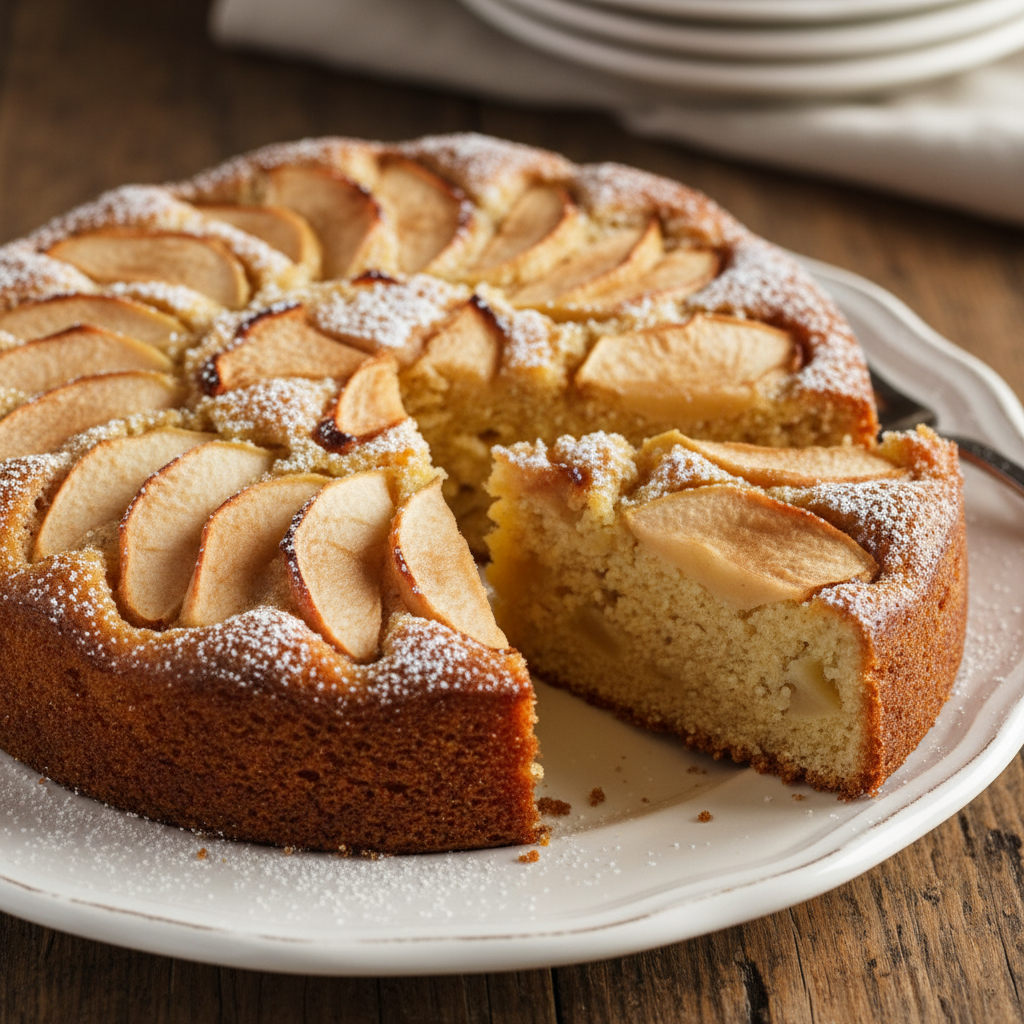
Preheat oven to 175°C (350°F). Grease a 23 cm (9 inch) round cake tin and line the base with parchment.
Whisk the eggs and sugar together in a large bowl for 2–3 minutes until pale and slightly thickened.
Whisk in the oil, rum (if using), and vanilla.
Sift in the flour, baking powder, and salt. Fold until just combined.
Fold in the apple cubes — the batter will be very thick and mostly apple. This is correct.
Spread into the prepared tin. Bake for 50–60 minutes until deeply golden on top and a skewer inserted in the centre comes out clean. Cool in the tin for 15 minutes before turning out. Dust generously with icing sugar before serving.

Whisk together the miso, mirin, sake, soy sauce, sugar, and sesame oil until smooth.
Pat the salmon fillets dry. Place in a shallow dish and coat all over with the miso marinade. Cover and refrigerate for at least 30 minutes (up to 24 hours — longer gives a deeper flavour).
Preheat your grill (broiler) to high. Line a baking tray with foil and lightly oil it.
Wipe off any excess marinade from the salmon (it burns easily). Place skin-side down on the prepared tray.
Grill for 6–8 minutes until the glaze is deeply caramelised and the salmon is just cooked through — it should still be slightly translucent in the very centre.
Serve over steamed rice with bok choy. Scatter with sesame seeds and serve immediately.

Heat the olive oil in a large pot over medium heat. Add the onion, celery, and carrots. Cook for 8 minutes until softened. Add the garlic and cook for 1 minute.
Add the chicken thighs, stock, rosemary, thyme, and Parmesan rind (if using). Bring to a simmer.
Simmer gently for 20–25 minutes until the chicken is cooked through and tender.
Remove the chicken and shred it into large pieces using two forks. Remove the herb sprigs, thyme, and Parmesan rind.
Add the cannellini beans to the pot. Use the back of a spoon to lightly crush a few beans against the side of the pot to thicken the broth. Add the kale and simmer for 5 minutes until wilted.
Return the shredded chicken to the pot. Season generously with salt and pepper. Ladle into bowls, drizzle with extra virgin olive oil, and serve with crusty bread.

Preheat oven to 160°C (325°F). Season the short ribs generously with salt and pepper. Heat the oil in a large Dutch oven over high heat. Sear the ribs on all sides until deeply browned, about 3–4 minutes per side. Remove and set aside.
Reduce heat to medium. Add the onion and cook for 5 minutes until softened. Add the garlic, cumin, smoked paprika, and oregano and stir for 1 minute.
Add the chipotle chillies, crushed tomatoes, and beef stock. Stir to combine, scraping up any browned bits from the base.
Return the short ribs to the pot, nestling them into the sauce. Bring to a simmer, then cover and transfer to the oven.
Braise for 3–3.5 hours until the meat is completely tender and falling off the bone. Remove the ribs, discard the bones, and shred the meat with two forks. Skim the fat from the braising liquid and return the shredded meat to the sauce.
Warm the corn tortillas. Pile the braised beef into each tortilla. Top with pickled red onion, fresh cilantro, a squeeze of lime, and a dollop of sour cream.

Preheat oven to 200°C (400°F). Place the cherry tomatoes and unpeeled garlic cloves in a large baking dish. Drizzle with 3 tbsp olive oil and season with salt, pepper, chilli flakes, and oregano. Toss to coat.
Place the block of feta in the centre of the dish. Drizzle with the remaining olive oil.
Bake for 30–35 minutes until the tomatoes have burst and are jammy, and the feta is soft and golden at the edges.
Meanwhile, cook the pasta in well-salted boiling water until al dente. Reserve 250 ml (1 cup) of pasta water before draining.
Squeeze the garlic out of its skins into the baking dish. Use a fork to mash the feta and burst tomatoes together into a creamy sauce.
Add the drained pasta to the dish and toss to coat, adding splashes of pasta water to loosen the sauce to your liking. Scatter with fresh basil and serve immediately.
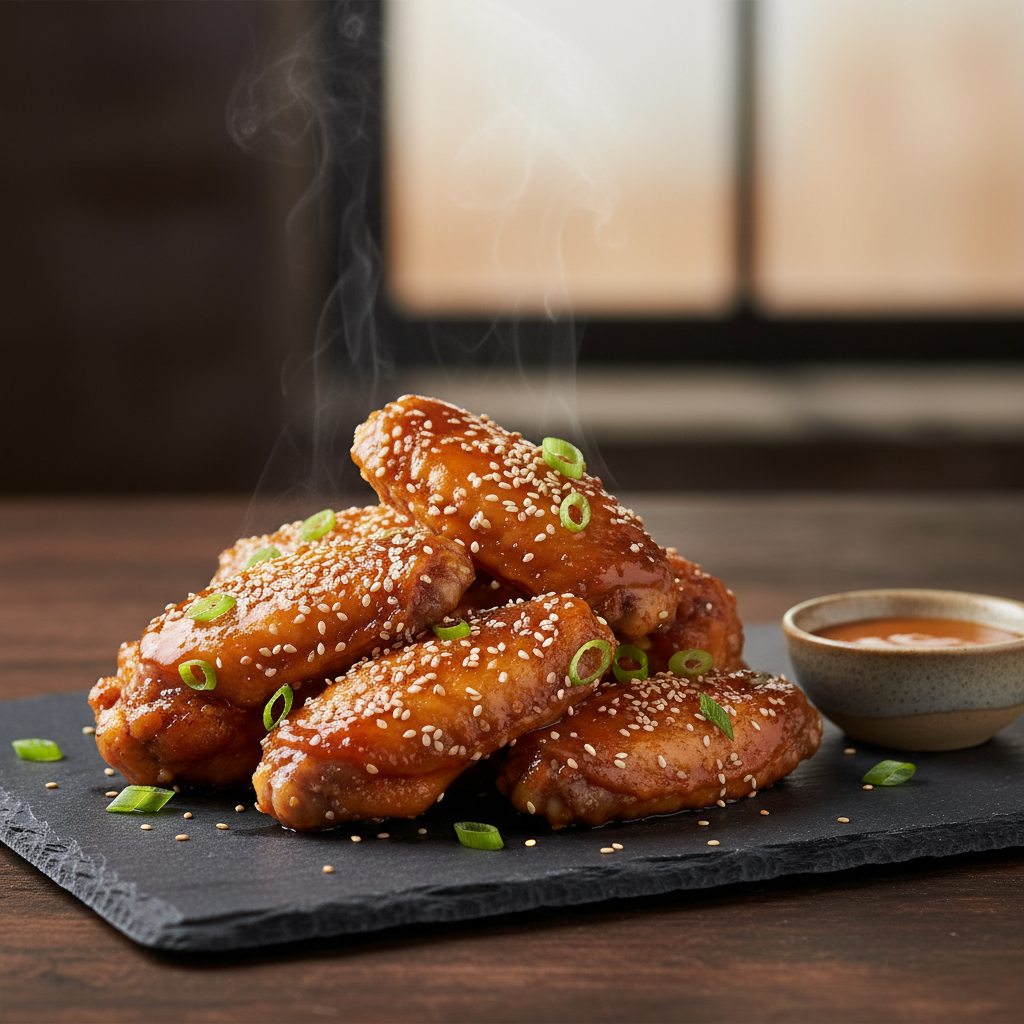
Pat the wings completely dry with paper towels — this is the key to crispiness. Toss with the baking powder, garlic powder, onion powder, and salt until evenly coated.
Arrange the wings in a single layer on a wire rack set over a foil-lined baking sheet. Refrigerate uncovered for at least 1 hour (or overnight) to dry out the skin further.
Preheat oven to 220°C (425°F). Bake the wings for 40–45 minutes, flipping halfway, until deeply golden and crispy.
While the wings bake, make the glaze: combine the honey, sriracha, soy sauce, rice vinegar, sesame oil, and garlic in a small saucepan. Simmer over medium heat for 3–4 minutes until slightly thickened.
Transfer the hot wings to a large bowl. Pour the glaze over and toss until every wing is well coated.
Arrange on a platter. Scatter with sesame seeds and spring onions. Serve immediately.

Preheat oven to 170°C (340°F). Butter a large baking dish generously.
Combine the cream, milk, garlic, salt, nutmeg, and white pepper in a large saucepan. Add the sliced potatoes and bring to a gentle simmer over medium heat, stirring occasionally. Cook for 8–10 minutes until the potatoes are just starting to soften and the cream has thickened slightly.
Transfer half the potato mixture to the prepared dish, spreading evenly. Scatter with half the Gruyère.
Add the remaining potatoes and pour over all the cream from the pan. Scatter the remaining Gruyère evenly over the top.
Cover tightly with foil and bake for 45 minutes. Remove the foil and bake for a further 30–35 minutes until the top is deeply golden and the potatoes are completely tender when pierced with a knife.
Rest for 10–15 minutes before serving — this allows the cream to set slightly for cleaner portions.
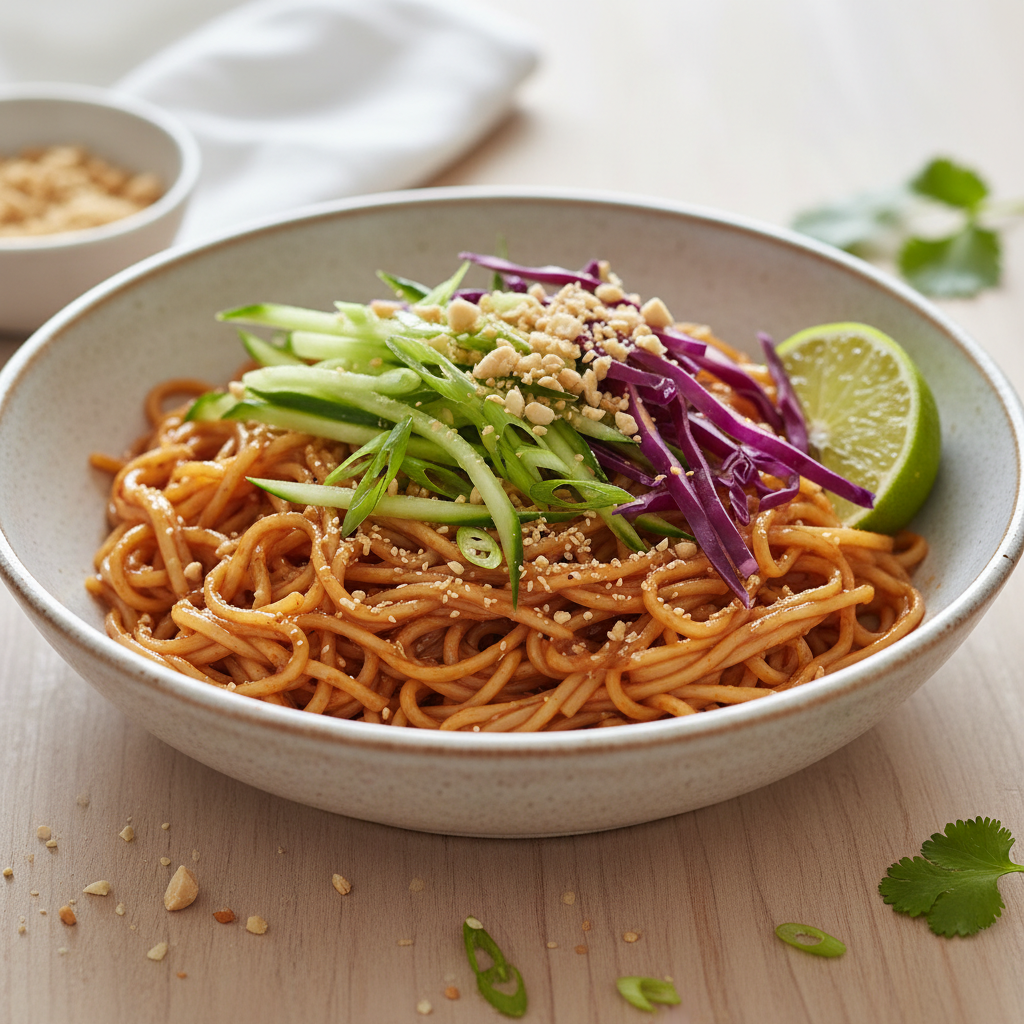
Cook the noodles according to package instructions. Drain, rinse under cold water until completely cool, and set aside.
Make the peanut sauce: whisk together the peanut butter, soy sauce, rice vinegar, sesame oil, honey, lime juice, ginger, and garlic until smooth. Add warm water, one tablespoon at a time, until the sauce is pourable but still thick and glossy.
Taste the sauce — it should be rich, tangy, and slightly sweet. Adjust with more lime juice for brightness or soy sauce for saltiness.
Combine the noodles, cucumber, carrots, red cabbage, and spring onions in a large bowl.
Pour the peanut sauce over and toss thoroughly until everything is well coated.
Divide among bowls. Top with crushed peanuts, fresh cilantro, and chilli flakes. Serve with lime wedges.

Beat the egg yolks and sugar together with an electric mixer for 4–5 minutes until pale, thick, and ribbon-like. Beat in the mascarpone and vanilla until smooth. Stir in the Marsala if using.
In a clean bowl, whisk the egg whites to stiff peaks. Gently fold the egg whites into the mascarpone mixture in three additions until just combined and airy.
Pour the cooled espresso into a shallow bowl. Briefly dip each ladyfinger — about 1 second per side — into the coffee. Do not soak them or they will become soggy.
Break the dipped ladyfingers to fit and layer them in the base of 6 glasses or ramekins.
Spoon a generous layer of mascarpone cream over the biscuits. Add another layer of dipped ladyfingers, then finish with a final layer of cream.
Cover and refrigerate for at least 4 hours, or overnight. Just before serving, dust generously with cocoa powder and add chocolate shavings if desired.
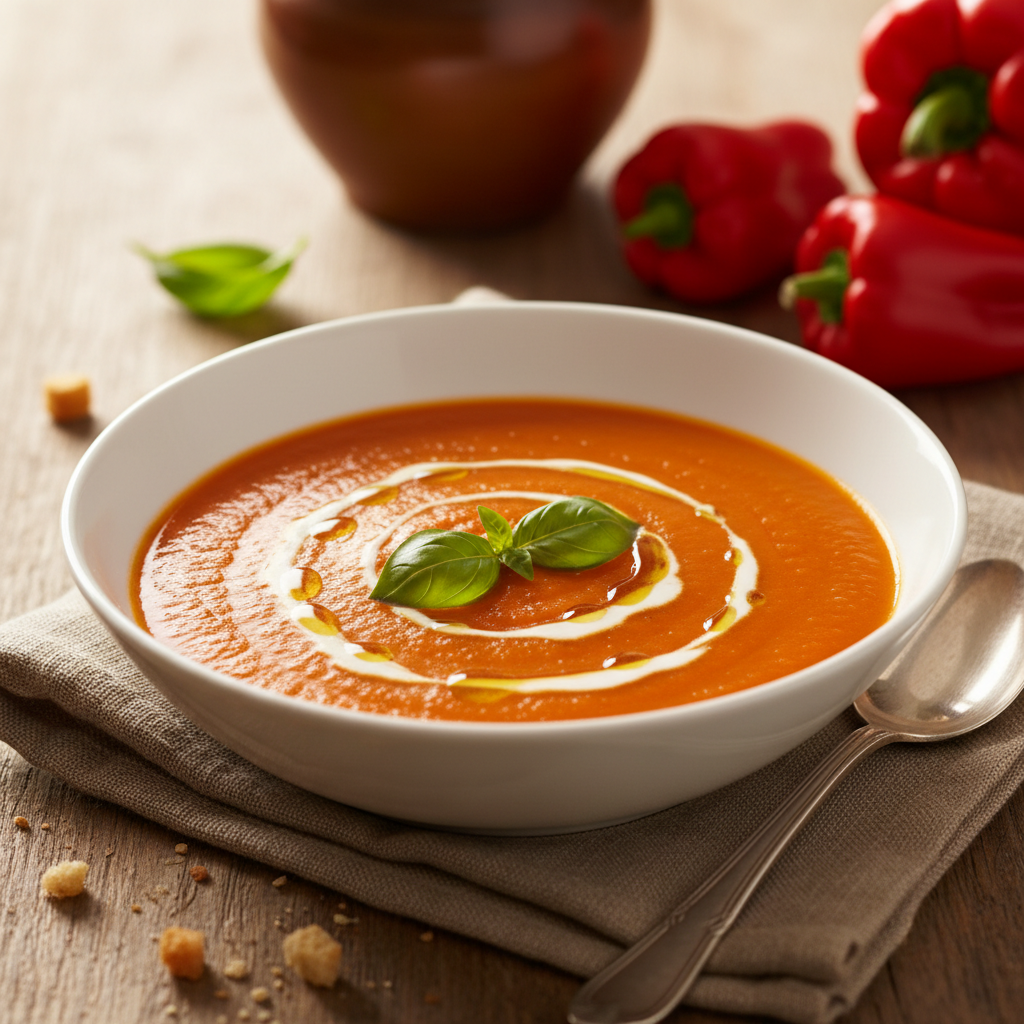
Preheat oven to 220°C (425°F). Place the whole peppers and unpeeled garlic cloves on a baking tray. Roast for 35–40 minutes, turning once, until the peppers are charred and collapsed.
Transfer the peppers to a bowl, cover tightly with cling film, and leave for 15 minutes — the steam loosens the skins. Peel, deseed, and roughly chop the peppers. Squeeze the garlic from its skins.
Heat the olive oil in a large pot over medium heat. Cook the onion for 8 minutes until softened. Add the smoked paprika and chilli flakes and stir for 1 minute.
Add the roasted peppers, garlic, crushed tomatoes, stock, and sugar. Bring to a simmer and cook for 15 minutes.
Use an immersion blender to blend until completely smooth. Season generously with salt and pepper. If the soup is too thick, add a little more stock.
Ladle into bowls. Swirl in a little cream, add a few fresh basil leaves, and serve with crusty bread.

Make the chimichurri: combine the parsley, oregano, garlic, shallot, chilli flakes, red wine vinegar, olive oil, and salt in a bowl. Stir well and taste — it should be bright, herby, and tangy. Set aside for at least 15 minutes for the flavours to meld.
Pat the lamb chops dry and season generously with salt and pepper on both sides.
Heat the olive oil in a large cast iron skillet or heavy pan over high heat until smoking.
Cook the lamb chops for 2–3 minutes per side for medium-rare (internal temperature 57°C / 135°F). Work in batches if needed to avoid crowding the pan.
Rest the chops on a board for 3–4 minutes.
Arrange on a platter and spoon the chimichurri generously over the top. Serve with the remaining chimichurri on the side.

Preheat oven to 220°C (425°F). Line a 12-hole muffin tin with paper cases or grease well.
Whisk together the flour, baking powder, baking soda, salt, and cinnamon in a large bowl.
In a separate bowl, whisk together the sugar, eggs, buttermilk, oil, melted butter, and vanilla until combined.
Pour the wet ingredients into the dry and fold until just combined — the batter should be lumpy. Do not overmix.
Toss the blueberries with 1 tbsp of the flour mixture (this prevents them sinking). Fold gently into the batter.
Divide the batter evenly among the muffin cases, filling them to the very top. Sprinkle generously with demerara sugar. Bake at 220°C for 5 minutes, then reduce to 190°C (375°F) and bake for a further 15–18 minutes until a skewer comes out clean. Cool in the tin for 5 minutes before transferring to a rack.

Beat the cream cheese with the chopped dill and lemon zest until light and fluffy. Season with a little black pepper.
Toast the bagels until golden and crisp.
Spread a generous layer of the herbed cream cheese on both cut sides of each bagel.
Layer the cucumber slices over the bottom half.
Drape the smoked salmon over the cucumber, folding it loosely for texture.
Scatter the capers and red onion over the salmon. Add fresh dill fronds and a crack of black pepper. Serve with lemon wedges on the side.

Combine the soy sauce, brown sugar, sesame oil, mirin, grated pear, garlic, and ginger in a bowl. Add the sliced beef and toss to coat thoroughly. Marinate for at least 20 minutes, or up to overnight in the fridge.
Heat a large skillet or wok over very high heat until smoking. Add 1 tbsp oil.
Cook the beef in a single layer in batches — do not crowd the pan. Cook for 1–2 minutes per side until caramelised and cooked through. The sugars in the marinade will char slightly, which is desirable.
Fry the eggs in a separate pan to your liking.
Build the bowls: add a generous scoop of steamed rice to each bowl. Arrange the bulgogi beef alongside.
Top each bowl with a fried egg, sliced cucumber, kimchi, spring onions, and a sprinkle of sesame seeds. Serve immediately.

Soak the rice noodles in cold water for 30 minutes until pliable but not soft. Drain and set aside.
Mix the tamarind paste, fish sauce, oyster sauce, and sugar in a small bowl. Set aside.
Heat a wok over very high heat until smoking. Add 1 tbsp oil. Stir-fry the prawns for 1–2 minutes until just pink. Remove and set aside.
Add the remaining oil and garlic to the wok. Stir for 30 seconds. Add the drained noodles and the sauce. Toss vigorously for 2 minutes until the noodles absorb the sauce.
Push the noodles to one side. Crack the eggs into the empty space and scramble briefly, then fold into the noodles before fully set.
Return the prawns to the wok. Add the bean sprouts and spring onions. Toss for 30 seconds — the sprouts should retain their crunch. Divide among plates. Top with crushed peanuts and chilli flakes. Serve with lime wedges and extra bean sprouts.

Preheat oven to 180°C (350°F). Grease a 900 g (2 lb) loaf tin and line with parchment.
Beat the butter and sugar together with an electric mixer for 4–5 minutes until very pale and fluffy.
Add the eggs one at a time, beating well after each addition. If the mixture curdles, add a spoonful of flour.
Fold in the flour, baking powder, lemon zest, and milk until just combined.
Pour into the prepared tin and bake for 45–50 minutes until a skewer inserted in the centre comes out clean and the top is golden.
While the cake is still hot in the tin, stir together the drizzle sugar and lemon juice. Poke the surface of the cake all over with a skewer, then slowly pour the drizzle over the top, letting it soak in. Cool completely in the tin before slicing.

Cook the tagliatelle in well-salted boiling water until al dente. Reserve 250 ml (1 cup) pasta water before draining.
Heat the butter and olive oil in a large skillet over high heat. Add the mushrooms in a single layer — do not stir for 2 minutes to allow them to brown. Then toss and cook for a further 3–4 minutes until deeply golden. Season with salt.
Reduce heat to medium. Add the shallot and garlic and cook for 2 minutes. Add the thyme and stir for 30 seconds.
Pour in the white wine and let it bubble for 2 minutes. Add the cream and simmer for 3–4 minutes until slightly thickened.
Add the drained pasta to the pan. Toss to coat, adding splashes of pasta water to loosen the sauce to a glossy, silky consistency.
Remove from heat. Stir in the Parmesan. Season generously with black pepper. Divide among bowls. Scatter with parsley and extra Parmesan. Drizzle with truffle oil if using.

Combine the olive oil, lemon juice, garlic, oregano, smoked paprika, and cumin in a bowl. Season with salt and pepper. Add the chicken pieces and toss to coat. Marinate for at least 1 hour (up to overnight).
Thread the chicken onto metal or soaked wooden skewers, packing the pieces snugly together.
Heat a grill pan or barbecue over high heat. Brush with oil.
Grill the skewers for 10–12 minutes, turning every 3 minutes, until charred in spots and cooked through (internal temperature 74°C / 165°F).
Rest for 3 minutes.
Serve the chicken in warm pita breads with a generous spoonful of tzatziki, diced tomato, red onion, and fresh parsley. Squeeze lemon over the top.

Preheat oven to 190°C (375°F). Line a 23 cm (9 inch) tart tin with the pastry. Blind bake for 15 minutes with baking weights, then remove weights and bake for 5 more minutes until lightly golden. Cool.
Make the caramel: heat the sugar in a heavy saucepan over medium heat without stirring until it melts and turns deep amber. Remove from heat and carefully whisk in the cream (it will bubble vigorously). Stir in the butter and salt until smooth. Cool for 10 minutes.
Pour the caramel into the cooled pastry shell and spread evenly. Refrigerate for 15 minutes to set slightly.
Arrange the apple slices in overlapping concentric circles over the caramel, starting from the outside edge and working inward.
Brush the apples with melted butter and sprinkle with the tablespoon of caster sugar. Bake for 35–40 minutes until the apples are tender and golden at the edges.
Warm the apricot jam with the water and brush over the hot tart for a glossy finish. Cool for 15 minutes before slicing. Serve with crème fraîche or vanilla ice cream.

Heat the olive oil in a large pot over medium heat. Cook the onion and carrot for 8 minutes until softened. Add the garlic, cumin, coriander, turmeric, smoked paprika, and cayenne. Stir for 1 minute until fragrant.
Add the crushed tomatoes and sugar. Cook for 3 minutes, stirring.
Add the rinsed lentils and stock. Bring to a boil, then reduce heat and simmer for 20–25 minutes until the lentils are completely soft and beginning to dissolve.
Use an immersion blender to blend the soup until smooth (or leave it partially chunky if preferred). Season generously with salt, pepper, and a squeeze of lemon juice.
If the soup is too thick, add a little more stock or water. Taste and adjust seasoning.
Make the chilli butter: melt the butter in a small pan over medium heat until it begins to foam. Add the chilli flakes and swirl for 30 seconds. Ladle the soup into bowls, drizzle with the chilli butter, and top with fresh cilantro. Serve with crusty bread.

Soft-boil the eggs: lower into boiling water and cook for exactly 7 minutes. Transfer to ice water, peel, and halve.
Blanch the green beans in boiling salted water for 3 minutes until just tender. Drain and refresh in ice water.
Make the vinaigrette: whisk together the olive oil, red wine vinegar, Dijon, shallot, and honey. Season with salt and pepper.
Pat the tuna steaks dry and season generously with salt and pepper. Heat the olive oil in a heavy skillet over very high heat until smoking. Sear the tuna for 1–1.5 minutes per side for rare to medium-rare. Rest for 2 minutes, then slice.
Arrange the potatoes, green beans, cherry tomatoes, and olives on a large platter. Nestle the egg halves and anchovy fillets (if using) among the vegetables.
Place the sliced tuna on top. Drizzle the vinaigrette generously over everything. Scatter with fresh parsley and serve immediately.

Make the chashu: roll the pork belly tightly and tie with kitchen twine. Sear in a hot pan until browned all over. Transfer to a pot with the soy sauce, mirin, sake, sugar, and enough water to cover. Simmer for 2 hours until tender. Cool in the liquid, then slice.
Make the broth: blanch the pork bones in boiling water for 5 minutes, drain, and rinse. Place in a large pot with the charred onion, garlic, ginger, and water. Bring to a vigorous boil and cook for 2–3 hours until the broth is milky and rich. Strain and season with salt.
Marinate the eggs: soft-boil eggs for 7 minutes, peel, and marinate in a mixture of soy sauce, mirin, and water for at least 2 hours.
Cook the ramen noodles according to package instructions. Drain.
Reheat the broth and season to taste. Warm the chashu slices in a pan or under the grill.
Divide the noodles among deep bowls. Ladle the hot broth over. Arrange sliced chashu, a halved marinated egg, nori, bamboo shoots, and spring onions on top. Finish with sesame seeds.

Preheat oven to 150°C (300°F). Place 6 ramekins or small cups in a deep baking dish.
Heat the cream and milk in a saucepan over medium heat until just below a simmer. Remove from heat and add the chopped chocolate. Let sit for 2 minutes, then whisk until completely smooth.
Whisk the egg yolks, sugar, vanilla, and salt in a bowl until combined. Slowly pour the warm chocolate cream into the egg mixture, whisking constantly to temper the eggs.
Strain the mixture through a fine sieve. Skim off any foam from the surface.
Divide the custard among the ramekins. Pour enough hot water into the baking dish to come halfway up the sides of the ramekins. Cover the dish tightly with foil.
Bake for 30–35 minutes until the custards are just set at the edges but still have a gentle wobble in the centre. Remove from the water bath and cool to room temperature, then refrigerate for at least 2 hours. Serve topped with a small spoonful of whipped cream and a pinch of flaky sea salt.

Heat the olive oil in a large, deep skillet or cast iron pan over medium-high heat. Add the crumbled merguez and cook, breaking it up, for 4–5 minutes until browned. Remove with a slotted spoon and set aside.
In the same pan, cook the onion and peppers over medium heat for 8 minutes until softened. Add the garlic, cumin, smoked paprika, coriander, and cayenne. Stir for 1 minute.
Add the crushed tomatoes and sugar. Season with salt and pepper. Simmer for 10–12 minutes, stirring occasionally, until the sauce thickens.
Return the merguez to the pan and stir to combine.
Use a spoon to create 6 wells in the sauce. Crack an egg into each well. Cover the pan and cook over medium-low heat for 6–8 minutes until the whites are just set but the yolks are still runny.
Remove from heat. Scatter with fresh cilantro and crumbled feta. Serve immediately straight from the pan with crusty bread or warm pita.

Melt the butter in a medium saucepan over medium heat. Continue cooking, swirling occasionally, until the butter turns deep golden brown and smells nutty, about 4–5 minutes. Add the brown sugar and stir until dissolved, about 2 minutes.
Whisk in the milk and cream. Bring to a gentle simmer, stirring to dissolve the sugar completely.
In a bowl, whisk together the egg yolks and cornstarch until smooth. Slowly ladle about 250 ml (1 cup) of the hot milk mixture into the egg mixture, whisking constantly to temper.
Pour the tempered egg mixture back into the saucepan. Cook over medium heat, stirring constantly, for 4–6 minutes until the pudding thickens and begins to bubble. Cook for 1 minute more.
Remove from heat. Stir in the vanilla, salt, and whisky if using.
Pour through a fine sieve into 6 glasses or ramekins. Press cling film directly onto the surface to prevent a skin forming. Refrigerate for at least 3 hours until set. Serve topped with whipped cream and a pinch of flaky sea salt.

Preheat oven to 220°C (425°F). Remove the outer leaves from each cauliflower and trim the base flat. Slice each head into 2–3 thick steaks (about 2.5 cm / 1 inch), cutting through the core so they hold together.
Brush both sides of each steak generously with olive oil. Mix the cumin, smoked paprika, and turmeric and dust over both sides. Season with salt and pepper.
Place on a large baking tray in a single layer. Roast for 20 minutes, then carefully flip and roast for a further 15–20 minutes until deeply golden and caramelised.
Make the tahini sauce: whisk together the tahini, lemon juice, garlic, and a pinch of salt. Add cold water one tablespoon at a time until the sauce is smooth and pourable.
Spread the tahini sauce over a large serving platter.
Arrange the cauliflower steaks over the tahini. Scatter with pomegranate seeds, toasted pine nuts, fresh parsley, and mint. Serve with lemon wedges.

Heat the olive oil in a large, heavy pot over medium heat. Cook the pancetta for 4 minutes until the fat renders. Add the onion, celery, and carrot (the soffritto) and cook for 10 minutes until very soft and golden.
Add the garlic and cook for 1 minute. Increase heat to high and add the ground meat. Cook, breaking it up, until browned all over — about 8 minutes. Season with salt and pepper.
Pour in the white wine and let it bubble until fully evaporated, about 5 minutes.
Add the milk and simmer until absorbed, about 5 minutes. Stir in the tomato paste and cook for 2 minutes.
Add the crushed tomatoes, stock, bay leaf, and nutmeg. Bring to a gentle simmer. Cook uncovered over very low heat for 1.5–2 hours, stirring occasionally, until the sauce is thick and rich. Add a splash of water if it gets too dry. Taste and adjust seasoning.
Cook the spaghetti in well-salted boiling water until al dente. Reserve a cup of pasta water. Toss the pasta with the ragù, adding pasta water to loosen. Serve with grated Parmesan.

Make the batter: whisk together the rice flour, turmeric, salt, coconut milk, and cold water until smooth. Stir in the spring onions. Rest for 15 minutes.
Make the dipping sauce: combine the fish sauce, lime juice, sugar, chilli, garlic, and 3 tbsp water. Stir until the sugar dissolves.
Heat 1 tbsp oil in a large non-stick skillet over high heat. Add a few prawns and pork slices and cook for 1 minute.
Pour a ladleful of batter into the pan, swirling to coat the base thinly. Add a handful of bean sprouts to one half.
Cover and cook for 3–4 minutes until the edges are crispy and the base is golden. Fold the plain half over the filled half. Slide onto a plate.
Repeat with remaining batter and filling. Serve immediately with lettuce leaves, fresh herbs, and the dipping sauce. To eat, tear pieces of crêpe, wrap in lettuce with herbs, and dip.

Make the dough: in a heatproof bowl set over a pot of simmering water, combine the eggs, sugar, honey, and butter. Stir until the sugar dissolves and the mixture is warm. Mix the baking soda with the vinegar and stir into the mixture — it will foam. Remove from heat and fold in the flour until a soft dough forms. Divide into 8 equal portions. Refrigerate for 30 minutes.
Preheat oven to 180°C (350°F). On a lightly floured surface, roll each portion into a very thin circle (about 22 cm / 9 inches). Trim to a neat circle using a plate as a guide — save the trimmings.
Bake each layer on a parchment-lined tray for 4–5 minutes until golden. Cool completely. Bake the trimmings too — they become the decoration.
Make the frosting: whisk together the sour cream, icing sugar, and vanilla until smooth and thick.
Assemble: place one cake layer on a plate. Spread with a generous layer of frosting. Repeat with all layers, finishing with frosting on the top and sides.
Crush the baked trimmings into fine crumbs and press onto the top and sides of the cake. Refrigerate overnight — the layers will soften and meld into a tender, cohesive cake. Slice and serve cold.

Cook the bacon in a large pot over medium heat until crispy. Remove with a slotted spoon and set aside. Leave 1 tbsp of fat in the pot.
Add the butter to the pot. Cook the onion and celery for 6 minutes until softened. Add the garlic and thyme and cook for 1 minute.
Sprinkle the flour over the vegetables and stir for 2 minutes to cook out the raw flour taste.
Gradually whisk in the stock and reserved clam liquid until smooth. Add the potatoes and bay leaf. Bring to a simmer and cook for 15 minutes until the potatoes are tender.
Stir in the cream and milk. Simmer gently for 5 minutes. Add the clams and most of the bacon. Heat through for 2 minutes — do not boil or the clams will toughen.
Remove the bay leaf. Season generously with salt, white pepper, and a few dashes of Tabasco. Ladle into bowls. Top with the remaining bacon and fresh chives. Serve with oyster crackers or crusty bread.

Score the duck skin in a crosshatch pattern, cutting through the fat but not into the flesh. Season all over with salt, pepper, and five-spice.
Place the duck breasts skin-side down in a cold, dry skillet. Turn the heat to medium. Cook for 12–15 minutes, pouring off the rendered fat occasionally, until the skin is deeply golden and crispy.
Flip and cook for 4–5 minutes more for medium-rare (internal temperature 57°C / 135°F). Rest on a board, skin-side up, for 8 minutes.
Make the sauce: pour off most of the fat from the pan. Add the sugar and cook over medium heat until it caramelises to a deep amber. Add the vinegar — it will spit — then the orange juice, lemon juice, and zest. Stir to deglaze.
Add the stock and Grand Marnier if using. Simmer for 5–6 minutes until the sauce reduces and coats the back of a spoon. Swirl in the cold butter.
Slice the duck breasts on the diagonal. Fan onto plates. Spoon the orange sauce over and around. Garnish with fresh thyme and orange slices.

Preheat oven to 200°C (400°F). Wilt the spinach in a dry pan over medium heat for 1–2 minutes. Squeeze out all excess moisture and roughly chop.
Combine the spinach, feta, cream cheese, garlic, oregano, and chilli flakes in a bowl. Season with black pepper.
Cut a deep pocket into the thickest side of each chicken breast, being careful not to cut all the way through. Season the outside with salt, pepper, and smoked paprika.
Stuff each breast generously with the spinach and feta mixture. Secure the opening with 1–2 toothpicks.
Heat the olive oil in an oven-safe skillet over high heat. Sear the chicken for 3 minutes per side until golden.
Transfer the skillet to the oven and bake for 18–22 minutes until the chicken is cooked through (internal temperature 74°C / 165°F). Rest for 5 minutes. Remove toothpicks. Serve with lemon wedges and a green salad.

Combine the diced mango, habanero, red onion, and red bell pepper in a bowl.
Add the cilantro, lime juice, lime zest, salt, and honey.
Toss gently to combine. Taste — it should be sweet, bright, and have a lingering heat. Add more lime juice for brightness or more habanero for heat.
Let the salsa rest for at least 10 minutes at room temperature for the flavours to meld.
Taste once more and adjust seasoning before serving.
Serve with tortilla chips, spooned over grilled fish or shrimp, or alongside tacos. Keeps refrigerated for up to 2 days — the heat intensifies over time.

Preheat oven to 160°C (325°F). Season the beef cheeks generously with salt and pepper. Heat the olive oil in a large Dutch oven over high heat. Sear the cheeks for 3–4 minutes per side until deeply browned all over. Remove and set aside.
Reduce heat to medium. Add the onion, carrot, and celery to the pot and cook for 8 minutes until softened. Add the garlic and tomato paste and stir for 2 minutes.
Pour in the red wine and bring to a boil, scraping up any browned bits. Simmer for 5 minutes until reduced by half.
Add the crushed tomatoes, stock, rosemary, thyme, and bay leaves. Return the beef cheeks to the pot. The liquid should come about two-thirds up the meat.
Cover and braise in the oven for 3–3.5 hours until the cheeks are completely tender and falling apart. Remove the cheeks and shred coarsely with two forks. Discard the herb sprigs and bay leaves. Return the meat to the sauce and stir to combine. Taste and adjust seasoning.
Cook the pappardelle in well-salted boiling water until al dente. Reserve 250 ml (1 cup) pasta water. Toss the pasta through the ragù, adding pasta water to loosen to a glossy, coating consistency. Serve with grated Parmesan and fresh parsley.

Make the marinade: combine the miso, mirin, sake, sugar, and soy sauce in a small saucepan over medium heat. Stir for 2–3 minutes until the sugar dissolves and the mixture is smooth. Cool completely.
Pat the cod fillets dry. Place in a shallow dish and coat all over with the miso marinade. Cover and refrigerate for at least 24 hours, or up to 3 days — the longer, the better.
When ready to cook, preheat the oven grill (broiler) to high. Line a baking tray with foil and lightly oil it.
Wipe the excess marinade from the fish (leaving a thin coating). Place skin-side down on the prepared tray.
Grill (broil) for 8–10 minutes until the top is deeply caramelised and the fish is just cooked through and flakes easily. Watch carefully — the sugars can burn quickly.
Serve immediately over steamed rice with blanched bok choy and pickled ginger on the side.

Arrange the arugula over a large serving platter as the base.
Scatter the peach slices over the arugula in an even layer.
Tear the prosciutto into loose, flowing pieces and drape over the peaches.
Place the burrata balls in the centre of the platter. Tear them open gently so the creamy interior spills out.
Scatter the toasted nuts over the salad.
Drizzle the olive oil, balsamic, and honey over everything. Season generously with flaky sea salt and cracked black pepper. Scatter with fresh basil leaves and serve immediately.

Make the curry sauce: heat 2 tbsp oil in a saucepan over medium heat. Cook the onion for 8 minutes until golden. Add the garlic, ginger, and curry powder and stir for 2 minutes. Add the flour and stir for 1 minute. Gradually whisk in the stock until smooth. Add the carrot, soy sauce, and honey. Simmer for 15 minutes until thickened. Blend until smooth.
Pound the chicken breasts to an even thickness of about 1.5 cm (½ inch). Season with salt and pepper.
Set up a breading station: flour in one shallow dish, beaten eggs in another, panko in a third. Coat each chicken breast in flour, then egg, then panko, pressing firmly to adhere.
Heat 1 cm of neutral oil in a large skillet over medium-high heat. Fry the chicken for 4–5 minutes per side until deeply golden and cooked through (internal temperature 74°C / 165°F). Drain on paper towels.
Slice the chicken on the diagonal into thick strips.
Serve the sliced katsu over steamed rice. Ladle the curry sauce generously over the top. Serve with pickled daikon on the side.

Line a 1.5 litre (6 cup) bowl with cling film, leaving a generous overhang. Layer the softened ice cream and sorbet into the bowl, pressing firmly. Smooth the top flat. Freeze for at least 4 hours, or overnight, until completely solid.
Place the sponge cake on a parchment-lined baking tray. Unmould the ice cream dome onto the centre of the sponge. Return to the freezer while you make the meringue.
Make the Italian meringue: combine the sugar and water in a small saucepan. Heat to 121°C (250°F) on a sugar thermometer. Meanwhile, whisk the egg whites and cream of tartar to soft peaks. With the mixer running, slowly pour the hot syrup down the side of the bowl. Whisk on high for 5–7 minutes until thick, glossy, and cooled. Beat in the vanilla.
Working quickly, spread the meringue all over the ice cream dome and sponge base in a thick, even layer, making sure there are no gaps. Use a spatula to create decorative swirls and peaks.
Return to the freezer for at least 30 minutes.
Just before serving, use a kitchen blowtorch to toast the meringue all over until golden and caramelised. Alternatively, place under a very hot grill (broiler) for 2–3 minutes. Serve immediately.

Using a meat mallet or rolling pin, pound the pork chops to an even thickness of about 1.5 cm (½ inch). Score the fat and connective tissue around the edge with a knife to prevent curling. Season with salt and pepper.
Set up a breading station: flour in one shallow dish, beaten eggs in another, panko in a third. Coat each pork chop in flour (shake off excess), then egg, then panko, pressing firmly so the crumbs adhere in a thick, even layer.
Heat 3–4 cm of neutral oil in a deep skillet or saucepan to 170°C (340°F).
Fry the tonkatsu for 3–4 minutes per side until deeply golden and cooked through (internal temperature 63°C / 145°F). Do not crowd the pan — fry in batches if needed.
Drain on a wire rack for 2 minutes. Slice into thick strips on the diagonal.
Arrange the sliced tonkatsu over steamed rice alongside a mound of shredded cabbage. Drizzle the tonkatsu sauce over the pork. Serve with Japanese mustard and lemon wedges.

Preheat oven to 200°C (400°F). Toss the tomatoes with the olive oil, balsamic vinegar, salt, and pepper on a baking tray. Roast for 20 minutes until softened and slightly caramelised. Set aside.
Beat together the goat cheese, cream cheese, garlic, thyme, and basil until smooth. Season with salt and pepper.
Unroll the puff pastry onto a parchment-lined baking tray. Score a 2 cm (¾ inch) border around the edge with a knife, being careful not to cut all the way through. Prick the inner rectangle all over with a fork.
Brush the border with beaten egg. Spread the goat cheese mixture evenly over the inner rectangle.
Arrange the roasted tomatoes over the cheese, cut-side up, in a single layer.
Bake for 20–25 minutes until the pastry is puffed and deeply golden. Drizzle with honey and scatter with fresh thyme leaves and flaky sea salt. Serve warm or at room temperature.

Heat the oil in a large pot over medium heat. Cook the onion for 8 minutes until golden. Add the garlic and ginger and cook for 2 minutes.
Add the cumin, coriander, turmeric, and garam masala. Stir for 1 minute until fragrant.
Add the diced tomato and cook for 3 minutes until it breaks down.
Add the rinsed lentils, coconut milk, and stock. Bring to a boil, then reduce heat and simmer for 20–25 minutes, stirring occasionally, until the lentils are completely soft and the dahl is thick and creamy. Season generously with salt.
Make the tarka: heat the coconut oil in a small pan over high heat until shimmering. Add the mustard seeds — they will pop immediately. Add the curry leaves and dried chillies and fry for 30 seconds until fragrant.
Pour the tarka over the dahl and stir through. Scatter with fresh cilantro. Serve with steamed basmati rice and warm naan.
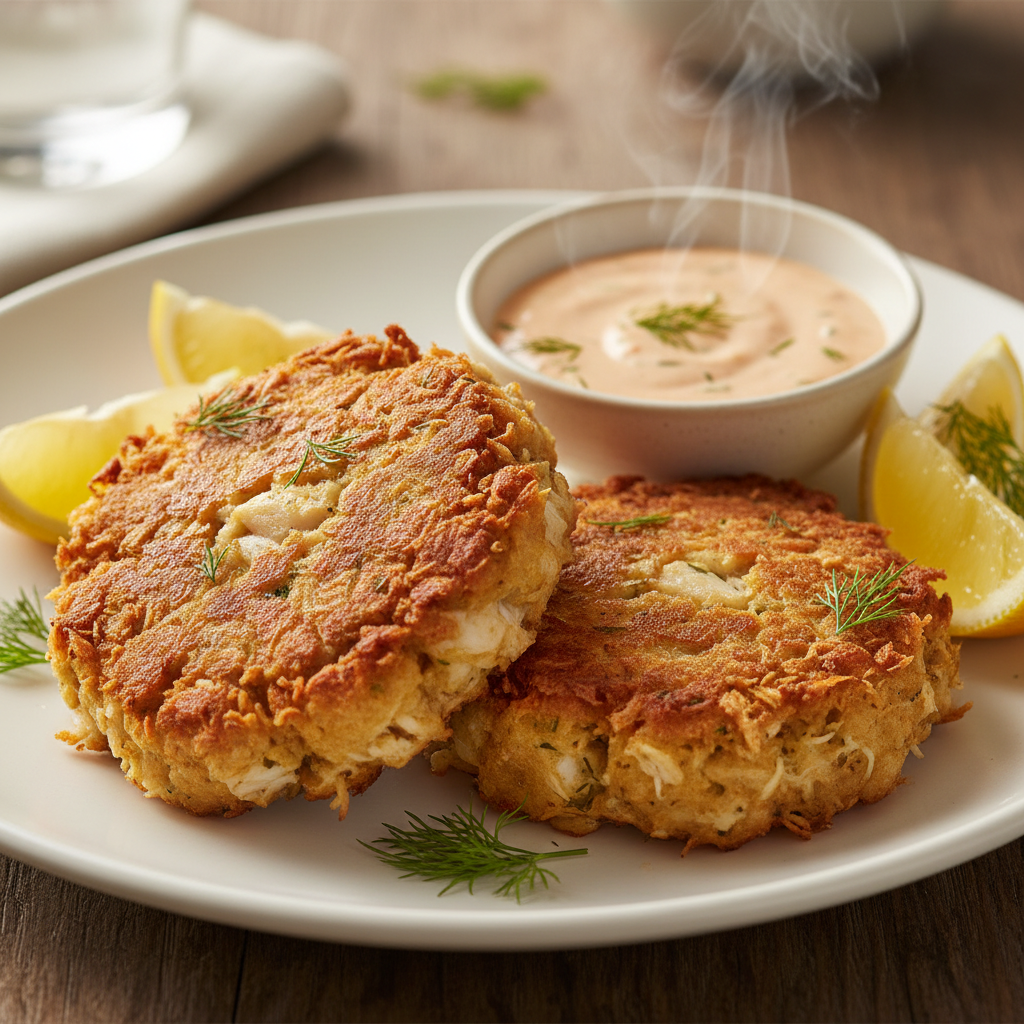
Make the remoulade: combine the mayonnaise, Dijon, capers, cornichons, and hot sauce. Refrigerate until needed.
Gently combine the crab meat, mayonnaise, egg, Dijon, Worcestershire, Old Bay, lemon juice, parsley, and panko in a bowl. Fold carefully — you want to keep large lumps of crab intact.
Divide the mixture into 8 equal portions and shape into patties about 2 cm (¾ inch) thick. Place on a parchment-lined tray, cover, and refrigerate for at least 30 minutes to firm up.
Heat the oil and butter in a large skillet over medium-high heat until the butter foams.
Cook the crab cakes for 3–4 minutes per side until deeply golden and heated through. Work in batches to avoid crowding.
Serve immediately with the remoulade, lemon wedges, and fresh dill.

Melt the butter and olive oil in a large, heavy pot over medium heat. Add the onions and sugar. Cook, stirring occasionally, for 45–55 minutes until the onions are deeply caramelised and a rich mahogany colour. Do not rush this step — it is the foundation of the soup.
Add the garlic and thyme and stir for 1 minute. Pour in the wine and let it bubble for 3 minutes, scraping up any browned bits.
Add the stock and bay leaves. Bring to a simmer and cook for 20 minutes. Remove the bay leaves. Season generously with salt and pepper.
Preheat the oven grill (broiler) to high. Ladle the soup into 4 oven-safe bowls placed on a baking tray.
Float 2 toasted baguette slices on top of each bowl of soup.
Mix the Gruyère and Parmesan together. Pile generously over the croutons, covering the surface completely. Grill (broil) for 3–5 minutes until the cheese is bubbling, golden, and beginning to char at the edges. Serve immediately — the bowls will be very hot.

Marinate the lamb: combine the yogurt, garlic, ginger, cumin, coriander, turmeric, garam masala, chilli powder, and 1½ tsp salt. Coat the lamb pieces thoroughly. Marinate for at least 2 hours, or overnight in the fridge.
Fry the onions: heat the oil in a large heavy pot over medium-high heat. Fry the sliced onion for 15–18 minutes, stirring often, until deeply golden and crispy. Remove half and set aside for garnish.
Add the whole spices (cardamom, cloves, cinnamon, bay leaves) to the pot with the remaining onions. Add the marinated lamb and cook over high heat for 8–10 minutes, stirring, until the lamb is browned and the marinade has reduced.
Add 200 ml (¾ cup) water. Cover and cook over low heat for 40 minutes until the lamb is nearly tender.
Meanwhile, parboil the soaked rice in well-salted boiling water with a bay leaf for 5–6 minutes until 70% cooked. Drain well.
Layer the parboiled rice over the lamb in the pot. Drizzle the saffron milk over the rice. Scatter with fresh cilantro and mint. Cover tightly with foil, then the lid. Cook over the lowest possible heat for 25–30 minutes (dum cooking). Rest for 10 minutes before opening. Gently mix and serve topped with fried onions and lemon wedges.

If using live lobsters, dispatch humanely and split in half lengthwise. Remove the stomach sac and intestinal tract. Brush with butter and grill (broil) cut-side up for 8–10 minutes until just cooked. Remove the meat from the shells and dice into large chunks. Reserve the shells.
Make the sauce: melt the butter in a saucepan over medium heat. Cook the shallots for 3 minutes until soft. Add the white wine and stock and simmer until reduced by half, about 4 minutes.
Add the cream and simmer for 5–6 minutes until the sauce coats the back of a spoon.
Remove from heat. Stir in the Dijon, tarragon, chervil, and lemon juice. Season with salt, white pepper, and a pinch of cayenne.
Fold the lobster meat gently into the sauce. Spoon the mixture back into the reserved lobster shells.
Scatter the Gruyère generously over the top. Grill (broil) under a high heat for 3–4 minutes until the cheese is golden and bubbling. Serve immediately with lemon wedges and crusty bread.

Preheat oven to 175°C (350°F). Grease and line two 20 cm (8 inch) round cake tins. Whisk together the flour, cocoa, baking powder, baking soda, salt, and sugar. In a separate bowl, whisk the eggs, buttermilk, oil, and vanilla. Combine the wet and dry ingredients, then stir in the hot coffee until smooth.
Divide the batter evenly between the tins. Bake for 28–32 minutes until a skewer comes out clean. Cool in the tins for 10 minutes, then turn out and cool completely on a wire rack.
Make the kirsch syrup: combine 4 tbsp of the reserved cherry juice with the kirsch. Slice each cake layer in half horizontally to give 4 layers.
Whip the cream with the icing sugar and vanilla to firm peaks.
Assemble: place the first cake layer on a plate. Brush generously with kirsch syrup. Spread with whipped cream and scatter with cherries. Repeat with the remaining layers, finishing with cream on the top and sides.
Press chocolate shavings onto the sides and top of the cake. Decorate with whole fresh cherries. Refrigerate for at least 2 hours before slicing.

Preheat oven to 200°C (400°F). Heat the olive oil in a large oven-safe skillet over medium heat. Cook the onion for 6 minutes until softened. Add the garlic and chilli and cook for 1 minute.
Pour in the white wine and let it bubble for 2 minutes. Add the crushed tomatoes, oregano, smoked paprika, and sugar. Season with salt and pepper. Simmer for 8–10 minutes until the sauce thickens slightly.
Nestle the prawns into the tomato sauce in a single layer.
Scatter the crumbled feta generously over the top.
Transfer the skillet to the oven and bake for 10–12 minutes until the prawns are pink and cooked through and the feta is softened and beginning to colour.
Scatter with fresh parsley and serve immediately straight from the skillet with plenty of crusty bread to mop up the sauce.

Combine the soy sauce, sesame oil, brown sugar, grated pear, garlic, ginger, spring onions, and sesame seeds in a bowl. Add the beef slices and toss to coat thoroughly. Marinate for at least 30 minutes, or up to 4 hours in the fridge.
Heat a large skillet or grill pan over high heat until very hot. Add the neutral oil.
Cook the beef in batches — do not crowd the pan — for 1–2 minutes per batch, tossing quickly, until caramelised and just cooked through. The sugar in the marinade will char slightly, which is desirable.
Arrange the lettuce cups on a large platter. Place a spoonful of steamed rice in each cup.
Top the rice with the bulgogi beef.
Serve with small bowls of kimchi, gochujang, sliced spring onions, and sesame seeds alongside. To eat, add condiments to taste, fold the lettuce around the filling, and eat in one or two bites.

Make the filling: heat the olive oil in a large skillet over high heat. Cook the shallots for 3 minutes. Add the garlic, thyme, and rosemary and cook for 1 minute. Add the mushrooms and soy sauce. Cook over high heat for 10–12 minutes, stirring often, until all moisture has evaporated and the mushrooms are deeply golden and dry. This is critical — wet filling will make the pastry soggy.
Wilt the spinach in the same pan for 1–2 minutes. Squeeze out all excess moisture and roughly chop. Combine with the mushroom mixture, cream cheese, and Parmesan. Season generously. Cool completely.
Preheat oven to 200°C (400°F). Lay one sheet of puff pastry on a parchment-lined baking tray. Spoon the mushroom filling down the centre, leaving a 4 cm (1.5 inch) border on all sides. Shape into a neat log.
Brush the border with egg wash. Lay the second pastry sheet over the top. Press the edges firmly to seal, then crimp with a fork. Trim any excess pastry.
Brush the entire surface with egg wash. Score a decorative pattern on top with a knife, being careful not to cut all the way through. Refrigerate for 15 minutes.
Bake for 30–35 minutes until deeply golden and crisp. Rest for 5 minutes before slicing. Serve with red wine jus or mushroom gravy.
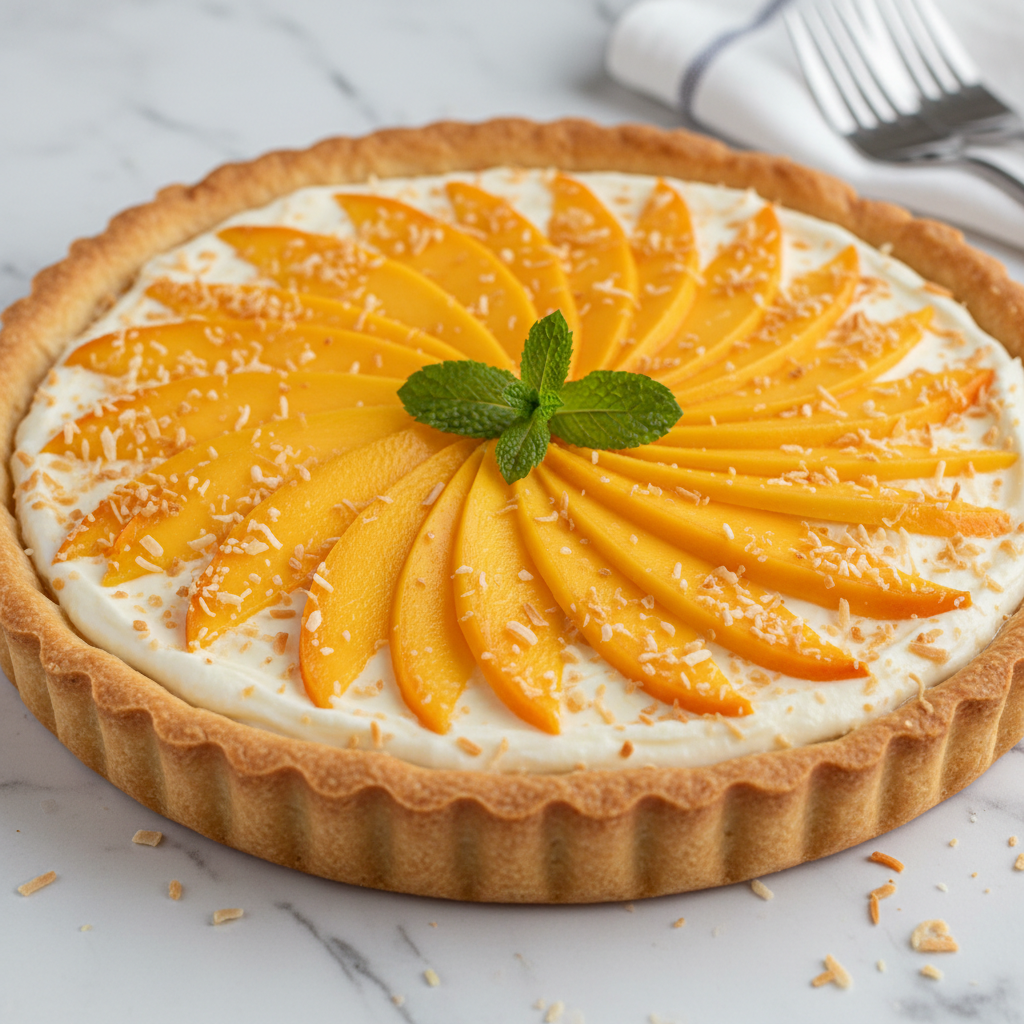
Make the pastry: pulse the flour, icing sugar, and butter in a food processor until it resembles breadcrumbs. Add the egg yolk and ice water and pulse until the dough just comes together. Shape into a disc, wrap, and refrigerate for 30 minutes.
Preheat oven to 190°C (375°F). Roll the pastry out and line a 23 cm (9 inch) tart tin. Blind bake with baking weights for 15 minutes, then remove the weights and bake for a further 8–10 minutes until golden. Cool completely.
Make the coconut cream filling: whisk the egg yolks, sugar, and cornstarch in a saucepan. Gradually whisk in the coconut cream. Cook over medium heat, stirring constantly, for 5–7 minutes until thick and bubbling. Remove from heat and stir in the vanilla.
Pour the coconut cream into the cooled tart shell. Press cling film directly onto the surface and refrigerate for at least 2 hours until set.
Arrange the mango slices over the coconut cream in overlapping fans or concentric circles.
Mix the warmed apricot jam with the lime juice and brush over the mango to glaze. Scatter with toasted coconut flakes. Refrigerate until ready to serve.

Make the meatballs: combine the pork, beef, garlic, egg, breadcrumbs, parsley, smoked paprika, cumin, salt, and pepper. Mix gently until just combined. Roll into walnut-sized balls (about 30 g / 1 oz each).
Heat 2 tbsp olive oil in a large skillet over medium-high heat. Brown the meatballs in batches for 2–3 minutes, turning, until golden all over. Remove and set aside — they do not need to be cooked through.
In the same pan, heat the remaining oil over medium heat. Cook the onion for 6 minutes until soft. Add the garlic and smoked paprika and stir for 1 minute.
Pour in the sherry and let it bubble for 2 minutes. Add the crushed tomatoes, stock, and saffron water. Bring to a simmer.
Return the meatballs to the sauce. Simmer gently, partially covered, for 20 minutes until the meatballs are cooked through and the sauce has thickened.
Taste and adjust seasoning. Scatter with fresh parsley. Serve straight from the pan with plenty of crusty bread.

Preheat oven to 200°C (400°F). Wrap the beetroots individually in foil and roast for 50–60 minutes until completely tender when pierced. Cool, peel, and blend or grate two-thirds of the beets to a smooth purée. Dice the remaining third into small cubes.
Heat the olive oil and half the butter in a large, heavy saucepan over medium heat. Cook the onion for 6 minutes until soft. Add the garlic and cook for 1 minute.
Add the arborio rice and stir for 2 minutes until the grains are coated and slightly translucent at the edges.
Pour in the white wine and stir until absorbed. Add the warm stock one ladleful at a time, stirring constantly and waiting until each addition is absorbed before adding the next. This will take 18–20 minutes.
When the rice is al dente and the risotto is creamy, stir in the beetroot purée and diced beets. The risotto will turn a vivid magenta.
Remove from heat. Stir in the remaining butter and the Parmesan. Season generously. Serve in warm bowls topped with crumbled goat cheese, toasted walnuts, fresh thyme, and a drizzle of balsamic glaze.
Preheat oven to 220°C (425°F). Pat the wings completely dry with paper towels — this is essential for crispiness.
Toss the wings with the baking powder, garlic powder, smoked paprika, salt, and pepper until evenly coated. The baking powder draws out moisture and creates a crispy skin.
Arrange the wings in a single layer on a wire rack set over a foil-lined baking tray. Bake for 45–50 minutes, flipping halfway, until deeply golden and crispy.
Make the glaze: combine the honey, sriracha, soy sauce, rice vinegar, and garlic in a small saucepan. Bring to a simmer over medium heat and cook for 3–4 minutes until slightly thickened. Stir in the butter.
Transfer the hot wings to a large bowl. Pour the glaze over and toss to coat thoroughly.
Arrange on a platter. Scatter with sliced spring onions and sesame seeds. Serve immediately with blue cheese or ranch dip.